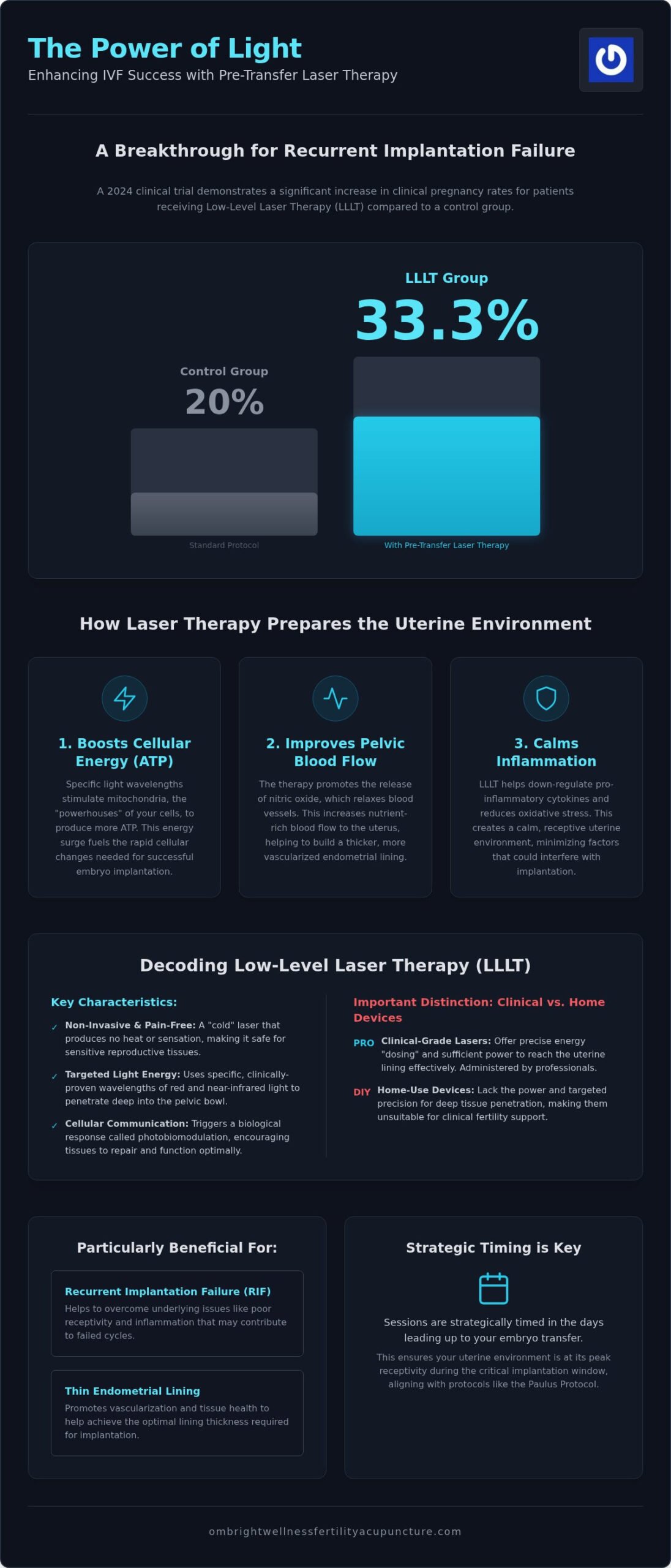
Could a specific wavelength of light be the missing piece in your fertility journey? A 2024 clinical trial involving women with recurrent implantation failure revealed that those receiving Low-Level Laser Therapy (LLLT) saw clinical pregnancy rates reach 33.3%, a notable increase from the 20% observed in the control group. If you’ve felt the heartbreak of a failed cycle or the persistent anxiety of a thin uterine lining, you aren’t alone in seeking a more supportive path. Integrating laser therapy before embryo transfer offers a non-invasive way to communicate with your body at a cellular level. It’s about more than just technology; it’s about creating a receptive, nurturing environment for your future child.
We understand the “Two Week Wait” often feels like an exhausting period of uncertainty, especially when previous transfers haven’t yielded the results you hoped for. You deserve a protocol that addresses the physiological requirements of implantation and the needs of your nervous system. This guide details how photobiomodulation works as a mitochondrial bio-hack to enhance uterine blood flow and reduce inflammation. We’ll examine the clinical benefits of optimizing your endometrial lining and how these sessions integrate with your primary IVF care. By the end, you’ll understand how this innovative approach creates a steady foundation for your transfer day.
Key Takeaways
- Learn how photobiomodulation uses specific light wavelengths to stimulate mitochondrial energy, providing the systemic support needed for cellular vitality during implantation.
- Discover how the release of nitric oxide improves pelvic blood flow, naturally encouraging a thicker and more vascularized uterine lining.
- Understand the strategic timing for laser therapy before embryo transfer to ensure your uterine environment is at its most receptive during the critical implantation window.
- Identify why this non-invasive support is particularly beneficial for those navigating the challenges of recurrent implantation failure or thin endometrial concerns.
- Explore the benefits of a coordinated care model that bridges the gap between high-tech clinical protocols and a nurturing, stress-reducing environment.
What is Fertility Laser Therapy Before Embryo Transfer?
At its core, Low-Level Laser Therapy (LLLT), also known as photobiomodulation, is a sophisticated method of using light to communicate with your cells. While the word “laser” often brings to mind surgical tools that cut or generate heat, the technology used in fertility support is fundamentally different. These are “cold” lasers. They operate at a low intensity that doesn’t produce heat, making them exceptionally safe for sensitive reproductive tissues. By using specific wavelengths of red and near-infrared light, this therapy triggers a biological response that encourages tissues to repair and thrive.
The shift toward using laser therapy before embryo transfer represents a significant advancement in how we support IVF cycles here in Miami. It wasn’t long ago that holistic support was limited to general wellness. Today, we’ve moved into a more targeted, clinical era where advanced light therapy acts as a non-invasive adjunct to traditional fertility acupuncture. This combination allows us to address the uterine environment from multiple angles, pairing the systemic balance of acupuncture with the cellular-level stimulation of the laser.
The Evolution of IVF Support: From Needles to Lasers
Modern fertility care is rapidly evolving as clinics embrace high-tech holistic tools to improve patient outcomes. Integrative care is no longer just a “nice to have” addition; it’s becoming a standard for those seeking to optimize every variable of their IVF cycle. Low-Level Laser Therapy is a non-thermal light therapy that stimulates cellular healing. By providing this support in the days leading up to a transfer, we’re helping the body prepare for the energy-intensive process of implantation. It’s a partnership between time-tested principles and modern innovation.
Addressing Common Misconceptions About Laser Therapy
It’s natural to feel a sense of caution when introducing new technology into your fertility plan. One of the most common questions we hear is whether the light is safe for the reproductive system. Clinical-grade fertility lasers are non-ionizing, meaning they don’t carry the risks associated with X-rays or UV light. You don’t have to fear pain or discomfort, either. The process is entirely sensation-free, offering a moment of quiet sanctuary during an otherwise busy clinical schedule.
There’s also a vital distinction between clinical-grade equipment and the small home-use devices found online. While home devices might offer general skin benefits, they lack the power and precision required for deep tissue penetration. Clinical lasers allow for specific “dosing” of light energy, ensuring it reaches the uterine lining effectively. This professional oversight is what transforms a general wellness tool into a clinical support system for your transfer.
The Biological Impact: How LLLT Prepares the Uterine Environment
Understanding the biological shift that occurs during laser therapy before embryo transfer starts with the mitochondria. Often called the powerhouses of the cell, mitochondria are responsible for producing adenosine triphosphate (ATP), the universal energy currency our bodies use for every metabolic process. In the context of the uterine environment, this energy is vital. When the light from the laser penetrates the pelvic bowl, it interacts with a specific enzyme called cytochrome c oxidase. This interaction accelerates the production of ATP, giving the cells of the endometrium the fuel they need to prepare for the arrival of an embryo.
Beyond energy production, the laser helps manage systemic inflammation by down-regulating pro-inflammatory cytokines that might otherwise interfere with implantation. This calming effect extends to the cellular level by reducing oxidative stress and promoting efficient waste removal. By clearing out metabolic byproducts, the pelvic bowl remains in a state of systemic harmony, which is essential for a successful pregnancy journey.
Mitochondrial Function and Embryo Receptivity
During the window of receptivity, the uterus undergoes a massive metabolic surge. It’s a period where the lining must transform rapidly to allow for embryo adhesion and deep implantation. Research, such as this Columbia University study on light therapy for IVF, suggests that optimized light exposure can support these vital cellular functions. When we improve mitochondrial efficiency, we’re essentially helping the body clear the path for a successful pregnancy. This ensures the cells have the stamina required for the complex biological dialogue between the embryo and the mother.
Vascular Optimization for a Healthy Lining
Microcirculation is another critical pillar of a healthy transfer. LLLT triggers the release of Nitric Oxide, a natural vasodilator that encourages the uterine arteries to relax and expand. This process allows oxygen-rich, nutrient-dense blood to reach the lining, which is particularly beneficial for patients who have struggled with a thin or unresponsive endometrium. This focus on blood flow is a cornerstone of our non-invasive fertility treatment in Miami. When the lining is well-perfused and thick, it becomes a more hospitable environment for the embryo to thrive.
If you’re looking for a partner to help navigate these biological complexities, we invite you to explore how integrated fertility support can optimize your upcoming cycle. By combining laser therapy before embryo transfer with precisely timed acupuncture, we create a supportive bridge between your clinical IVF protocol and your body’s natural receptivity.
Timing Your Sessions: The Paulus Protocol and Laser Integration
Success in reproductive medicine often hinges on the harmony of timing. While the biological mechanisms discussed earlier provide the foundation, the strategic application of these tools during your “window of receptivity” is what translates science into outcomes. We utilize an adapted version of the Paulus Protocol, a clinically recognized acupuncture sequence, and enhance it with the precise energy of photobiomodulation. By integrating laser therapy before embryo transfer, we aim to stabilize the uterine environment exactly when the body requires the most support.
Our clinical experience suggests that a multi-layered approach works best. We typically recommend strategic sessions 24 to 48 hours before your procedure to maximize vascular dilation. Following the transfer, a second session helps modulate the immune response and encourages the uterus to remain in a calm, receptive state. This isn’t just about the day of the procedure; it’s about a methodical progression that respects your body’s natural rhythms.
The Day of Transfer Protocol
On the day of your transfer, the atmosphere at our clinic is one of focused tranquility. We follow a specific sequence: first, we use fertility acupuncture to transition your nervous system from a state of “fight or flight” to “rest and digest.” This is immediately followed by LLLT to ensure peak blood flow to the uterine wall. The clinical gold standard remains the “20 minutes before and 20 minutes after” rule, which has shown significant improvements in implantation rates across multiple studies. For our patients traveling from clinics in Coral Gables, Kendall, or Brickell, we coordinate these times carefully to ensure your transition between our sanctuary and your medical procedure is as seamless and stress-free as possible.
Building the Foundation: The 3-Month Prep
While the transfer day is the finish line, the most profound shifts often happen during the three months leading up to it. We view this as a three-phase journey. During Phase 1, we focus on follicular support and egg quality, which is essential if you’re preparing for a retrieval. Phase 2 shifts the focus to the FET cycle itself, where we use laser therapy before embryo transfer to help develop a robust, trilaminar lining. Finally, Phase 3 covers the critical 48-hour implantation window where all our preparations converge. Starting this process 8 to 12 weeks early allows us to influence the entire maturation cycle of the follicles and the steady development of the endometrium, giving you the best possible start.
Addressing Recurrent Implantation Failure and Thin Lining
Navigating the complexities of Recurrent Implantation Failure (RIF) can be an isolating experience, often leaving patients feeling as though they’ve exhausted every clinical option. While traditional protocols focus heavily on embryo quality, the receptive state of the endometrium is equally decisive. This is where laser therapy before embryo transfer serves as a vital intervention. By addressing the “unexplained” barriers to success, we provide a targeted way to optimize the uterine environment for those who haven’t seen results with standard care alone. This multi-modal approach often combines LLLT with fertility acupuncture in Miami to address both local blood flow and systemic balance.
The ideal candidate for this therapy is someone who has faced the frustration of multiple failed transfers despite having high-quality embryos. It’s also exceptionally supportive for those preparing for a Frozen Embryo Transfer (FET), where the focus is entirely on preparing the “soil” for the “seed.” By ensuring the endometrium is in its most receptive state, we help bridge the gap between a successful retrieval and a successful pregnancy.
Support for the ‘Thin Lining’ Challenge
A persistent challenge in many IVF cycles is a thin endometrial lining that fails to reach the clinical threshold of 7 to 8 millimeters. When the lining is insufficient, the risk of implantation failure or early pregnancy loss increases. LLLT encourages the proliferation of endometrial cells by enhancing the microcirculation we discussed in previous sections. Clinical observations have shown that even stubborn linings can respond to the consistent application of light energy, which promotes a more vascularized and receptive tissue. We’ve seen patients who previously struggled with unresponsive linings finally achieve the necessary thickness after a dedicated course of photobiomodulation.
Integrative Care for Recurrent Implantation Failure (RIF)
For those facing RIF, the issue often lies within mitochondrial insufficiency or chronic, low-grade inflammation. We use Genova diagnostics to help rule out underlying inflammatory barriers that might be hindering your progress. By providing mitochondrial support through laser therapy before embryo transfer, we give your cells the energy required for the complex process of embryo adhesion. We also recognize the profound impact of the “Two Week Wait” on your mental well-being. Integrating mind-body fertility support in Miami helps regulate your nervous system, ensuring your body remains in a state of calm receptivity rather than high-stress tension.
If you’re ready to move beyond the frustration of failed cycles, we invite you to schedule a consultation for integrative fertility support and discover a more comprehensive path forward.
Preparing for Your Transfer in Miami: The Ombright Approach
Miami’s fertility landscape is one of the most advanced in the country, yet navigating the logistics of transfer day can often feel overwhelming. We’ve designed our clinic to be more than just a medical office; it’s a sanctuary where clinical precision meets deep, nurturing care. By integrating laser therapy before embryo transfer into your final preparations, we help you transition from the high-pressure clinical environment to a space of focused tranquility. This approach ensures your body is physiologically ready and your mind is at peace during one of the most significant moments of your journey.
We view our role as a steady, reliable companion on your path to parenthood. Our focus isn’t just on the technology, but on how that technology serves your systemic health and emotional well-being. This methodical rhythm of care reinforces our commitment to you, moving you through the information and the treatment in a way that feels comprehensive rather than hurried.
Local Coordination and Scheduling
Effective timing is the heartbeat of a successful transfer protocol. We maintain close coordination with major fertility centers across Miami, including leading clinics in Coral Gables, Kendall, and Brickell. Because we understand the unique traffic patterns and logistical challenges of Miami-Dade, from Cutler Bay to South Beach, we help you schedule your sessions to align perfectly with your doctor’s timeline. You won’t have to worry about rushing; we prioritize a steady pace that keeps your cortisol levels low. Working with a specialist who understands the local IVF landscape means your supportive care is a seamless extension of your primary medical treatment.
The ‘Ombright’ Difference in Reproductive Wellness
Our commitment to holistic support for IVF patients in Miami is rooted in a partnership mindset. We believe that you’re an active participant in your healing journey, and our specialized focus on fertility makes a profound difference in your experience. Whether we’re using laser therapy before embryo transfer to optimize your uterine lining or applying acupuncture to calm your nervous system, every detail is intentional. We’re here to be your steady companion through the “Two Week Wait” and beyond, offering encouragement when you need it most.
To make the most of your transfer day, we recommend a few practical steps for mental and physical preparation:
- Hydrate consistently in the 24 hours leading up to your session to support cellular vitality.
- Arrive ten minutes early to allow your body to settle into our sanctuary’s environment.
- Practice gentle, diaphragmatic breathing to signal safety to your nervous system.
- Trust in the extensive preparation you’ve done; your body is capable and supported.
Taking the next step in your journey is simple. You can book your specialized IVF support sessions through our portal or speak with our team to design a timeline that fits your specific cycle needs. We look forward to providing the expert, compassionate care you deserve.
Empowering Your Path to Implantation Success
Embracing integrative tools like Low-Level Laser Therapy offers a sophisticated way to communicate with your body at a cellular level. By focusing on mitochondrial vitality and enhanced pelvic circulation, you’re providing your endometrium with the systemic foundation it needs for successful embryo adhesion. This clinical approach addresses the physiological requirements of implantation while providing a much-needed sense of calm during a high-stakes journey. Whether you’re navigating the persistent challenges of a thin lining or seeking a proactive edge for your first transfer, laser therapy before embryo transfer serves as a powerful, non-invasive ally.
Our team is dedicated to providing high-tech solutions within a nurturing sanctuary, specializing in both the Paulus Protocol and clinical-grade photobiomodulation. We coordinate closely with your medical team to ensure every detail of your cycle is supported with precision and empathy. Serving Coral Gables, Miami, and the surrounding areas, we’re here to be your steady, knowledgeable companion. Schedule your IVF Transfer Support Session in Miami today. Trust that your body is capable, your preparations are thorough, and you’re supported every step of the way.
Frequently Asked Questions
How soon before my embryo transfer should I start laser therapy?
You should ideally begin your sessions 8 to 12 weeks before your scheduled procedure to support the full maturation cycle of your follicles. While long-term preparation yields the most systemic benefits, specific sessions are strategically timed for the 24 to 48 hours immediately preceding your transfer. This ensures your uterine environment is at peak receptivity. Starting early allows us to influence both egg quality and the steady development of your endometrial lining over several cycles.
Is laser therapy safe to use alongside IVF medications?
Yes, this treatment is completely non-invasive and doesn’t involve any chemicals or pharmaceutical agents that could interfere with your medications. It works harmoniously with your clinical protocol by supporting the body’s natural physiological responses. Many patients find that it helps manage the systemic stress often associated with medicated cycles. By improving blood flow and cellular energy, it provides a supportive foundation that complements the work your primary IVF physician is doing.
Does laser therapy hurt or have any side effects?
You won’t feel any pain or discomfort during your session because we use “cold” lasers that don’t generate heat. Most patients find the experience deeply relaxing and often use the time to rest or practice mindfulness. There are no known adverse side effects for reproductive health when administered by a trained professional. It’s a gentle, sensation-free way to support your body’s internal balance without adding any physical stress to your transfer preparation.
How many sessions of LLLT are recommended for IVF success?
For the best results, we typically recommend one to two sessions per week during the three months leading up to your retrieval or transfer. The exact number of laser therapy before embryo transfer sessions is tailored to your specific history and goals. On the day of the transfer itself, we follow a two-session protocol: one shortly before the procedure and one immediately after. This frequency ensures consistent cellular support and optimal uterine perfusion.
Can laser therapy help if I have a history of thin uterine lining?
Yes, it is specifically designed to help patients who have struggled with a thin or unresponsive endometrium. By triggering the release of nitric oxide, the therapy encourages vasodilation and improves the delivery of oxygen-rich blood to the uterine wall. This process supports the proliferation of endometrial cells, helping many patients finally reach the 7 to 8 millimeter threshold required for a successful transfer. It’s a targeted way to encourage a more hospitable environment.
Is it better to do acupuncture or laser therapy for my transfer?
We find that these two therapies work most effectively when they are integrated into a single, cohesive protocol. Acupuncture is excellent for regulating the nervous system and balancing systemic hormones, while laser therapy provides the targeted cellular energy needed for implantation. Choosing both allows you to address your fertility from multiple angles. This combination creates a “partnership” of care that supports both your emotional well-being and the physical requirements of a successful embryo transfer.
What is the success rate of laser therapy before embryo transfer?
Recent clinical data from 2024 indicates that laser therapy before embryo transfer can improve clinical pregnancy rates to 33.3% in women with recurrent implantation failure. Another study highlighted a 38% improvement in implantation rates when laser acupuncture was performed on the day of the procedure. While individual outcomes vary based on age and clinical history, these statistics reflect the significant potential of photobiomodulation to enhance the receptive state of the uterine environment.
Do I need a referral from my IVF doctor for laser therapy?
You don’t need a formal referral to begin care, though we strongly believe in a partnership approach with your primary fertility clinic. We frequently coordinate with doctors across Miami, Kendall, and Coral Gables to ensure our supportive protocols align with your medical timeline. Maintaining open communication with your IVF team allows us to provide the most effective and seamless care possible. We’re here to be a steady, reliable companion throughout your entire journey.