
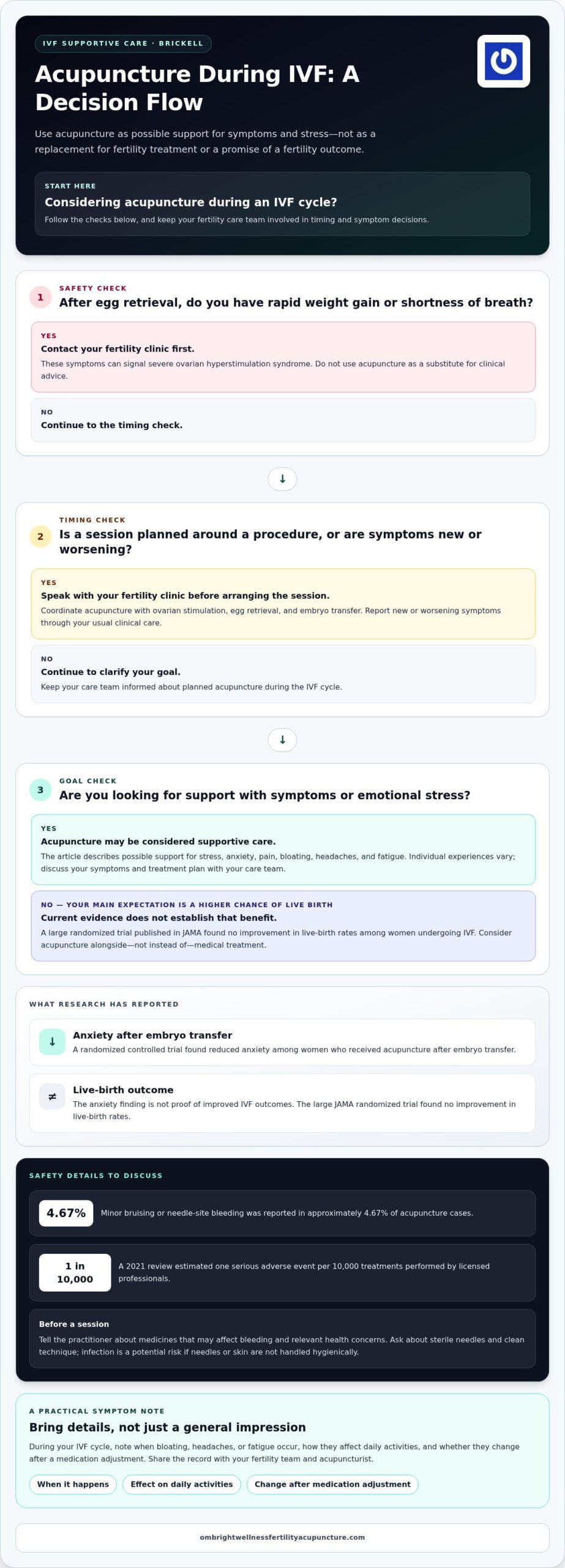
Acupuncture for IVF side effects in Brickell may offer supportive care for symptoms such as bloating, headaches, fatigue, and treatment-related stress, but it has not been shown to improve live-birth rates. A large randomized trial published in JAMA found no improvement in live-birth rates among women undergoing IVF. Acupuncture is best considered alongside, not instead of, medical treatment.
It’s understandable to look for ways to feel more comfortable during IVF, especially when medication effects and uncertainty add to an already demanding process. A randomized trial found reduced anxiety among women who received acupuncture following embryo transfer, though individual experiences vary.
This guide covers what acupuncture may help with, how sessions can fit around stimulation, egg retrieval, and embryo transfer, and what to consider about insurance and costs, without promising a fertility outcome. It also explains why timing and coordination with your IVF care team matter when deciding whether this supportive approach suits your treatment plan.
Key Takeaways
- Acupuncture can be considered supportive care for IVF-related stress and symptoms, not a replacement for fertility treatment.
- Research on whether acupuncture improves IVF success is mixed, so symptom support and treatment outcomes are worth considering separately.
- Session timing can be coordinated with ovarian stimulation, egg retrieval, embryo transfer, and the two-week wait.
- Discuss acupuncture with your fertility care team so its timing and approach fit your IVF plan.
- Learn what to consider about insurance coverage and how treatment plans can be tailored to your symptoms and IVF stage.
Can reducing stress improve IVF outcomes?
Acupuncture may support emotional well-being and uterine blood flow during fertility treatment, but research has not established that reducing stress improves pregnancy chances. Studies suggest possible benefits for anxiety and pain, which may make demanding IVF stages easier to manage.
Stress During Fertility Treatment
Acupuncture is thought to ease stress by influencing the sympathetic nervous system, which helps regulate the body’s stress response. A systematic review found that most studies examining acute and chronic stress across IVF stages associated stress with poorer outcomes. However, strong research evidence does not show that reducing stress itself increases the chance of pregnancy.
During the two-week wait, anxiety, poor sleep, and repeated symptom-checking can affect emotional well-being. Acupuncture may provide a structured moment of care during this uncertain time, while counseling or other emotional support can address needs beyond a treatment session.
Proposed Hormone and Blood Flow Effects
Researchers propose that acupuncture may influence the autonomic nervous system and the HPA axis, which can affect cortisol and reproductive hormones. A study of women experiencing infertility found that acupuncture reduced uterine artery impedance, a measure of resistance that may affect blood flow to the uterus. These findings suggest possible physiological effects, not proof of improved IVF outcomes.
To verify an acupuncturist’s Florida license, request their license details and match the practitioner’s name through Florida’s official license lookup. Ask about their fertility-treatment experience, including care during stimulation, retrieval, and transfer.
Anxiety and Pain Around Embryo Transfer
Embryo transfer can bring anxiety, stress, and physical discomfort at a particularly concentrated point in treatment. A randomized controlled trial found reduced anxiety after embryo transfer among women who received acupuncture. In a retrospective study at University Hospitals Connor Whole Health and UH Fertility Center, patients reported less anxiety, stress, and pain after a single treatment session.
Minor bruising or needle-site bleeding was reported in approximately 4.67% of acupuncture cases. A 2021 review estimated one serious adverse event per 10,000 acupuncture treatments performed by licensed professionals. Infection is a potential risk if needles or skin aren’t handled hygienically, so ask about sterile needles and clean technique before treatment.
These findings support considering acupuncture for comfort and stress support, not as a substitute for IVF care. A large randomized controlled trial published in JAMA found no improvement in live-birth rates among women undergoing IVF. Tell your fertility team about planned acupuncture sessions, especially around procedures, and report new or worsening symptoms through your usual clinical care.
How Much Does Fertility Acupuncture Cost, and Is It Covered by Insurance?
Insurance coverage for acupuncture depends on the terms of your individual plan. Before booking, review your benefits or call the member-services number on your insurance card. Ask whether acupuncture is covered, whether fertility-related care is treated differently, and what documentation your plan requires. Record the representative’s guidance and the date of your call for reference.
Ask whether your plan requires an in-network practitioner, a referral, or prior authorization. These details can affect how you arrange care, even when acupuncture appears in your benefits. If your plan asks for a treatment description or diagnosis, clarify what documentation it accepts rather than assuming general acupuncture coverage also applies to fertility care.
To explore possible relief from medication effects, keep a brief symptom record during your IVF cycle. Note when bloating, headaches, or fatigue occur, how they affect daily activities, and whether they change after a medication adjustment. Bringing this record to appointments gives your fertility team and acupuncturist specific details to discuss, rather than relying on memory during a busy treatment visit.
Acupuncture can cause minor bruising or bleeding at a needle site. Before treatment, tell the practitioner about medicines that may affect bleeding and any relevant health concerns. This information helps the practitioner understand your situation and plan the session appropriately.
Speak with your fertility clinic before arranging acupuncture around procedures or if new symptoms arise during treatment. After egg retrieval, rapid weight gain or shortness of breath can signal severe ovarian hyperstimulation syndrome. Contact the fertility clinic first about these symptoms.
For a useful coverage conversation, have your plan details and IVF calendar available. Ask about acupuncture benefits, fertility-related restrictions, referrals, authorization, and required records. Keeping these questions together can make it easier to understand your coverage and plan appointments around treatment.
If you’re considering acupuncture alongside IVF, fertility acupuncture support can be part of a discussion about your symptoms and treatment schedule.
Confirm the fee before scheduling and compare it with the coverage details in your plan. Acupuncture may offer supportive care alongside medical IVF treatment, but it should not replace it. Discuss how it fits your care with your fertility team, especially when considering symptom relief during a treatment cycle. Clear expectations about cost and acupuncture’s role can help you decide whether to include sessions in your IVF care.
Timing acupuncture around IVF stimulation, retrieval, and transfer
Acupuncture is generally considered safe during IVF when performed by a licensed, experienced practitioner, with timing coordinated around treatment. A common transfer schedule includes a session on embryo-transfer day or within 24 hours of transfer.
Acupuncture During IVF Stimulation and Retrieval
During ovarian stimulation, acupuncture appointments can be planned around medication schedules, monitoring visits, and symptoms such as tension or discomfort. Because the ovaries respond to stimulation, tell the acupuncturist which IVF stage you’re in and share any instructions from your fertility clinic.
A session within 24 hours before or after egg retrieval is one timing approach described for IVF care. Patients should avoid aggressive acupuncture techniques or excessive stimulation, especially around the abdomen. The clinic’s procedure instructions take priority when arranging an appointment before or after retrieval.
Acupuncture sessions during IVF may involve resting with needles in place for 20-30 minutes. That time can provide a quiet pause during a schedule shaped by medication and monitoring, but the treatment should remain supportive rather than interfere with retrieval preparation or recovery.
Treatment Before Embryo Transfer
Before embryo transfer, acupuncture may be scheduled in the period leading up to the procedure, with the appointment planned around the fertility clinic’s calendar. This can help patients arrange care without adding unnecessary pressure to transfer preparation.
Because transfer dates can depend on the IVF cycle, share the expected schedule as it develops. If the clinic changes the procedure date, adjust the acupuncture appointment accordingly. Avoid strong stimulation or abdominal techniques near the procedure, and follow any specific clinic instructions about activity or treatment timing.
Acupuncture is an adjunct to IVF, not a substitute for embryo-transfer care. Keep prescribed medications and clinic appointments unchanged unless your fertility team directs otherwise. A clear schedule helps prevent confusion about which instructions apply before transfer.
Acupuncture on Transfer Day
Some patients schedule acupuncture on embryo-transfer day, while another option is an appointment within 24 hours of transfer. In a comparison group described in the research, participants received two acupuncture treatments on transfer day. That study schedule is an example, not a requirement for every patient.
Practical planning matters on transfer day: confirm the procedure time with your fertility clinic, allow enough time for travel and appointments, and avoid a rushed schedule. Ask the clinic how acupuncture can fit around the transfer itself, and keep the practitioner informed of any timing changes.
After transfer, the fertility team remains responsible for the embryo’s care. Acupuncture appointments in the following days should follow the clinic’s instructions and account for your comfort. Whether a session takes place before or after transfer, coordination helps keep supportive care aligned with the IVF plan.
Acupuncture During IVF: Can It Boost Your Chances of Success?
Acupuncture schedules during IVF may range from preparation before treatment to repeated sessions during the cycle. Research findings on whether acupuncture improves IVF success rates are mixed, so frequency should reflect treatment timing and the support you’re seeking.
Treatment Frequency and Session Volume
Session volume describes how often acupuncture is scheduled across an IVF cycle, rather than relying on one appointment. The clinic’s suggested schedule includes 4-12 sessions during the IVF cycle, with 1-2 sessions per week during ovarian stimulation. During the luteal phase of the two-week wait, the suggested schedule includes 1-2 sessions.
One clinic identifies 13 to 15 sessions as a meaningful threshold for fertility benefits, but this is not a proven success-rate cutoff. A treatment plan may change from week to week as stimulation, retrieval, and the two-week wait bring different symptoms and needs.
Timing Within IVF Treatment
Acupuncture timing can follow the phases of IVF, from preparation through stimulation and transfer. Beginning about 3 months before IVF is the clinic’s preparation recommendation; preparation has also been done in as little as 1 month before IVF.
The schedule can reflect how soon treatment is approaching. With more lead time, patients may plan regular sessions before the cycle; those starting closer to IVF can discuss a shorter preparation period. Tell your fertility doctor about acupuncture so the schedule fits your medical treatment plan.
Rather than assuming a particular number of sessions ensures implantation, consider what each appointment is intended to support. For example, a session during stimulation may focus on current symptoms, while one during the two-week wait may center on comfort and emotional support.
What to Expect From Treatment
An acupuncture session during IVF may involve resting with needles in place for 20-30 minutes. The practitioner chooses points based on the treatment stage and the concerns discussed, such as stress during stimulation or support around transfer.
Make each visit more relevant by bringing an updated IVF calendar and noting changes since the previous session. If a retrieval or transfer date shifts, share the new timing before your next appointment. This gives the practitioner a clear basis for adjusting the plan.
Discuss your goals with the acupuncturist and fertility doctor at the start. Ask how the proposed frequency relates to your IVF schedule, what each session is intended to address, and how the plan may change between stimulation and the two-week wait.
Regular treatment may provide more consistent support across IVF stages than a single appointment on procedure day, but current research has not established that acupuncture increases the chance of pregnancy. Treat session frequency as a planning choice, not a substitute for prescribed treatments or a measure of reproductive success.
How acupuncture may support IVF
Acupuncture may support an IVF cycle through symptom care, stress support, and possible effects on uterine blood flow. These proposed benefits are distinct from evidence that treatment increases pregnancy or live-birth rates. The practical takeaway: consider acupuncture complementary care, not a way to guarantee success or replace fertility treatment.
One proposed mechanism involves uterine artery impedance, or resistance that may affect blood flow to the uterus. A study of women experiencing infertility found reduced impedance after acupuncture. Researchers have also explored possible effects on uterine contractions and the autonomic nervous system. These findings describe potential biological pathways, not proof that acupuncture changes implantation or pregnancy outcomes for every patient.
Other findings relate to specific reproductive conditions, rather than all IVF patients. A meta-analysis of 15 studies involving 1,029 people with recurrent implantation failure associated acupuncture and moxibustion with a clinical pregnancy relative risk of 1.84 and a live-birth relative risk of 2.39. Those results apply to the studied group and treatment combination; they shouldn’t be treated as a prediction for an individual IVF cycle.
For PCOS, a systematic review of 53 randomized controlled trials involving 4,406 people reported a SUCRA score of 76.6% for acupuncture therapies’ pregnancy-rate outcomes. A clinical cohort reported ovulation among 77.97% of acupuncture patients, compared with 49.74% of controls. Ovulation findings don’t establish that acupuncture improves IVF success, since IVF involves stimulation, egg retrieval, fertilization, and transfer.
Laser acupuncture has also been studied around embryo transfer. A randomized controlled trial published in Fertility and Sterility associated laser acupuncture before and after transfer with improved implantation rates. Laser acupuncture uses low-level light to stimulate acupuncture points without inserting needles. This differs from needle acupuncture, and implantation findings alone do not establish a higher live-birth rate.
Acupuncture may be relevant for supportive goals, such as easing stress or exploring possible effects on uterine blood flow, while the fertility clinic manages IVF medications and procedures. Tell your fertility doctor about any sessions so timing and techniques align with care for the uterus and ovaries. Study results vary by population, intervention, and outcome measured. When considering acupuncture, distinguish symptom support from claims about pregnancy chances, and weigh the evidence in the context of your treatment.
The author compared five years of data on women who underwent IVF alone with women who added acupuncture during IVF treatment. A U.S. academic fertility center study examined nearly 1,900 acupuncture treatments delivered alongside IVF.
Ombright Wellness Fertility Acupuncture: Fertility Acupuncture
Ombright Wellness Fertility Acupuncture offers Fertility Acupuncture as supportive care alongside an IVF plan. You can discuss sessions around stimulation, egg retrieval, or embryo transfer, with your treatment stage and concerns shaping the conversation. Acupuncture complements fertility care; it does not replace IVF medication or procedures.
Working with an NCCAOM-Certified Diplomate of Acupuncture gives you a qualified acupuncture professional to discuss your goals and treatment experience. Share your IVF schedule and coordinate planned sessions with your fertility team, especially when procedure dates change. This can help keep supportive care aligned with your clinical plan.
To explore Fertility Acupuncture as part of your IVF support, contact Ombright Wellness Fertility Acupuncture.
Choose the Support That Fits Your Next Step
As you plan the next stage of IVF, consider what kind of support would feel useful alongside your medical care. If you’re considering acupuncture for IVF side effects in Brickell, bring your treatment schedule and questions to your consultation, including how sessions might fit around upcoming appointments. Acupuncture is supportive care, not a substitute for your fertility team’s treatment plan.
Ombright Wellness Fertility Acupuncture also offers Fertility IV Therapy and Fertility Ozone Therapy. These additional options can be discussed as part of your fertility care, with your needs and existing treatment plan guiding what makes sense to explore.
When you’re ready to talk through supportive care, contact Ombright Wellness Fertility Acupuncture. You can take the next step thoughtfully, with your questions at the center of the conversation.
Frequently Asked Questions
But Does It Work?
Acupuncture may offer supportive care for parts of the IVF experience, but it cannot promise a particular result. If you’re considering acupuncture for IVF side effects in Brickell, define what you hope to address, such as treatment discomfort or feeling more settled before appointments. Keep that goal specific, then discuss whether acupuncture fits alongside your prescribed care and personal preferences.
What Does the Research Say?
Research findings depend on who participated, which acupuncture method was used, and what outcome investigators measured. When reviewing a study, look for details about participants’ treatment stage and whether the result concerns symptoms or fertility outcomes. These distinctions can help you judge how closely a study relates to your IVF plan, rather than treating every acupuncture study as evidence for the same benefit.
Does acupuncture improve IVF success rates according to clinical studies?
Clinical studies have not established acupuncture as a reliable way to increase IVF success rates. To interpret a claim, check what the study counted as success, whether it followed participants through the same treatment stage, and whether its acupuncture schedule resembles the care you’re considering. These details put reported results in context without treating them as personal predictions.
How can I plan acupuncture visits during IVF in Brickell, Miami?
Start with your IVF calendar and identify appointments that may affect travel, rest, or recovery. Then consider whether acupuncture would fit comfortably around those commitments, rather than adding pressure to an already full schedule. For acupuncture for IVF side effects in Brickell, share schedule changes with the practitioner and keep your fertility clinic’s instructions central as plans develop.
Do Brickell IVF acupuncture clinics accept insurance?
Insurance coverage depends on the terms of your individual plan. Ask your insurer whether acupuncture is covered, whether fertility-related visits have separate rules, and whether you need a referral, authorization, or specific documentation. Confirm what records to keep and how claims are handled before arranging care. This can help you understand your benefits without assuming general acupuncture coverage applies to every fertility-related visit.