
An IV drip bypasses digestion, but that alone doesn’t show that it improves egg health. IV nutrient therapy for egg health in Coconut Grove delivers nutrients directly into the bloodstream; evidence for IV therapy as a general wellness treatment in otherwise healthy people remains insufficient. It is best viewed as a possible adjunct to nutrition, supplements, and prescribed care, not a replacement.
When weighing this option, it’s reasonable to want clear information about potential benefits and risks. This article explains how IV nutrient therapy works, what is known about its relationship to reproductive health, and why individual health factors matter. It also considers how the therapy may fit alongside nutrition, supplements, and medication, so you can better understand what it can and cannot offer.
Key Takeaways
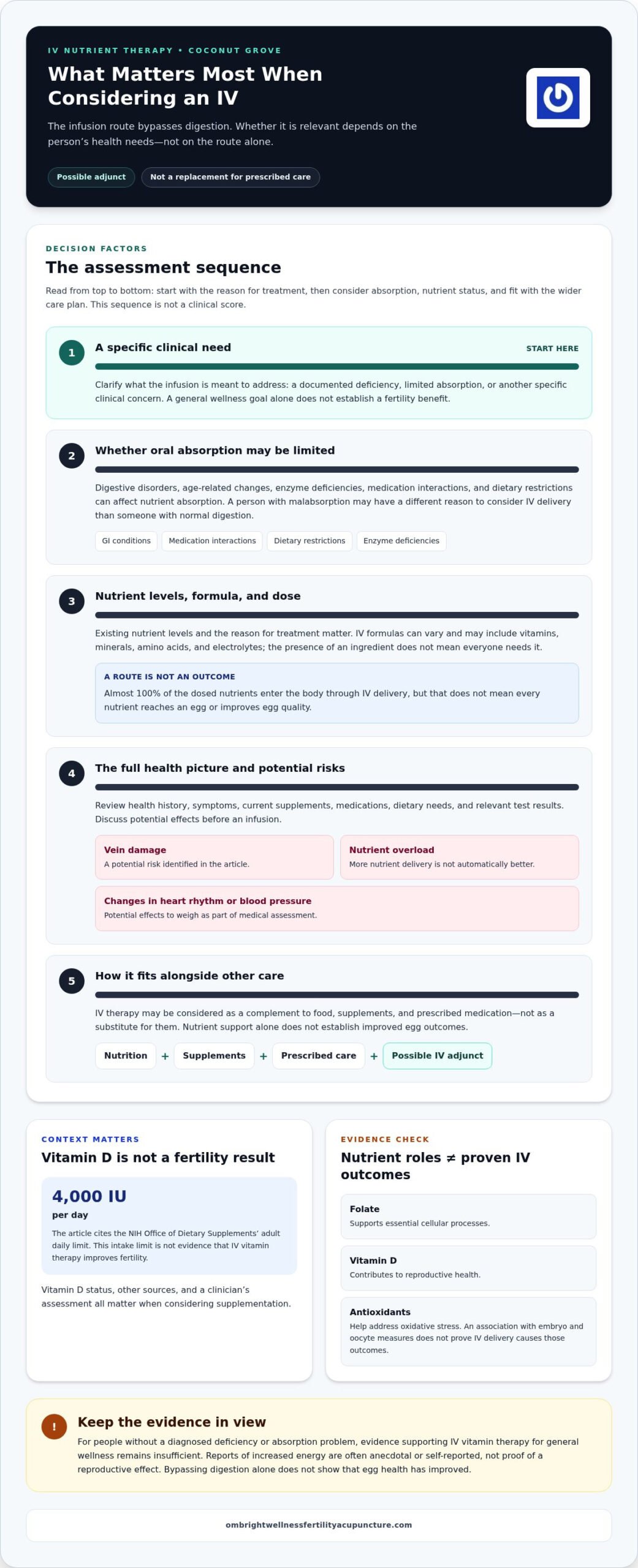
- Consider IV nutrients in the context of your health needs, especially when absorption or a documented deficiency is a concern.
- Learn how folate, vitamin D, and antioxidants relate to reproductive health, and why nutrient support alone doesn’t establish better egg outcomes.
- Review potential effects such as vein damage, nutrient overload, and changes in heart rhythm or blood pressure before considering an infusion.
- Use IV therapy as a possible complement to food, supplements, and prescribed medication, not as a replacement for them.
- Explore how Fertility IV Therapy and Fertility Acupuncture can fit into an individualized fertility-support plan.
Is IV vitamin therapy worth trying?
An IV infusion delivers vitamins, minerals, and amino acids through a vein into the bloodstream. Unlike a tablet, it bypasses digestion and the gastrointestinal system. For example, vitamin C in an infusion enters circulation without first being absorbed through the intestines. In Coconut Grove, IV nutrient therapy for egg health may be considered when a specific clinical need makes nutrient absorption relevant. The delivery route alone does not establish a fertility benefit.
Oral absorption varies with digestive efficiency, gastrointestinal disorders, age-related changes, enzyme deficiencies, medication interactions, and dietary restrictions. A person with a malabsorption condition may process an oral supplement differently from someone with normal digestion. Dietary fiber can also bind zinc, iron, and magnesium, reducing their availability for absorption. Calcium and magnesium share intestinal transport pathways, so high doses of one may interfere with absorption of the other. These factors help explain why blood levels and nutrient status can differ between people.
IV delivery avoids those intestinal steps and places the prescribed dose directly into circulation. Almost 100% of the dosed nutrients enter the body, but that doesn’t mean every nutrient reaches an egg or produces a fertility benefit. The body still regulates distribution, use, and removal. A high blood level after an infusion isn’t proof of improved egg quality. Nutrient needs, existing levels, the formula, and the reason for treatment all shape its relevance.
Vitamin D illustrates why route and dose need context. According to the National Institutes of Health, Office of Dietary Supplements, adults can safely take up to 4,000 international units (IU) of vitamin D per day. That daily limit concerns intake, not evidence that IV vitamin therapy improves fertility. Vitamin D status, other sources of the vitamin, and a clinician’s assessment matter when considering supplementation.
For people without a diagnosed deficiency or absorption problem, evidence supporting IV vitamin therapy for general wellness remains insufficient. Reports of increased energy are often anecdotal or self-reported, rather than proof of a reproductive effect. In fertility care, an infusion shouldn’t be treated as a shortcut around nutrition, prescribed supplements, or medication. Bypassing digestion also doesn’t show that stress, inflammation, or other influences on egg health have been addressed.
A practical first step is to identify the concern an infusion is meant to address: a known deficiency, limited absorption, or another specific clinical need. Relevant details include current supplements, medications, digestive conditions, and available nutrient results. Someone with poor oral absorption, for example, may have a different reason to consider therapy than someone seeking general wellness despite adequate levels. For IV nutrient therapy for egg health in Coconut Grove, these distinctions help clarify its place in a broader fertility plan.
How Do Vitamin IV Injections and Infusions Support Women’s Wellness & Reproductive Health?
IV vitamin therapy can deliver selected nutrients into the bloodstream, but its reproductive role depends on the nutrient and the person’s needs. Folate, vitamin D, antioxidants, and other nutrients each have distinct functions.
Folate, Vitamin D, and Antioxidants
Folate supports essential cellular processes, vitamin D contributes to reproductive health, and antioxidants help address oxidative stress. These nutrients are important to overall health, but they are not a proven formula for improving egg quality. Antioxidant intake has been linked to higher-quality embryo rates and more retrieved oocytes in older women. That association does not establish that IV delivery causes those outcomes.
Medical Assessment Before Therapy
Medical assessment involves reviewing symptoms, expectations, health history, and nutrient needs before selecting an infusion. This matters because a person with a documented deficiency or malabsorption may have a different reason for treatment than someone seeking general wellness. Current supplements, medications, dietary restrictions, and relevant test results can help guide the discussion. An assessment also allows the care team to consider potential side effects and whether an IV approach fits the specific concern.
Vitamins, Minerals, and Electrolytes
IV formulas may contain vitamins, minerals, amino acids, and electrolytes, with combinations varying between providers. B-complex vitamins, magnesium, and zinc play roles in hormone regulation, while vitamin C and zinc can support immune defenses. Their presence in an infusion doesn’t mean everyone needs them. The purpose of each ingredient, its dose, and a person’s existing nutrient levels all matter when deciding what belongs in a formula.
Deficiencies can have various causes. Limited dietary variety, restrictive eating patterns, medication interactions, enzyme deficiencies, and gastrointestinal conditions can affect nutrient intake or absorption. Someone with a digestive disorder, for example, may not absorb nutrients from food or oral supplements as expected. Age-related absorption changes can also affect nutrient status. Identifying the likely cause helps distinguish a specific nutritional need from a general desire for more energy or fertility support.
Vitamin C illustrates the difference between a nutrient’s biological role and a treatment claim. It supports immune function, and IV therapy delivers it directly into circulation. That route may be relevant when absorption is limited, but it doesn’t establish that an infusion prevents illness or improves fertility outcomes. The same applies to antioxidants: the nutrient’s function, a person’s levels, and the clinical goal should guide the discussion.
For a clearer discussion of how nutrient support fits into fertility care, consider an individualized fertility assessment that takes symptoms, nutrition, medications, and relevant test results into account.
Risks and side effects
IV nutrient therapy delivers vitamins, minerals, or amino acids through a vein and into the bloodstream. For egg health, this describes a delivery method, not a proven fertility treatment. Evidence for IV nutrient therapy as general wellness care in otherwise healthy people remains insufficient. Large, long-term clinical trials are needed to assess safety and effectiveness outside hospitals.
When considering a fertility IV clinic in Florida, relevant safety markers include oversight by a licensed medical director and clear information about how each mixture is formulated. The U.S. Food and Drug Administration has warned about the safety of IV mixtures offered by hydration clinics and spas. Oversight and transparent formulation matter because nutrient combinations and doses can vary between providers.
Current evidence doesn’t establish that IV vitamin therapy improves egg quality or ovarian reserve. An infusion may address a specific nutrient need, but that differs from demonstrating a change in ovarian function or fertility outcomes. Claims about mental clarity, reduced fatigue, or increased energy also don’t establish a reproductive benefit, particularly when effects are self-reported rather than supported by strong clinical evidence.
Possible reactions include flushing, hot flashes, chills, excitability, changes in blood pressure, and heart arrhythmias. These effects can occur during or after nutritional IV therapy, so symptoms during an infusion deserve attention. Repeated treatments may also contribute to nutrient overload or vein damage. Hydration needs and infusion contents matter, since excess amounts of particular nutrients can cause problems rather than correct a deficiency.
Some health conditions call for particular caution. People with heart disease, high blood pressure, kidney disease, or pregnancy should consult a healthcare provider before trying IV vitamin therapy. The article also advises against IV nutrient therapy for people with certain conditions, including heart arrhythmias. Kidney function matters because the body must process and remove many nutrients; heart conditions are relevant because infusions can affect fluid balance or circulation.
Oral supplements and IV mixtures can both add nutrients, but the vein route has its own risks. A formula containing several vitamins, minerals, and amino acids, for example, can expose someone to ingredients they don’t need. Reviewing current medications, supplements, health conditions, and the planned formula can help identify possible interactions or excess intake before treatment begins.
Fatigue or difficulty concentrating can have many causes, including sleep disruption, illness, medication effects, or a nutrient deficiency. An IV infusion shouldn’t be treated as proof of the cause or as a reliable remedy for mental clarity. A focused assessment can distinguish a specific need, such as limited absorption, from a general wellness claim. Discussing expected effects, side effects, and the evidence behind each ingredient supports a more informed decision.
Does Getting Nutrients Through an IV Drip Work?
Fertility patients may have low levels of folic acid, B vitamins, vitamin C, other antioxidants, or glutathione. Because these nutrients have distinct roles, the first useful question is which deficiency or health concern a formula aims to address. Fatigue alone, for example, doesn’t identify a specific nutrient deficiency. Symptoms, diet, medications, and relevant test results help shape a more meaningful assessment.
Common IV formulations combine several nutrients rather than providing a single vitamin. A Myers cocktail commonly contains magnesium, calcium, vitamin C, and B-complex vitamins. Some IV nutrient combinations are promoted for wellness purposes, but their intended use doesn’t establish a fertility benefit. These intended uses don’t establish that the formula corrects a deficiency or improves fertility for every patient.
Formulas can differ substantially. Vitamin and mineral combinations and doses vary widely between providers, and standardized guidelines or individualized assessments may not be used consistently. A tailored approach links each ingredient to a specific need, such as a measured deficiency or limited absorption. It also helps avoid treating a broad goal, such as wellness, as though it were a diagnosis.
Glutathione and other antioxidants are included in some nutrient approaches because of their role in addressing oxidative stress. Antioxidant intake has been linked to higher-quality embryo rates and more retrieved oocytes in older women. That association doesn’t show that an IV infusion causes those outcomes. The formulation, dose, a patient’s nutrient status, and other fertility care all affect how relevant this evidence is.
Some IV combinations, including Myers cocktail variations, may be associated with reduced tissue inflammation. That possibility is distinct from proof of improved egg quality. A practical review considers the exact ingredients, the reason for each, and how the infusion fits with food and oral supplements. Patients can also note whether an ingredient duplicates a supplement they already take, especially when several products contain overlapping vitamins.
IV nutrient therapy is also promoted for goals beyond fertility, including weight loss, but those claims should be considered separately. Evidence for sustained weight loss from MIC/B12 treatments alone is mixed; an injection or infusion shouldn’t be treated as a substitute for broader nutrition care. For fertility, the more relevant question is whether a specific deficiency exists and whether the selected route addresses it. That distinction keeps a nutrient treatment focused on a health need rather than a generalized promise.
IV therapy as an adjunct to nutrition, supplements, and medication
IV nutrient therapy belongs alongside everyday nutrition and prescribed care, not in place of them. An infusion cannot replace a healthy diet or prescribed medication. Someone taking fertility medication, for example, should follow that treatment plan rather than treating an IV nutrient blend as an equivalent. A clear adjunct role starts by identifying the intended goal, such as addressing a diagnosed deficiency or supporting care when absorption is limited.
Food remains the foundation because it provides nutrients as part of meals, alongside energy and other dietary components. Supplements can address specific nutritional needs, while medication treats conditions according to its prescribed purpose. An IV infusion adds another route for nutrient delivery. Keeping these roles distinct helps prevent duplicated ingredients and unclear goals. Before treatment, compare the infusion formula with current supplements, meals, and medications.
Ingredient overlap deserves attention. A Myers cocktail, for example, commonly contains magnesium, calcium, vitamin C, and B-complex vitamins. Anyone already taking supplements with overlapping ingredients should account for both sources when considering a formula. This makes the full ingredient list relevant, not just the infusion’s name. The dose and purpose of each nutrient should fit the person’s needs.
Energy is another common concern. Patients with chronic fatigue report increased energy after nutrient IVs containing vitamin B12 and folate, nutrients implicated in red blood cell production. That report describes a perceived benefit, not proof that an infusion treats the cause of fatigue or improves egg health. Fatigue can have different causes, so the symptom alone doesn’t show which nutrient or treatment is appropriate.
Nutrition, oral supplements, and IV therapy deliver nutrients in different ways. Oral absorption can be affected by digestive conditions and medication interactions, while IV delivery bypasses the gastrointestinal tract. This route may be relevant when absorption is limited, but it doesn’t make food or oral supplements unnecessary. Comparative effectiveness studies are needed to assess IV nutrients against oral supplementation and dietary changes. For fertility decisions, compare the intended benefit with the evidence for that specific outcome.
Magnesium and other nutrients support normal body functions, including metabolism, but their presence in an infusion doesn’t establish that the formula will improve reproductive outcomes. Nutrients and electrolytes may support healing and circulation after surgery, a use distinct from routine fertility care. A practical plan coordinates nutrition, supplements, medication, and any infusion around a defined health goal.
If you’re considering IV support as one part of fertility care, discuss an integrated fertility plan that accounts for nutrition, supplements, and prescribed treatment.
Ombright Wellness Fertility Acupuncture: Fertility Acupuncture
Ombright Wellness Fertility Acupuncture offers Fertility Acupuncture as supportive care for people navigating conception or fertility treatment. This specialized form of acupuncture focuses on reproductive health and may support blood flow, hormone balance, and stress reduction. It can be part of a broader conversation about care, alongside nutrition, medication, and decisions about Fertility IV Therapy.
Care is provided by an NCCAOM-Certified Diplomate of Acupuncture. Consider discussing acupuncture as part of your fertility support plan, or how supportive care can complement existing treatment. It doesn’t replace prescribed medication or fertility care from your medical team.
For a calm next step, contact Ombright Wellness Fertility Acupuncture or visit ombrightwellnessfertilityacupuncture.com.
Choose a Next Step That Fits Your Fertility Goals
Fertility decisions can feel easier to manage when the next step is specific. Before adding an infusion, consider what you want support with, what questions remain, and how a new therapy would fit alongside your current care. This keeps the conversation focused on your priorities rather than a general promise of better egg health.
If you’re considering IV nutrient therapy for egg health in Coconut Grove, bring questions about the intended nutrient formula, your current supplements, and how the approach may complement your fertility plan. A thoughtful discussion can help clarify which supportive options suit your needs and which questions to raise with your medical team.
Ombright Wellness Fertility Acupuncture offers a welcoming place to explore fertility support. Contact Ombright Wellness Fertility Acupuncture to discuss your next step. You can move forward at a pace that feels informed, considered, and right for you.
Frequently Asked Questions
What Is IV Nutritional Therapy, and Should You Try It?
IV nutritional therapy delivers nutrients through a vein, and whether it fits depends on your health needs and treatment goals. A documented absorption concern, for example, gives the conversation a clearer focus than a general wish to improve wellness. Before considering an infusion, identify the outcome you hope to support and how it would fit with current fertility care. It should not replace prescribed treatment.
Should certain people avoid IV vitamin therapy?
People with heart disease, high blood pressure, kidney disease, pregnancy, or certain heart rhythm conditions should approach IV vitamin therapy cautiously. Before discussing an infusion, prepare a complete list of medications, supplements, and known conditions. Kidney function can affect how the body handles nutrients, while heart conditions may affect whether an infusion is suitable. New symptoms during treatment, such as heartbeat changes, warrant prompt attention.
What Is Fertility IV Therapy?
Fertility IV Therapy is an intravenous service intended to provide nutrient support as part of fertility care. It may be considered in relation to a specific concern, rather than as a stand-alone promise of conception. For readers in Coral Gable, Kendall, Cutler Bay, Homestead, Pincrest, Miami, Coconut Grove, South Beach, Brickel, or Key West, the key is understanding how supportive care fits existing fertility treatment and personal health priorities.
What nutrients are commonly included in fertility IV drips, and what doses are used?
Fertility IV drips may contain folate, B vitamins, vitamin C, magnesium, zinc, antioxidants, or glutathione. Ingredients and amounts vary by formulation, so a single dose cannot apply to every patient. Ask for the full ingredient list and amount of each nutrient. Comparing those details with supplements already being taken can help identify overlapping ingredients and clarify the purpose of each component.
What are the risks and side effects of IV nutrient therapy for fertility?
Possible effects include flushing, chills, hot flashes, excitability, blood pressure changes, or heart arrhythmias. Repeated infusions may also contribute to nutrient overload or vein damage. Before treatment, share your health history and current supplements so potential concerns can be considered. During an infusion, report unexpected symptoms rather than assuming they are normal. More long-term clinical study is needed on elective IV therapy’s safety and effectiveness outside hospital settings.
Who should avoid fertility-focused IV nutrient therapy?
People with heart arrhythmias, heart disease, high blood pressure, kidney disease, or pregnancy should seek medical guidance before fertility-focused IV nutrient therapy. Beforehand, list current medications, supplements, and relevant diagnoses. This gives the care team a clearer view of potential ingredient overlap and health considerations. If a specific condition affects nutrient handling or circulation, that should shape the decision about an infusion.
How does IV nutrient therapy compare with oral supplements and fertility treatments?
IV nutrient therapy delivers nutrients through a vein, oral supplements are taken by mouth, and fertility treatments address reproductive goals. An IV route may be considered when absorption is limited, but it doesn’t replace meals, prescribed medication, or fertility treatment. Someone following a medication plan for ovulation, for example, should keep that care distinct from nutrient support. Compare each option by its purpose and fit with the overall plan.
What questions should patients ask a provider before starting fertility IV therapy?
Ask what each ingredient is intended to address, how the formula is selected, and who oversees the infusion service. Request the amount of each nutrient and compare it with your supplements and medications. It’s also useful to ask what evidence supports the intended fertility goal, which symptoms to report during treatment, and how the infusion fits with current care. Clear answers help you make a considered decision based on your priorities.