
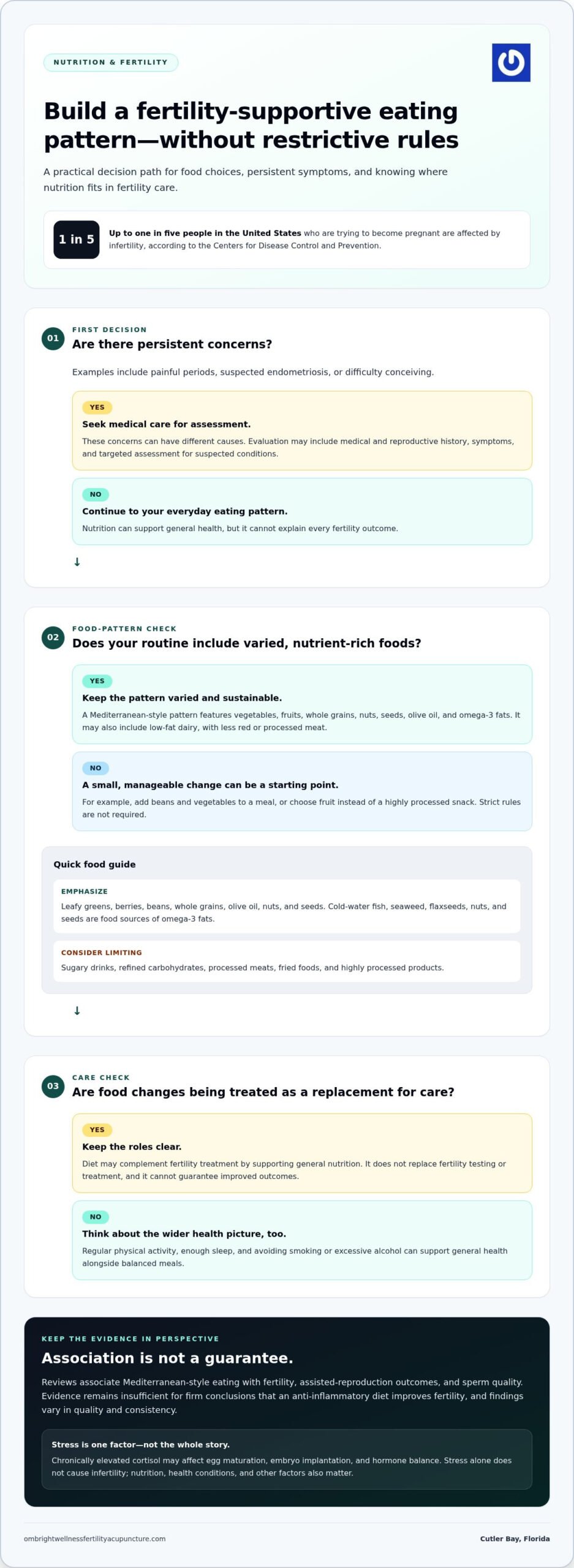
Food choices can support fertility, though they don’t tell the whole story. For people in Cutler Bay, reducing inflammation for better fertility may include a Mediterranean-style eating pattern rich in vegetables, fruits, whole grains, nuts, seeds, olive oil, and omega-3 fats. These patterns are associated with improved fertility and sperm quality, but evidence on anti-inflammatory diets remains insufficient for firm conclusions.
If you’re trying to conceive, it’s understandable to wonder whether everyday habits can make a difference. A thoughtful approach can help you focus on realistic changes without expecting one food or diet to resolve every fertility concern.
This article explains how inflammation and cortisol may relate to reproductive health, which foods and oils are worth limiting, and where omega-3 fats fit. You’ll also learn why balanced, sustainable choices are more useful than restrictive rules, and how nutrition can be considered alongside the wider factors that shape fertility.
Key Takeaways
- A Mediterranean-style pattern with vegetables, whole grains, nuts, seeds, olive oil, and omega-3 fats is associated with fertility benefits, though evidence isn’t conclusive.
- Chronic stress and elevated cortisol may affect hormone balance, egg maturation, and implantation, making stress support part of a broader fertility plan.
- Consider limiting sugary drinks, refined carbohydrates, processed meats, fried foods, and highly processed products as you review your eating habits.
- Explore food sources of omega-3 fats, including cold-water fish, seaweed, flaxseeds, nuts, and seeds.
- Inflammation can have many causes, so notice persistent symptoms and consider how underlying health conditions may relate to reproductive health.
Could an anti-inflammatory diet improve fertility?
An anti-inflammatory eating pattern may support fertility, but it can’t guarantee improved outcomes. In Cutler Bay, reducing inflammation for better fertility may involve everyday nutrition and lifestyle habits alongside appropriate medical care.
Florida insurance coverage for fertility testing or treatment depends on the policy and the specific service. Review your plan’s fertility benefits to understand what it covers. Seek medical care for persistent painful periods, suspected endometriosis, or difficulty conceiving, as these concerns can have different causes.
Diet and Fertility Outcomes
An anti-inflammatory diet emphasizes nourishing foods while limiting highly processed choices. Diet and physical activity are lifestyle factors associated with fertility, though nutrition alone can’t explain every outcome.
A Mediterranean-style pattern includes vegetables, fruits, whole grains, nuts, seeds, low-fat dairy, and olive oil. Reviews associate this pattern, including greater intake of monounsaturated and omega-3 fats and less red or processed meat, with fertility, assisted-reproduction outcomes, and sperm quality. Still, evidence remains insufficient for firm conclusions about whether an anti-inflammatory diet improves fertility.
Build meals around leafy greens, berries, beans, whole grains, and olive oil. Colorful produce and seasonings such as turmeric, ginger, and garlic provide antioxidants that help neutralize free radicals. Regular movement and balanced meals can support overall health before conception.
A Paleo diet is another whole-food approach. Foods in this pattern include meat, eggs, vegetables, legumes, nuts, seeds, and fruit. Since eating approaches differ, prioritize a sustainable pattern with varied, nutrient-rich foods rather than strict rules.
Diet Alongside Fertility Treatment
Diet can complement fertility treatment by supporting general nutrition, but it doesn’t replace clinical care. This distinction helps you approach lifestyle changes realistically while pursuing treatments such as IVF.
Reviews associate Mediterranean-style eating with improved assisted reproductive technology outcomes, including IVF success, but findings vary in quality and consistency. They don’t show that diet alone causes a successful cycle or implantation. The Centers for Disease Control and Prevention reports that infertility affects up to one in five people in the United States who are trying to become pregnant.
Before treatment, aim for consistent meals with vegetables, fruit, whole grains, and healthy fats. Pair dietary changes with regular physical activity, enough sleep, and avoiding smoking or excessive alcohol. These lifestyle measures support general health, but they aren’t substitutes for fertility testing or treatment.
Start with one manageable change, such as adding beans and vegetables to a meal or choosing fruit instead of a highly processed snack. In Cutler Bay, reducing inflammation for better fertility can be gradual rather than restrictive. If a diagnosed condition or food allergy affects your choices, account for it when planning meals.
Cortisol and reproductive health
Cortisol is a steroid hormone and the body’s natural anti-inflammatory. Chronically elevated cortisol can affect egg maturation, embryo implantation, and hormone balance, so stress and inflammation may matter during reproductive planning. This doesn’t mean stress alone causes infertility; it’s one factor among health conditions, nutrition, and lifestyle.
The estrogen-pregnenolone pathway helps explain one possible connection. Pregnenolone can be converted into estrogen or progesterone, while stress can shift production toward cortisol. Hormone signaling also involves multiple organs and processes, so a single hormone level cannot explain every fertility concern. Persistent stress may be worth discussing alongside menstrual changes, treatment history, and other symptoms.
Chronic inflammation may occur alongside endometriosis, PCOS, diabetes or pre-diabetes, autoimmune conditions, obesity, high blood pressure, or IBS. Infection is another inflammation-related condition associated with increased infertility risk. These conditions differ, and their effects depend on the person and their reproductive circumstances. Identifying a possible underlying issue can help guide care rather than treating inflammation as a diagnosis on its own.
Inflammation can affect reproductive health through changes involving the uterus, cervix, and placenta. It may contribute to irregular menstrual cycles or implantation difficulties. In men, inflammatory processes and oxidative stress can affect sperm quality; oxidative stress can also damage cells. Nutrition and lifestyle are relevant, but they don’t replace an assessment of potential medical causes.
There isn’t one universal test for inflammation-related fertility concerns. Assessment may include reproductive and medical history, symptoms, and targeted evaluation for suspected conditions such as PCOS, endometriosis, infection, or diabetes. The findings help determine whether further testing or treatment is appropriate.
For endometriosis, PCOS, or another identified condition, treatment is tailored to the diagnosis and fertility goals. Care may include condition-directed medical treatment and fertility treatments. Anti-inflammatory medicines aren’t appropriate for everyone, and their possible fertility benefits may not outweigh risks to a parent or child.
Nutrition can include turmeric, ginger, garlic, and healthy fats such as olive oil, nuts, seeds, and omega-3-rich foods. Omega-3 fats may help limit the formation of inflammatory molecules. Supplements such as omega-3 fatty acids, curcumin, resveratrol, or glutathione may be considered in an individualized plan, but they can have side effects or interact with medicines. Review supplements with a qualified health professional, especially during fertility treatment or pregnancy planning.
Systemic inflammation can reduce fertility or cause infertility by affecting the placenta, cervix, and uterus, underscoring its potential relevance to reproductive health.
Foods and oils to limit
When trying to conceive, notice how often certain foods appear across a week. An occasional treat is different from a routine built around sweetened drinks, packaged snacks, or fried meals. Evidence does not establish that removing one food improves fertility, so focus on overall patterns and practical substitutions rather than rigid rules.
Refined carbohydrates and added sugars are common targets for moderation. Examples include sweetened beverages, candy, pastries, and some packaged breakfast foods. Check ingredient lists and nutrition panels to compare similar products; choose the option with less added sugar when it suits your needs. These comparisons can make grocery decisions more specific without requiring a special diet.
- Sweetened drinks: Replace soda or sweetened tea with water or an unsweetened drink more often.
- Packaged snacks: Compare labels on crackers, bars, and convenience foods for added sugars and saturated fats.
- Processed meats: Have them less often, or choose a less-processed option for some meals.
- Fried foods: Choose a baked or steamed preparation instead of a frequently fried side.
- Personal triggers: Avoid foods that cause a known allergy or sensitivity reaction.
Cooking oils are worth considering in context. Some anti-inflammatory recommendations advise limiting certain omega-6-rich oils, particularly when they are common in fried and highly processed foods. This is not a reason to treat every oil as harmful. Look at how an oil is used, how often the food is eaten, and what else is in the meal.
For example, compare prepared meals by looking at their ingredient lists and cooking methods. A meal with several processed components or a fried preparation may present an opportunity to choose a simpler alternative. At home, changing a cooking method can be an easier first adjustment than removing an entire food group.
Food sensitivities and allergies call for a different kind of decision. If a food repeatedly causes a reaction, avoid that trigger and account for it when choosing substitutes. Cutting out dairy, gluten, or other food groups without a clear reason can make eating less practical. Let individual needs, including diagnosed conditions, guide those choices.
Try one change that fits your routine, such as comparing breakfast-food labels or ordering a non-fried side. Keep the adjustment manageable and observe whether it works for your household. In Cutler Bay, reducing frequent sources of added sugar and highly processed foods can be a practical part of a broader fertility-supportive eating pattern, not a promise of a particular pregnancy outcome.
Omega-3 fatty acids
Omega-3 fats are polyunsaturated fatty acids involved in the body’s inflammatory signaling. They may help prevent the formation of inflammatory molecules, which connects them with immune activity and chronic inflammation. That connection doesn’t make omega-3s a fertility treatment or show that increasing intake will resolve a specific disease. It gives context for considering fat quality within broader reproductive health.
Polyunsaturated and monounsaturated fatty acids are different categories. Omega-3s belong to the polyunsaturated group, while monounsaturated fats are another type. Dietary patterns with more of both types, and less red or processed meat, have been associated with fertility outcomes and sperm quality. These associations describe patterns seen across research, not a guaranteed result for an individual or a single meal.
To make this distinction practical, look at the full nutrition profile rather than choosing foods by a “healthy fat” label alone. Consider how often a food appears, how it’s prepared, and what it replaces. Swapping a routinely processed meal for a less processed option may change several parts of the eating pattern at once. A single ingredient, by contrast, can’t establish overall balance.
- Check the whole meal: Notice whether the main ingredients are minimally processed and varied.
- Compare preparation: Consider whether frying or heavy processing is part of the regular pattern.
- Think about replacement: Assess what a food replaces, not only what it contains.
- Keep changes practical: Choose adjustments that fit your normal meals and preferences.
Omega-3 fats also sit within a larger relationship between nutrition and immune function. Inflammation is part of normal immune activity, and the body needs regulated responses rather than complete suppression. A food pattern can support general health, but it does not diagnose or treat an inflammatory disease. Persistent symptoms or a known condition call for attention to the underlying cause, not just a change in fat intake.
Hormone balance and reproductive processes involve many influences, including existing health conditions and lifestyle. Research on associations between fatty acids and fertility can help inform food choices, but it doesn’t establish that a particular fat causes conception or improves treatment outcomes. Keep expectations grounded: dietary choices are one element of reproductive health, not a replacement for evaluating fertility concerns.
When reviewing your usual meals, note which sources of fat appear regularly and how they’re prepared. Then consider one manageable adjustment that improves the overall pattern. This measured approach can help people in Cutler Bay make informed nutrition choices without treating omega-3 intake as a standalone solution.
Inflammation and fertility
Inflammation is part of the body’s response to injury, infection, allergies, exercise, and metabolic or autoimmune conditions. Its presence alone doesn’t identify a fertility problem. The useful question is whether a persistent symptom, diagnosed condition, or reproductive change points to an issue that needs assessment. A recurring pattern is more informative than an isolated ache or tired day.
Reproductive health involves carefully timed changes in immune activity. Implantation and labor are pro-inflammatory phases of pregnancy, while mid-pregnancy is described as anti-inflammatory. This illustrates why the goal isn’t to eliminate inflammation altogether. The timing, location, and cause of inflammation matter when considering reproductive function and possible effects on the uterus.
Inflammation may be associated with irregular menstrual cycles or difficulty with implantation. Infection, endometriosis, and polycystic ovary syndrome are among the conditions associated with increased infertility risk. Pelvic pain alone doesn’t establish any of these diagnoses. Its timing, recurrence, and relationship to menstrual cycles can help make a medical discussion more specific.
Oxidative stress offers another way to understand possible effects on fertility. When free radicals exceed the body’s defenses, cell damage can occur. Excess oxidative stress is a risk factor for chromosomal abnormalities, which are largely responsible for early miscarriage. It can also affect egg and sperm quality. These connected processes show why fertility concerns can involve more than one reproductive factor.
When preparing for an evaluation, keep a brief record of relevant changes, such as cycle irregularity, recurring pelvic discomfort, unusual fatigue, or skin symptoms. Note when each began and whether it follows a recurring pattern. This record won’t diagnose inflammation, but it can help distinguish persistent concerns from occasional symptoms and make the conversation about next steps clearer.
Health assessment considers context rather than treating “inflammation” as a standalone diagnosis. Symptoms, reproductive history, and known conditions help determine what needs attention. For example, persistent pelvic pain alongside cycle changes raises different questions than short-lived soreness after exercise. Targeted evaluation can then focus on plausible causes instead of assuming every symptom has the same source.
Daily habits can support general health, but they don’t replace evaluation of persistent symptoms or a diagnosed condition. Highly processed foods, sleep disruption, inactivity, stress, and environmental exposures may be relevant to a person’s overall picture. Focus on sustainable changes with a clear purpose: supporting health, not trying to suppress every normal inflammatory response.
In Cutler Bay, the clearest takeaway is to notice persistent changes, record their pattern, and discuss them as part of fertility care. This keeps attention on your symptoms and reproductive goals rather than broad claims about inflammation. It also helps connect lifestyle choices with appropriate evaluation, without treating either as a complete answer on its own.
Ombright Wellness Fertility Acupuncture: Fertility Acupuncture
Ombright Wellness Fertility Acupuncture offers Fertility Acupuncture as supportive care for people addressing reproductive health concerns. This specialized approach targets reproductive organs to support blood flow, hormone balance, and stress reduction. It can complement nutrition changes and fertility care, including IVF, without replacing medical evaluation or treatment.
Consider discussing acupuncture when stress, cycle concerns, or a desire for integrative support is part of your fertility journey. Ombright Wellness Fertility Acupuncture also offers Fertility IV Therapy, Fertility Ozone Therapy, and Fertility Hyperbaric Oxygen Therapy as supportive options.
For a calm conversation about fertility support, contact Ombright Wellness Fertility Acupuncture.
Build a fertility plan around your next step
Rather than changing everything at once, choose one habit you can sustain and notice how it fits your daily life. A simple food-and-symptom journal can help you recognize patterns, prepare useful questions, and make conversations about fertility care more focused. If you’re managing a health condition or fertility treatment, include those details in the discussion before making major changes to your diet or supplements.
In Cutler Bay, a thoughtful plan for reducing inflammation for better fertility can combine everyday choices with supportive care tailored to reproductive goals. The next step is a conversation about what matters most in your circumstances, whether that’s stress, nutrition, or an integrative approach to fertility support.
Contact Ombright Wellness Fertility Acupuncture to discuss your next step. Progress can begin with one clear, manageable choice.
Frequently Asked Questions
Does inflammation contribute to infertility?
Yes, inflammation-related conditions can contribute to fertility difficulties, but inflammation alone doesn’t explain every case. Endometriosis, infection, and polycystic ovary syndrome, for example, are associated with increased infertility risk. If you’re in Cutler Bay and experiencing persistent pelvic pain or cycle changes, note when symptoms occur and share that pattern during a medical evaluation. This can help connect reproductive concerns with possible underlying conditions.
So, what do I eat?
Choose meals you can maintain rather than following a strict elimination plan. For example, prepare a bowl with brown rice, beans, roasted vegetables, and olive oil, then add fruit or plain yogurt. This makes a practical meal with whole-food ingredients and varied nutrients. If allergies, sensitivities, or a medical condition affect your choices, plan around those needs instead of cutting out broad food groups without guidance.
What evidence-based lifestyle changes can reduce inflammation and support fertility?
Regular movement, sleep, stress management, and balanced eating are practical lifestyle areas to address. The article’s guidance suggests aiming for 7 to 9 hours of sleep and notes 4,000 steps a day as a movement target associated with improved insulin sensitivity and lower inflammatory markers. These figures aren’t a fertility prescription; adapt activity to your abilities and health, and discuss persistent sleep or stress problems during care.
Which anti-inflammatory foods are recommended when trying to conceive?
Build variety across meals with vegetables, fruit, whole grains, legumes, nuts, seeds, and olive oil. For a simple example, add berries and ground flaxseed to oatmeal, or serve lentils with vegetables and olive oil. Ginger, garlic, and turmeric can add flavor to soups or roasted vegetables. These foods can contribute to a nourishing eating pattern, but no single ingredient is a fertility treatment.
Can weight loss, exercise, or sleep improvements reduce inflammation and improve fertility?
Movement and adequate sleep are relevant to inflammation and general reproductive health, while body weight is one factor among many. Don’t treat weight loss as a guaranteed fertility intervention or use a restrictive plan without support. A manageable approach could include regular walks and a consistent bedtime, adjusted to your health and routine. If a medical condition affects activity or sleep, include it in your care discussion.