
An unpredictable cycle can be useful information, not a personal failure. When planning or trying to conceive, it’s understandable to want clearer patterns and practical support. People exploring acupuncture to regulate menstrual cycle Coral Gables care may wonder how fertility acupuncture fits with their goals and other health care. Fertility acupuncture may support cycle regularity, ovulation, hormone balance, blood flow to reproductive organs, and stress reduction, but it cannot guarantee a particular cycle pattern or pregnancy.
Tracking when bleeding begins and ends, changes in flow, and symptoms can help make a conversation about your cycle more specific. This article covers what to record, how fertility acupuncture may support reproductive wellness, and how to prepare for a cycle-focused consultation. Ombright Wellness Fertility Acupuncture offers personalized care with an NCCAOM-Certified Diplomate of Acupuncture in Coral Gables, as well as telehealth consultations. The aim is to help you consider your options with clear expectations and support tailored to your goals.
Key Takeaways
- Track recurring cycle patterns and one-time changes so you can describe them clearly when discussing ovulation or pregnancy goals.
- Fertility acupuncture offers individualized support for cycle regularity, stress, and reproductive wellness.
- Acupuncture to regulate menstrual cycle Coral Gables care can be part of a fertility support plan, but it cannot promise a specific outcome.
- Prepare for a cycle-focused conversation with your cycle observations, health history, diagnoses, medications, and questions.
- Ombright Wellness Fertility tailors care to your health profile and goals, with in-person and telehealth consultations available.
What Menstrual Cycle Changes Can Mean for Fertility and Well-Being
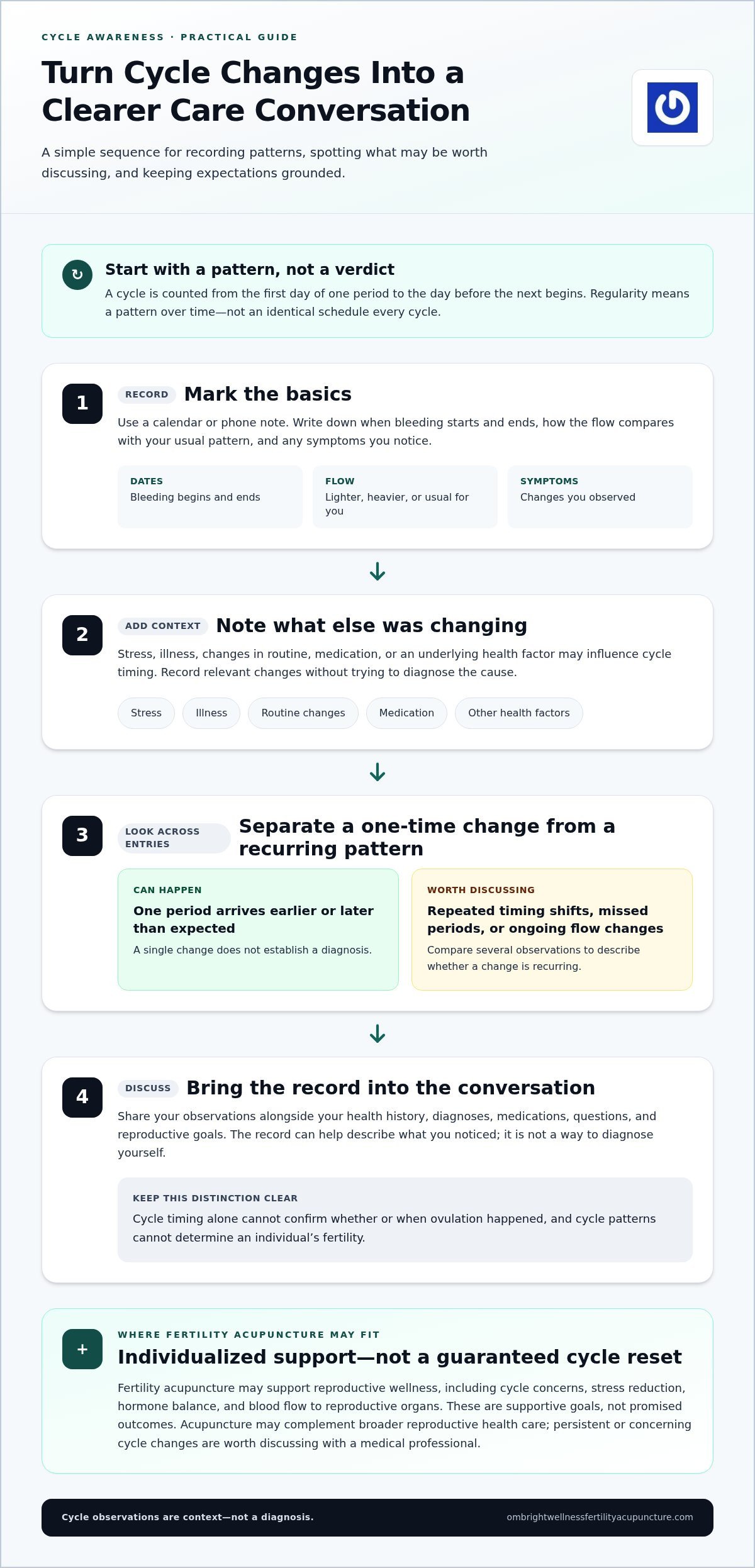
A menstrual cycle is counted from the first day of one period to the day before the next begins. Regularity does not mean every cycle follows an identical schedule. It means there is a pattern over time. One period arriving earlier or later than expected can happen; repeated shifts, missed periods, or ongoing changes in flow may be useful to discuss with a health-care professional.
Menstrual cycle regulation means supporting a steadier pattern over time in the context of a person’s health and circumstances, not making every cycle identical. The cycle involves changing hormones and several phases, as outlined in Understanding the Menstrual Cycle. Possible influences on cycle timing include stress, illness, changes in routine, medication, or an underlying health factor. A change on its own does not establish a diagnosis.
Which cycle patterns are worth discussing?
Note recurring timing differences, missed periods, or flow that becomes noticeably lighter or heavier than your usual pattern. Record when bleeding starts and ends, how the flow compares with your baseline, and any symptoms or relevant changes in your life. Looking at several observations together can help you describe whether a shift happened once or has become a recurring pattern.
Cycle tracking can be simple. Use a calendar or phone note to record dates and observations. If you are unsure whether something is significant, write down what you noticed instead of trying to identify the cause. The aim is to create a clear record for discussion, not to diagnose yourself.
How cycle concerns relate to fertility goals
For people trying to conceive, cycle awareness can help frame questions about when ovulation may occur. Timing alone cannot confirm whether or when ovulation has happened, and cycle patterns cannot determine an individual’s fertility. A recurring change can still provide helpful context when discussing reproductive goals and other health information.
Not everyone seeking cycle support is trying to become pregnant. You may want to understand changes in your periods or feel more informed about reproductive well-being. Both goals deserve individual attention. People exploring acupuncture to regulate menstrual cycle Coral Gables care can use their observations to guide a conversation about what they want support with, while keeping acupuncture in a supportive role rather than expecting a guaranteed reset. Ombright Wellness Fertility provides fertility acupuncture in Miami, including care for people in Coral Gables, Kendall, Cutler Bay, Homestead, Pincrest, Coconut Grove, South Beach, Brickel, and Key West.
How Fertility Acupuncture May Support Menstrual Cycle Regularity
Fertility acupuncture is tailored to reproductive health concerns, including cycle patterns and ovulation goals. In traditional Chinese medicine, practitioners select points on meridians, channels through which qi, or energy, is understood to flow. Ombright Wellness Fertility’s approach also focuses on reproductive wellness, including support for hormone balance, stress reduction, and blood flow to reproductive organs. These areas of support do not mean acupuncture can reliably reset a cycle or produce ovulation.
Fertility acupuncture is a specialized form of acupuncture that may support reproductive wellness through individualized care focused on cycle concerns, stress, and blood flow to reproductive organs. These are supportive goals, not guaranteed outcomes. A general overview from About Acupuncture Treatment describes acupuncture and what treatment may involve; it does not establish that acupuncture will regulate a particular person’s menstrual cycle.
What an individualized acupuncture approach considers
A thoughtful plan starts with the person, not a standard point formula. Health history, cycle observations, current concerns, and fertility goals can inform the approach. For one person, stress and general well-being may be central. Another may be tracking ovulation while pursuing pregnancy. Tailoring care helps keep the discussion relevant without assuming acupuncture directly changes a specific hormone level or guarantees ovulation.
Practitioners may discuss blood flow to reproductive organs, stress reduction, and hormone balance as areas of support. A proposed pathway is not proof of a particular clinical result. For example, a possible effect on circulation does not show that acupuncture will correct irregular timing or address every underlying cause. Because cycle changes can have varied explanations, consider acupuncture in the context of your broader health care.
Where the evidence needs careful interpretation
Research findings depend on what was studied and how success was measured. Feeling calmer or more supported is meaningful, but it is not the same outcome as a measured change in cycle timing, confirmed ovulation, or pregnancy. These measures answer different questions. Results from a group also cannot predict how one person will respond.
For people considering acupuncture to regulate menstrual cycle Coral Gables care, a grounded approach means setting practical goals, such as keeping cycle observations or discussing support for stress, without expecting a specific result. Acupuncture may complement reproductive health care. If cycle changes persist or concern you, discuss them with a medical professional to explore possible causes. Personalized fertility acupuncture can be part of a broader support plan, not a replacement for evaluation or other indicated care.
Learn more about personalized fertility acupuncture care and how your cycle concerns and goals can inform an individualized plan.
What Acupuncture Can and Cannot Promise for Irregular Cycles
Acupuncture may support people addressing cycle concerns, but it cannot guarantee a regular menstrual cycle, ovulation, or pregnancy. Responses can differ, in part because cycle patterns may be influenced by health factors and individual circumstances. A change in cycle timing should not be treated as proof that acupuncture has worked or that a medical concern has been resolved.
Supportive fertility care can contribute to an individualized wellness plan, but it cannot promise a specific medical outcome. Keeping that distinction clear helps set realistic expectations. For people considering acupuncture to regulate menstrual cycle Coral Gables care, discuss progress in relation to personal goals and health history, not a universal timeline or guaranteed result.
Setting realistic expectations for supportive care
Goals may include support for cycle patterns, ovulation-related concerns, stress, or general well-being. These are areas to discuss, not outcomes to assume. Acupuncture should not be presented as a cure for PCOS, hormonal imbalance, or another medical condition. A change in symptoms alone does not establish that an underlying cause has been addressed.
Consider what support means to you. You may want to feel more at ease during care, better understand your cycle observations, or include reproductive wellness in a broader plan. Reviewing your goals alongside your health history makes it easier to discuss what feels useful and whether the plan remains appropriate as your circumstances change.
Coordinating acupuncture with other reproductive care
Share relevant diagnoses, medications, and treatment plans with the practitioners involved in your care. This is especially helpful if you are pursuing IVF or IUI (Intrauterine insemination, a fertility treatment where sperm is placed directly into the uterus). Acupuncture can be considered alongside fertility treatment, but it should not be treated as proof of improved treatment outcomes or as a replacement for guidance from the clinicians managing that care.
Clear communication helps keep expectations aligned. If a medication changes, a diagnosis is added, or your fertility goals shift, share that information when discussing supportive acupuncture care. Mind-body approaches can also be part of a broader conversation about stress and nervous-system regulation, as described in this guide to mind-body fertility support in Miami.
Individualized care should make room for questions and adjustment, not pressure you toward a promised result. Read more about personalized fertility acupuncture care.
How to Prepare for Cycle-Focused Acupuncture in Coral Gables
You do not need a perfect record or a complete explanation of your cycle to have a useful consultation. A few practical details can help you make the most of the conversation and ask questions that matter to you. Before your visit, gather relevant health information and think about what you want to understand about acupuncture and your reproductive care.
You may find it helpful to prepare:
- A brief health-history summary, including prior evaluations and relevant diagnoses.
- An up-to-date list of medications and supplements.
- Information about fertility care that is underway or planned, if applicable.
- A few questions about your concerns, goals, and what supportive acupuncture may involve.
What to bring to a cycle-focused consultation
Bring records or test results from prior evaluations if they are readily available, along with the names of medications and supplements you take. If you are receiving fertility treatment or considering it, a short summary of the plan can provide useful context. You can also note questions in advance, such as how acupuncture may fit alongside your current care or what you would like to discuss at a follow-up.
You do not need to organize every detail before you arrive. The practitioner can review the history you share, ask clarifying questions, and focus the conversation on your priorities. It is a collaborative process: you decide what feels relevant to discuss, and the plan can reflect your health profile and goals.
How to prepare without adding pressure
Keep preparation simple. If writing down questions helps, use a phone note or a piece of paper. You might group them under “health history,” “current care,” and “goals.” This can help you return to what matters during the conversation without feeling that you need to gather every record or identify an explanation in advance.
Share what you know, and say when something is uncertain. Your observations and concerns can support a discussion, but they are not a diagnosis. If a concern is changing or affecting your well-being, mention it so it can be considered in the context of your health history.
There is no fixed visit schedule that applies to everyone. Ombright Wellness Fertility’s FAQ says many patients start with a three-month treatment plan. That is not a universal requirement or a promise of a particular result. A practitioner can discuss whether that starting point fits your situation and goals.
To discuss your questions, connect with Ombright Wellness Fertility about cycle-focused care in Coral Gables.
Personalized Menstrual Cycle Acupuncture Care in Coral Gables
Cycle concerns can connect with different priorities, from understanding reproductive wellness to planning for pregnancy. Ombright Wellness Fertility offers fertility acupuncture tailored to cycle and reproductive health concerns. A conversation about what you hope to address can shape care around your circumstances rather than assume the same approach fits everyone.
How personalized care fits different fertility goals
Care planning can take your health profile, cycle concerns, and fertility goals into account. Someone pursuing natural conception may have different priorities from a patient preparing for IVF or IUI. Those goals provide context for discussing supportive care, while leaving room to adapt as your circumstances change. Acupuncture cannot guarantee cycle regularity, ovulation, or pregnancy, and it does not replace care from the clinicians overseeing fertility treatment.
Your priorities may also focus on reproductive wellness rather than conception. Sharing what you want help understanding can clarify the focus of care and give you space to discuss questions at your own pace. The approach is intended to reflect your individual situation, not follow a fixed formula.
Choosing an in-person or telehealth conversation
Ombright Wellness Fertility offers in-person care in Coral Gables and fertility telehealth consultations for remote guidance and personalized treatment planning. Telehealth can be a practical way to discuss your goals and consider possible next steps. Whether meeting in person or remotely, use the conversation to explain what matters to you and ask how supportive care may fit.
It may help to have your questions and relevant health information nearby. You do not need to have every answer ready; a first conversation can begin with your concerns and develop from there. Acupuncture is supportive care, not a promise of a particular cycle or fertility outcome.
When you feel ready, schedule an appointment to discuss your reproductive wellness goals with Ombright Wellness Fertility Acupuncture.
Take the Next Step at Your Own Pace
Your cycle concerns deserve a thoughtful conversation, without pressure to reach a particular result. As your priorities change, the questions you bring to care may change too. Start by clarifying what you hope to understand, what kind of support feels right, and how acupuncture could fit alongside your broader health care.
If you are considering acupuncture to regulate menstrual cycle Coral Gables care, a first step can be discussing your goals and concerns. There is room to ask questions, share what matters to you, and decide whether this approach aligns with your needs. Support should respect your circumstances and leave space for informed choices.
Schedule an appointment with Ombright Wellness Fertility Acupuncture to discuss your cycle concerns and personalized fertility acupuncture care.
Frequently Asked Questions
Is acupuncture safe while trying to conceive?
Fertility acupuncture is described as a non-invasive treatment that is safe when performed by a trained professional. Share relevant diagnoses, medications, and fertility plans with the practitioner, including whether you are trying to conceive naturally or receiving treatment. This context helps the practitioner consider your circumstances and discuss how acupuncture may fit alongside your existing care. Acupuncture does not guarantee pregnancy.
Can I receive acupuncture during my period?
Your menstrual timing is useful context for discussing acupuncture, but it does not determine by itself whether a session is appropriate for you. If you are considering acupuncture to regulate menstrual cycle Coral Gables care, tell the practitioner whether you are bleeding, what symptoms you are experiencing, and any relevant health history. There is no universal cycle-day schedule. Acupuncture should not replace medical evaluation for symptoms that concern you.
Does acupuncture hurt?
People can have different experiences during acupuncture, so treatment may not feel the same for everyone. If needles make you uneasy or you have concerns about comfort, mention that before care begins. You can ask the practitioner to explain what to expect and discuss your preferences. Open communication helps keep your concerns in view.
How many acupuncture sessions are needed for menstrual cycle support?
Ombright Wellness Fertility notes that many patients start with a three-month treatment plan, but that is not a universal requirement or a promise of cycle changes. A suitable plan depends on your health profile, cycle concerns, and goals. Use a consultation to discuss what you hope to address and how you will review whether the plan remains appropriate for your circumstances.
Can acupuncture be combined with fertility medication or IUI?
Acupuncture may be considered alongside fertility medication, IVF, or IUI, but it is not a promise of improved treatment outcomes or a replacement for fertility treatment. Share your current medications and care plan during a consultation, including planned changes or treatment milestones. This gives the practitioner relevant context for discussing supportive care that reflects your situation and fertility goals.
Can telehealth help me discuss menstrual cycle concerns?
Yes. Ombright Wellness Fertility offers telehealth consultations for remote guidance, personalized strategies, and treatment planning. A conversation can help you share relevant health history, describe cycle concerns, and clarify fertility goals without traveling for that discussion. Telehealth is a consultation, not acupuncture performed remotely, and it does not replace in-person care when that is needed. It can be a helpful starting point for exploring next steps.