A low egg yield doesn’t mean pregnancy is impossible, but it can change the decisions ahead. A poor ovarian response is commonly described as retrieving 3 or fewer oocytes after standard ovarian stimulation, while diminished ovarian reserve means having fewer eggs than others of the same age. Natural treatment for poor ovarian response in Coral Gables may offer supportive add-ons, but it can’t restore the number of eggs in the ovaries.
If you’re weighing lifestyle changes, supplements, or integrative care, it’s understandable to want to know what may help and what remains uncertain. This article explains how ovarian reserve differs from ovarian response, how natural approaches may fit alongside fertility treatment, and why evidence for many add-ons is limited.
You’ll also learn what options may be considered after a low response, from reviewing an IVF stimulation plan to discussing other fertility paths. The next steps depend on factors such as age, test results, prior treatment, and personal goals. Understanding these choices can make the conversation more focused and manageable.
Key Takeaways
- Learn how diminished ovarian reserve differs from a low response during IVF stimulation, and why the terms aren’t interchangeable.
- Understand how AMH, antral follicle count, and day 3 FSH contribute to an ovarian reserve assessment.
- Explore fertility treatment paths that may be considered after a low response, based on test results and reproductive goals.
- See how lifestyle measures and natural add-ons may support reproductive health, while recognizing their limits.
- Find out what questions can help guide a discussion about next steps after an IVF cycle yields fewer eggs than expected.
What is Poor Ovarian Response?
Poor ovarian response means fewer eggs are retrieved during IVF stimulation than expected. For readers exploring natural treatment for poor ovarian response in Coral Gables, it helps to distinguish this cycle result from ovarian reserve.
Defining Poor Ovarian Response
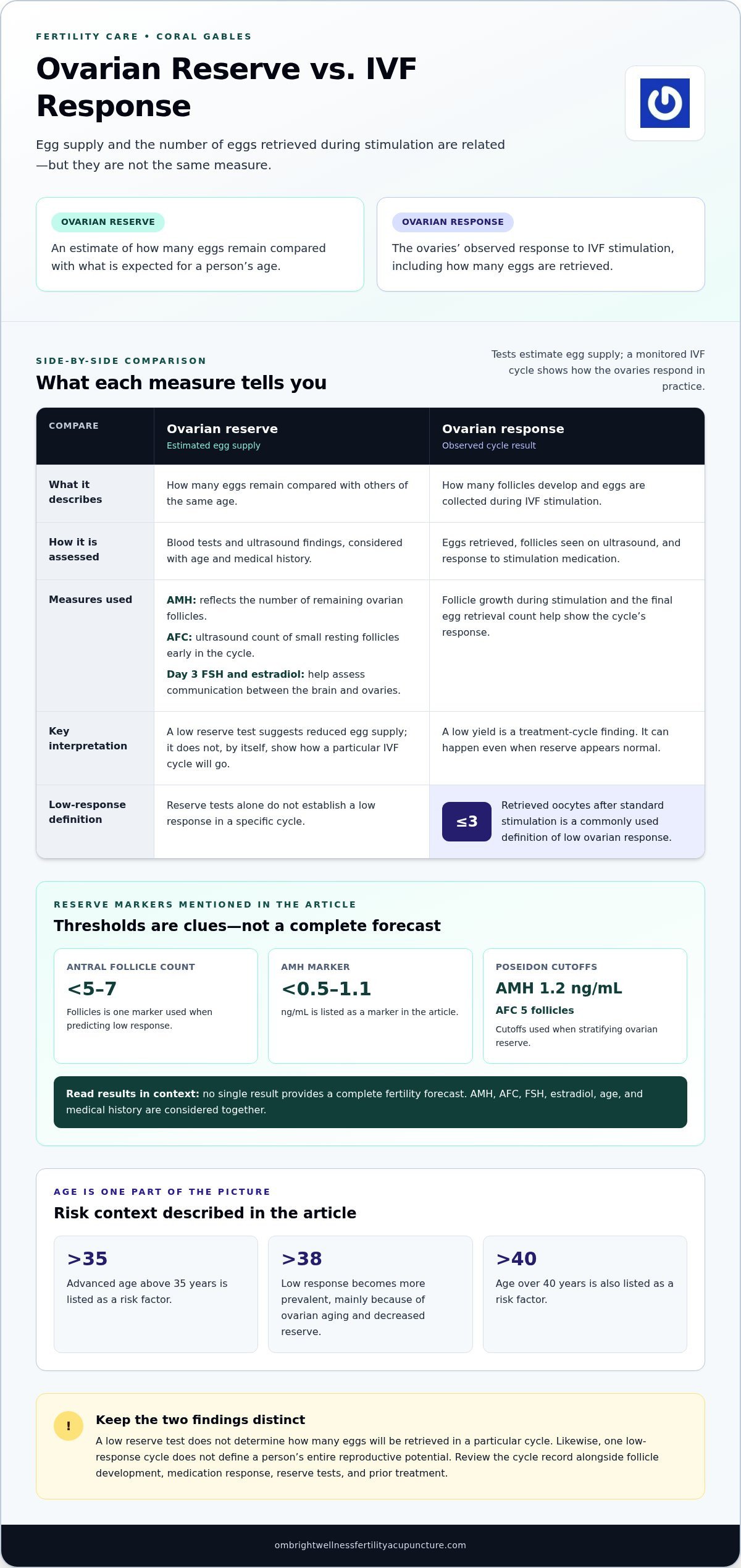
In IVF, a previous cycle is commonly considered a low ovarian response when standard stimulation results in 3 or fewer retrieved oocytes. “Poor ovarian response” and “low ovarian response” describe this limited yield, rather than a person’s entire reproductive potential. The distinction matters because response is observed during treatment, while reserve is estimated through tests and clinical history.
During a standard menstrual cycle, the ovaries usually release one egg. IVF stimulation uses medication to encourage multiple follicles to develop, with the aim of retrieving more than one egg. A lower response means fewer follicles may grow or fewer eggs may be collected than anticipated. This can happen even when ovarian reserve appears normal, so cycle results need context.
A low egg count doesn’t identify one cause. Age, ovarian aging, diminished reserve, and previous treatment may help explain the pattern. Advanced age above 35 years is listed as a risk factor. Low response becomes more prevalent over 38 years, mainly because of ovarian aging and decreased reserve. Age over 40 years is also a risk factor. Chemotherapy, radiation, or surgery affecting the ovaries may be relevant history.
Diagnosis and Prevalence
Assessment considers the eggs retrieved after stimulation, follicles seen on ultrasound, and response to medication. Fewer developing follicles than expected during IVF may indicate a low response. Someone with normal ovarian reserve can still respond inadequately, while a low reserve test alone does not establish how they will respond in a particular cycle.
Prevalence estimates vary, with poor ovarian response reported in 6% to 35% of patients. A systematic review of 47 studies found 41 different definitions, helping explain differences in estimates and classifications. Other research estimates low response in 9% to 24% of women undergoing fertility treatment. These figures describe different study groups, not a personal prediction.
If you’re considering a natural treatment for poor ovarian response in Coral Gables, a practical first step is to review your IVF cycle record. Compare the eggs retrieved with follicle development and the stimulation plan. Medication response, ultrasound findings, and previous cycles help show whether the result reflects a recurring pattern or a single cycle. That distinction can guide questions about the next treatment options.
What is diminished ovarian reserve?
Diminished ovarian reserve means fewer eggs remain than expected for a person’s age. It describes egg supply, not a definitive measure of whether pregnancy can occur naturally or through IVF.
Ovarian reserve testing combines blood tests and ultrasound findings. Anti-Müllerian hormone (AMH) reflects the number of remaining ovarian follicles, while antral follicle count (AFC) uses ultrasound to count small resting follicles early in the cycle. Follicle-stimulating hormone (FSH) and estradiol are measured early in the menstrual cycle to assess communication between the brain and ovaries.
These results offer different pieces of the picture. Lower AMH and fewer antral follicles can suggest reduced reserve; an AFC below 5-7 follicles is one marker used when predicting low response. AMH below 0.5-1.1 ng/ml is also listed as a marker. The POSEIDON classification uses an AMH cutoff of 1.2 ng/ml and an AFC cutoff of 5 follicles when stratifying ovarian reserve. These thresholds support interpretation, but no single result provides a complete fertility forecast.
Day 3 FSH is measured early in the menstrual cycle, alongside estradiol, to assess ovarian signaling. Higher FSH and lower AMH may occur with diminished reserve, but the results are considered alongside AFC, age, and medical history. Reserve tests estimate egg supply; they cannot determine how many years of fertility remain or predict natural conception.
During IVF, stimulation medication supports the growth of multiple follicles so eggs can be retrieved for fertilization. Ultrasound monitoring tracks follicle development during the cycle. If fewer follicles grow than expected, that finding can help explain a low response, even when earlier reserve tests suggested a different outlook.
Follicle synchronization protocols refer to cycle planning intended to coordinate follicle development before or during stimulation. The choice of preparation matters: for antagonist IVF cycles using FSH-alone stimulation, combined oral contraceptive pretreatment is not recommended because it reduces efficacy. When birth-control pills are used only to schedule a cycle before a fresh transfer, a minimum washout of 5 days may be applied. These are distinct uses, so the purpose of pretreatment matters.
When a low response is predicted, stimulation planning also considers how the ovaries responded in previous cycles, alongside AMH, FSH, estradiol, and AFC. Reserve results describe egg supply; monitored follicle growth shows how the ovaries respond to medication in practice. Considering both helps make the next treatment discussion more specific.
Fertility treatment options
A poor response can lead to several fertility paths, from adjusting IVF protocols to considering other ways to pursue pregnancy. The diagnosis, age, ovarian reserve, and personal goals all help shape the discussion.
Natural Approaches and IVF Protocol Changes
Natural approaches may support general reproductive health, while IVF protocol changes directly affect how stimulation medication is used. They serve different purposes: lifestyle measures cannot increase egg quantity, but a revised protocol may change ovarian response in a later cycle.
IVF using a person’s own eggs remains an option, and donor eggs may be considered when reserve is severely diminished. Mild IVF and Natural Cycle IVF use lower medication doses and may suit some people with limited egg supply. For some patients with mildly diminished reserve and a good response, ovulation induction with IUI may also be considered.
Studies of add-ons such as DHEA and antioxidants report limited or conflicting evidence. Growth hormone may carry risks or side effects. Natural approaches therefore do not replace a review of stimulation protocols, especially after an unexpectedly low yield. A treatment discussion can compare the previous cycle’s response with other options, including egg freezing when diminished reserve is found early.
Delaying treatment to try natural approaches carries a particular concern when ovarian reserve is diminished: age is the most common factor in declining reserve, and no treatment reverses age-related changes in egg quality. Decisions about timing should account for age, test results, and the time needed to pursue fertility goals.
Lifestyle Changes and Fertility Outcomes
Lifestyle choices may support overall reproductive health, but they do not restore a reduced egg supply. The American Society for Reproductive Medicine identifies smoking and tobacco use as the only lifestyle factors associated with decreased ovarian reserve, making tobacco cessation relevant to fertility planning.
Maintaining a healthy weight and avoiding tobacco products may help maintain egg quality. Limiting or avoiding alcohol also supports attention to ovarian function, since excessive consumption can have negative effects. These steps can complement a treatment plan, but they do not replace medical assessment or change the number of eggs available.
For diet, exercise, and sleep, focus on sustainable habits that support general health rather than a specific fertility cure. Prenatal vitamins containing folic acid may support egg quality, though they do not increase egg quantity. Before adding supplements such as CoQ10, DHEA, or melatonin, discuss them with a healthcare provider, since add-on evidence remains limited.
Next steps after poor ovarian response
After a low-yield IVF cycle, first understand what happened before choosing another path. The retrieval result, ultrasound findings, stimulation protocol, and fertility goals help frame that review.
Start with the cycle record: compare the follicles seen during stimulation with the eggs retrieved. Note whether the cycle was cancelled, how the ovaries responded to medication, and whether mature eggs or embryos resulted. This gives your fertility specialist specific information to discuss, rather than relying on the egg count alone.
A second-cycle plan may involve changing the stimulation protocol. In a 2024 analysis of patients whose first IVF cycle was cancelled during stimulation, changing the protocol for the second cycle was associated with 14% lower odds of another cancellation and 17% higher odds of live birth after a fresh transfer. These findings describe associations, not a guaranteed outcome for an individual cycle.
Medication intensity also deserves careful review. The ESHRE guideline does not recommend gonadotropin doses above 300 IU for predicted low responders. More medication isn’t automatically a better fit; the discussion can consider the previous response, test results, and protocol together. A planned change should address a specific issue from the prior cycle, such as limited follicle development or cancellation.
When viable eggs are obtained, IVF may continue using a person’s own eggs, with fertilization and embryo transfer planned around the resulting embryos. If an insufficient number of eggs are available, one strategy is freezing resulting embryos and transferring 2 in a later cycle. The aim is to make a plan around what retrieval produced, not an assumed egg yield.
If very few or no viable eggs are available, donor egg IVF may be a possible next path. The eggs are fertilized with sperm, and resulting embryos are transferred to the recipient’s uterus. Because this option changes the source of the eggs, it belongs in a discussion of reproductive goals and treatment preferences.
Timing matters when diminished ovarian reserve is diagnosed at a younger age. Freezing eggs or embryos as soon as possible may preserve fertility for future use. If you’re considering another retrieval, weigh that goal against the previous response and the time involved in another cycle. Age, ovarian reserve, and prior treatment history all shape the timing discussion.
A focused conversation about next steps can cover three points: what the ultrasound and retrieval showed, what a protocol change would address, and which alternatives fit your family-building goals. This framework keeps the focus on decisions after a low response, whether the next choice is another IVF cycle, embryo planning, or donor eggs.
Which natural or lifestyle approaches may support ovarian response, and what evidence supports them?
Natural approaches may support general reproductive health, but they cannot restore diminished ovarian reserve or create more eggs. Their role differs from IVF stimulation, which uses medication to support follicle growth. If you’re considering natural treatment for poor ovarian response in Coral Gables, this distinction helps set realistic goals: support overall health, weigh evidence carefully, and don’t treat an add-on as a replacement for fertility care.
Smoking and tobacco use are the lifestyle factors the American Society for Reproductive Medicine associates with decreased ovarian reserve. Avoiding tobacco is therefore a meaningful step. Maintaining a healthy weight may help maintain egg quality, while excessive alcohol consumption can negatively affect ovarian function. These choices support reproductive health, but they do not change the number of eggs available.
Nutrition has a defined but limited role. Prenatal vitamins containing folic acid are important for maintaining egg quality, but they do not affect egg quantity. A balanced diet supports general health, but no specific food plan has been shown to reverse low reserve. Exercise and sleep also support overall wellness rather than serving as established methods for increasing the number of eggs retrieved.
Coenzyme Q10 and DHEA have been studied as possible supports for ovarian response. Some evidence suggests they may improve IVF pregnancy rates for people facing poor response, but findings don’t establish a consistent benefit for every patient. Research on androgen add-ons is contradictory, with results varying by dose, androgen type, and treatment duration. Supplements should be considered alongside medication and personal health history.
Evidence for antioxidants and growth hormone as add-ons remains limited. Growth hormone may also carry risks or side effects. Before starting acupuncture, herbal medicine, or supplements such as CoQ10, DHEA, or melatonin, discuss their role with a healthcare provider. This is especially relevant when a treatment plan includes prescribed fertility medication.
When weighing these approaches, ask what outcome each targets: general health, egg quality, medication response, or pregnancy. Then consider whether evidence supports that specific outcome and whether the approach could interact with IVF medication. This keeps expectations grounded and makes conversations about add-ons more focused.
Ombright Wellness Fertility Acupuncture: Fertility Acupuncture
Ombright Wellness Fertility Acupuncture offers Fertility Acupuncture as supportive care alongside a fertility plan for poor ovarian response. It may suit you if you want an integrative option while discussing IVF decisions with your medical team. Acupuncture does not restore ovarian reserve or replace fertility treatment, so keep your cycle results and treatment goals central to planning.
Care is provided by an NCCAOM-Certified Diplomate of Acupuncture. Fertility IV Therapy, Fertility Ozone Therapy, and Fertility Hyperbaric Oxygen Therapy are also available as supportive offerings. Discuss any complementary approach with your treating team, particularly when coordinating it with medication or an IVF cycle.
To explore Fertility Acupuncture, contact Ombright Wellness Fertility Acupuncture or visit ombrightwellnessfertilityacupuncture.com.
Take Your Next Step With Clarity
Turn what you’ve learned into a focused conversation about your priorities. Bring your questions, treatment history, and goals together so your care discussions can address medical options and the role of supportive approaches.
If you’re considering natural treatment for poor ovarian response in Coral Gables, an integrative approach should complement fertility care, not replace decisions about treatment timing or protocols. The right role for supportive care depends on your circumstances and the plan you’re weighing.
If you’d like to explore supportive fertility care as part of your next-step planning, connect with Ombright Wellness Fertility Acupuncture. You can move forward thoughtfully, with questions that reflect what matters most to you.
Frequently Asked Questions
Can a low antimüllerian be indicative of a low response?
Yes. A low anti-Müllerian hormone (AMH) level can indicate fewer remaining ovarian follicles and may be associated with a lower response to stimulation. It is one part of the assessment, not a prediction for every cycle. For example, a fertility evaluation may interpret AMH alongside ultrasound findings, other hormone results, and how the ovaries responded during a previous IVF cycle.
Does folic acid improve egg quality?
Prenatal vitamins containing folic acid are important for maintaining egg quality, but they do not increase the number of eggs. That distinction matters if ovarian reserve is diminished: a vitamin supports nutritional preparation, while egg supply is a separate issue. If you’re choosing a prenatal vitamin while preparing for pregnancy, include it in a discussion of your health history and current supplements.
WHAT DOES THE SCIENTIFIC EVIDENCE SAY?
Evidence for natural add-ons varies by treatment and outcome, so a proposed benefit needs to be considered specifically. Some evidence suggests DHEA and CoQ10 may improve IVF pregnancy rates for people facing poor ovarian response, but findings do not establish a dependable result for every patient. Evidence for many add-ons remains too limited to confirm usefulness, so distinguish potential support from proven improvement.
What if the number of eggs I produce is insufficient for IVF?
A cycle may still have options if ultrasound shows only 1 or 2 follicles: it can sometimes be converted to IUI when other factors are suitable and there’s no severe male factor. The next choice depends on the cycle findings and treatment goals. If retrieval yields eggs, the fertility team can discuss whether to proceed with fertilization and embryo planning or consider another approach.
What is poor ovarian response in IVF and how is it diagnosed?
Poor ovarian response describes a low egg yield after stimulation in an IVF cycle. A previous cycle is commonly considered a low response when 3 or fewer oocytes are retrieved after standard stimulation. Assessment also considers follicle growth on ultrasound, medication response, and ovarian reserve results. Because definitions vary, the cycle record helps clarify what the result means for planning.
Can supplements such as CoQ10, DHEA, or melatonin improve ovarian response, and what are the risks?
CoQ10 and DHEA have some evidence suggesting possible benefits, but research doesn’t establish a consistent improvement for every person. Evidence for melatonin as an ovarian-response add-on is not established here. Before starting any of these supplements, discuss them with a healthcare provider, including how they fit with your medications and treatment plan. Growth hormone is a different add-on, with limited evidence and potential risks or side effects.
What does research say about acupuncture for poor ovarian response or IVF success?
Fertility acupuncture may be considered supportive care, but it should not be presented as a proven way to increase egg numbers or guarantee IVF success. Evidence for add-on treatments varies, and a specific benefit for poor ovarian response is not established. If you’re considering acupuncture during IVF, discuss timing and coordination with your fertility care team, especially when treatment protocols or medication schedules are underway.
How long before an IVF cycle should someone start lifestyle changes or supplements?
Prenatal vitamins containing folic acid are ideally started at least three months before conception. No specific lead time is given for starting other supplements or lifestyle changes before an IVF cycle.