
Fertility hypnosis isn’t a way to control conception; it may offer emotional support through the uncertainty of trying to conceive. Hypnosis for a fertility mindset in South Beach may help you explore stress, anxiety, and limiting beliefs while developing a calmer approach to your fertility journey. It can complement medical fertility care, but it doesn’t replace it.
Appointments, treatment decisions, and the wait between steps can feel emotionally demanding. This guide explains how fertility hypnosis may support wellbeing, what mindset work can involve, and how it can fit alongside fertility treatment. You’ll also learn what to expect from a supportive approach and when this kind of care may suit your needs, so you can consider your next step with greater clarity and without added pressure.
Key Takeaways
- Notice how fertility-related stress affects your emotional wellbeing, and consider calming practices that feel manageable.
- Explore limiting beliefs with curiosity, so they can be recognized without treating them as facts about your fertility.
- Understand how hypnosis may complement fertility care while remaining distinct from medical treatment.
- Read research findings in context and focus on emotional support rather than assuming hypnosis determines pregnancy outcomes.
Stress, anxiety, and emotional wellbeing
Trying to conceive can make ordinary moments feel loaded: an appointment, a pregnancy announcement, or an unanswered message. Stress may feel sharper around treatment milestones, including embryo transfer or waiting for results. Hypnosis offers a focused relaxation practice using calming images and supportive suggestions. During embryo transfer, hypnosis may reduce involuntary uterine contractions linked to stress. It supports emotional wellbeing; it doesn’t control conception or replace fertility care.
Naomi Woolfson said mindfulness reduces anxiety in women experiencing infertility by 76% and depression by 46%. These figures describe mindfulness, not hypnosis, and aren’t a prediction for any individual. A practical benefit of a calming practice is having a repeatable pause: breathe slowly, notice tension, and name the immediate worry. Before a clinic call, for example, write down one question and choose a grounding phrase. A partner, trusted friend, or counselor can listen without turning every conversation into treatment planning.
Emotional freedom technique (EFT), sometimes called tapping, pairs attention to a feeling with tapping on selected body points. To try it, identify a specific concern, such as fear of another disappointing result. Say a compassionate statement about that feeling while tapping through the sequence. Pause afterward and notice whether your emotions, body tension, or thoughts have shifted. Treat EFT as a personal coping exercise, not evidence that stress caused infertility. If the practice increases distress, stop and choose a supportive conversation instead.
Emotional support during infertility can mean making room for grief, anger, and uncertainty without judging your response. A simple plan might include checking in with someone after appointments, choosing a quiet activity, and identifying someone to call. In South Beach, hypnosis for a fertility mindset may complement personal support if relaxation feels relevant. Discuss treatment concerns with your fertility clinician, especially if emotions make daily life harder.
That support may also matter after conception: hypnosis can support emotional wellbeing and reduce anxiety during early pregnancy. Naomi Woolfson said studies show that practicing mind-body techniques can double the chances of pregnancy success; this is a general statement, not a guarantee for an individual. Woolfson also mentioned pregnancy scans at eight week, 12 week, and 20 week as milestones that can bring new worries, when a calming routine may feel useful.
Changing limiting beliefs about fertility
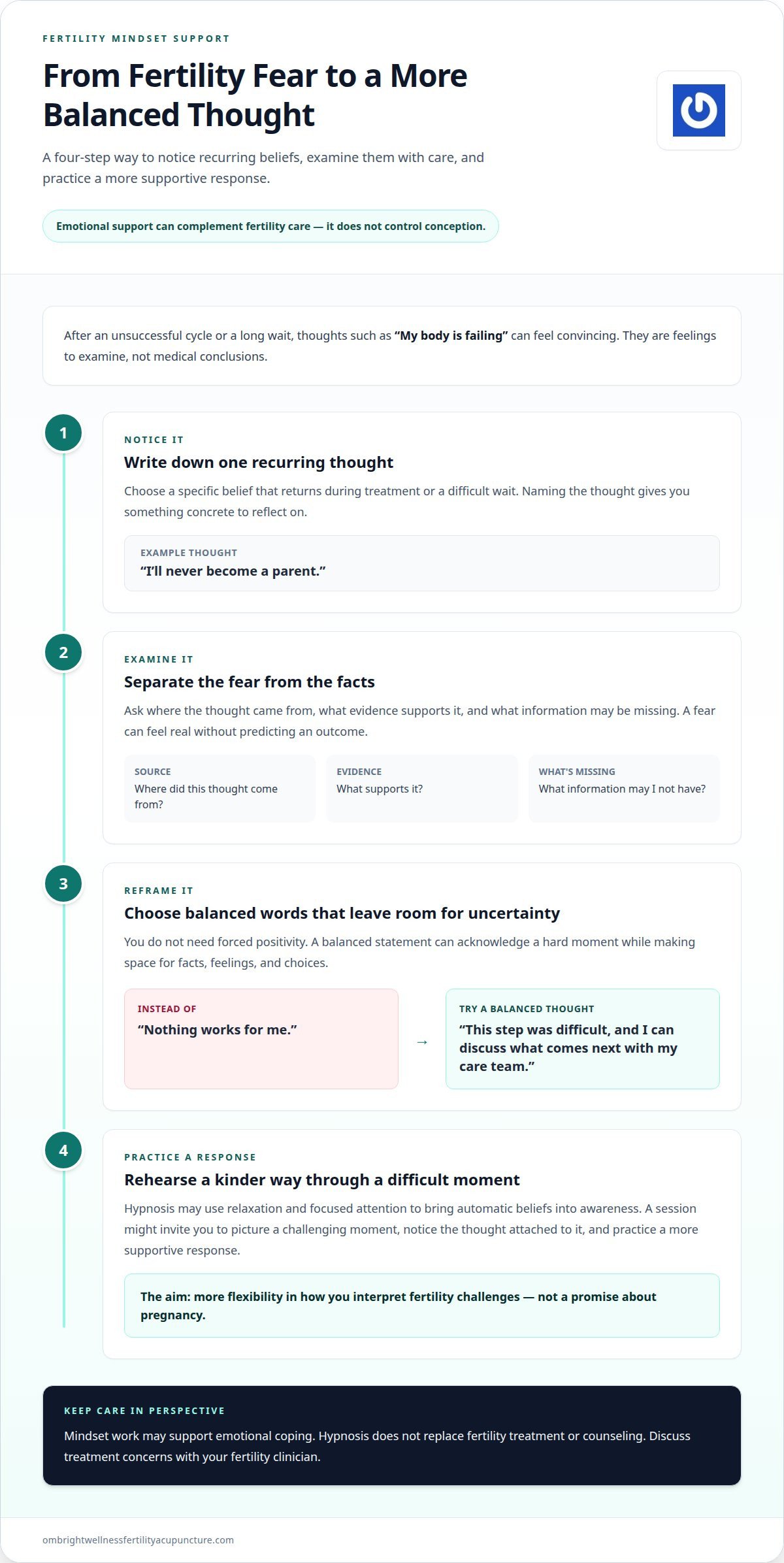
A limiting belief can sound like “My body is failing” after an unsuccessful cycle, or “I’ll never become a parent” during a long wait. These thoughts can feel convincing, but they aren’t medical conclusions. Separating a fear from a fact helps you respond with more care. For example, “I’m afraid treatment won’t work” describes an emotion; it doesn’t predict the outcome. Naming the difference makes the thought easier to examine without blaming yourself.
Start with one recurring thought and write it down. Consider where it came from, what evidence supports it, and what information may be missing. Replace absolute language with a balanced statement that leaves room for uncertainty. “Nothing works for me” might become “This step was difficult, and I can discuss what comes next with my care team.” This practice doesn’t require forced positivity. It makes space for facts, feelings, and choices to coexist.
Hypnosis can use relaxation and focused attention to bring automatic beliefs into awareness. A session may invite you to picture a difficult moment, notice the thought attached to it, and rehearse a more supportive response. Naomi Woolfson said some clients work through a belief-change process over two weeks. That describes the process she mentioned, not a guaranteed timeline for everyone. A helpful aim is greater flexibility in how you interpret fertility challenges, rather than a promise about pregnancy.
Keep medical information separate from beliefs about personal worth. A diagnosis or treatment plan can guide care, but it doesn’t define your character or effort. If this reflection feels useful, consider exploring guided support for fertility-related beliefs as one part of your emotional care. Bring specific thoughts or situations to discuss, such as a difficult test result or a conversation that left you discouraged.
Fertility hypnosis and mindset support
Fertility hypnosis uses guided attention and relaxation to support emotional coping during conception or treatment. Meditation usually involves independently practicing attention, while CBT examines thought patterns and behaviors. Fertility counseling offers space to process the emotional and relationship effects of infertility. These approaches can serve different needs; hypnosis doesn’t replace counseling or medical care.
Fertility hypnosis is an available support option in the South Beach and Miami area. To understand a practitioner’s qualifications in Florida, distinguish hypnosis training from a clinical license. Verify any claimed clinical license through Florida’s official license lookup, and ask which organization issued hypnosis training. Ask about supervised practice and experience supporting people through fertility treatment.
A session may begin by identifying a concern, such as anxiety before embryo transfer. The practitioner may then guide breathing, relaxation, imagery, or suggestions focused on that goal. You remain involved and can discuss what feels comfortable. Most fertility hypnotherapy clients see results after 3-6 sessions, depending on their needs and journey. Treat this as a reported pattern, not a fixed course or promise.
Hypnosis may offer emotional support while trying to conceive and can complement IVF; it doesn’t replace fertility treatment. Share your treatment schedule and relevant concerns with the practitioner and your fertility clinician. Ask how sessions fit around appointments, what methods are used, and how progress is discussed. Some women report better sleep or improved cycles after regular sessions, but these experiences aren’t guaranteed outcomes.
Before beginning, clarify your goal, such as feeling calmer during injections or handling the wait after a procedure. Ask what a session involves, how the practitioner’s training applies to fertility, and how they coordinate with ongoing care. Also ask what happens if imagery or relaxation feels uncomfortable. Clear answers help you decide whether this form of mindset support fits your needs.
Fertility hypnosis is described as an option for women aged 25 to 45 who are trying to conceive. That age range can help frame an initial conversation, but it need not settle whether the approach feels appropriate for an individual. Personal goals, comfort with the methods, and fit with ongoing care remain useful points to discuss.
What does research say about hypnosis, stress, and fertility outcomes?
Research on mind-body support includes programs that combine stress-management practices, not hypnosis alone. In a study led by Dr. Alice Domar at Harvard Medical School, participants completing the Mind/Body Program for Infertility had a 55% pregnancy rate. The control group’s rate was 20%. Those figures describe that program and study participants; they don’t establish hypnosis as the cause or predict an individual outcome.
A separately reported comparison found double the success rates among women using hypnosis during embryo transfer compared with women who didn’t. That result deserves careful interpretation: the available description doesn’t provide study details needed to assess its design or strength. It shouldn’t be treated as proof that hypnosis doubles IVF success. Hypnosis can be considered for emotional support, while fertility treatment decisions remain grounded in medical evaluation.
Stress relief can still matter to daily wellbeing, even when pregnancy outcomes remain uncertain. Mindfulness findings reported by Naomi Woolfson include reductions of 76% in anxiety and 46% in depression among women experiencing infertility. These are mindfulness figures, not hypnosis results. Distinguishing the intervention helps readers avoid combining different approaches into one claim. A useful next step is to choose an emotional goal, such as feeling steadier before an appointment, and track that experience separately from clinical outcomes.
For a balanced discussion, ask what a finding measured: mood, pregnancy rate, or treatment success. Also ask whether the research involved hypnosis, a broader mind-body program, or another practice. A fertility clinician can explain how emotional support fits alongside the treatment plan. To explore hypnosis as supportive care, learn about fertility hypnotherapy and discuss how it could fit your emotional wellbeing goals.
Ombright Wellness Fertility Acupuncture: Fertility Acupuncture
Ombright Wellness Fertility Acupuncture offers Fertility Acupuncture as an integrative option alongside emotional support. This specialized approach targets reproductive organs and aims to support blood flow, hormone balance, and stress reduction. It may be relevant if you want care that addresses physical wellbeing while you continue fertility evaluation or treatment. Share your treatment plan and goals during a discussion about whether acupuncture fits your needs.
Ombright Wellness Fertility Acupuncture’s practitioner is an NCCAOM-Certified Diplomate of Acupuncture. Fertility Acupuncture is supportive care, not a substitute for medical fertility treatment or emotional support from a qualified mental health professional. To learn whether this approach aligns with your care, contact Ombright Wellness Fertility Acupuncture or visit ombrightwellnessfertilityacupuncture.com.
Choose a supportive next step
Let your next step reflect what would feel useful now, not what you think you’re expected to do. You might write down the kind of support you want, such as feeling more grounded during treatment conversations or making space for difficult emotions. Then consider how hypnosis for a fertility mindset in South Beach could fit alongside the care and support you already have. Keep your priorities clear, and share them openly when discussing options.
Emotional support should respect your pace and your fertility care plan. Hypnosis may be one option to explore, but it can’t promise a particular fertility outcome. If you’d like to discuss an integrative approach, contact Ombright Wellness Fertility Acupuncture. You can take this one thoughtful step at a time.
Frequently Asked Questions
What is fertility hypnosis and how might it support a fertility mindset?
Fertility hypnosis can help you practice responding to fertility-related thoughts with greater steadiness. For example, if a cycle update triggers self-criticism, you might work on noticing that reaction and choosing a kinder response. This doesn’t change medical facts or treatment decisions. It offers a way to approach difficult moments with more self-compassion and less pressure to feel positive throughout your fertility journey.
Is fertility hypnosis safe while trying to conceive or undergoing IVF?
Fertility hypnosis may offer emotional support alongside IVF, but it doesn’t replace medical treatment. Share your treatment schedule and concerns with both the practitioner and your fertility clinician, and ask what happens if relaxation or imagery feels uncomfortable.