
Acupuncture for early pregnancy support in Key West may help ease symptoms such as nausea, pelvic discomfort, and back pain, while complementing prenatal care with a calming approach. Treatment should be provided by an acupuncturist experienced in pregnancy and tailored to your stage and symptoms.
It’s understandable to want reassurance before considering acupuncture during early pregnancy. This guide covers how it may support symptom relief, what to consider about its use and safety, and how to discuss it as part of coordinated care. It also explains how symptom-focused acupuncture differs from treatment intended to influence labor later in pregnancy, so you can set clear expectations.
Key Takeaways
- Learn how acupuncture may be used to ease early-pregnancy nausea and other discomforts.
- Understand why pregnancy experience and careful point selection matter when planning treatment.
- Know which common, mild effects to discuss with an acupuncturist experienced in prenatal care.
- Explore what research can and can’t tell you about acupuncture during pregnancy and before birth.
Is Acupuncture Safe During Pregnancy?
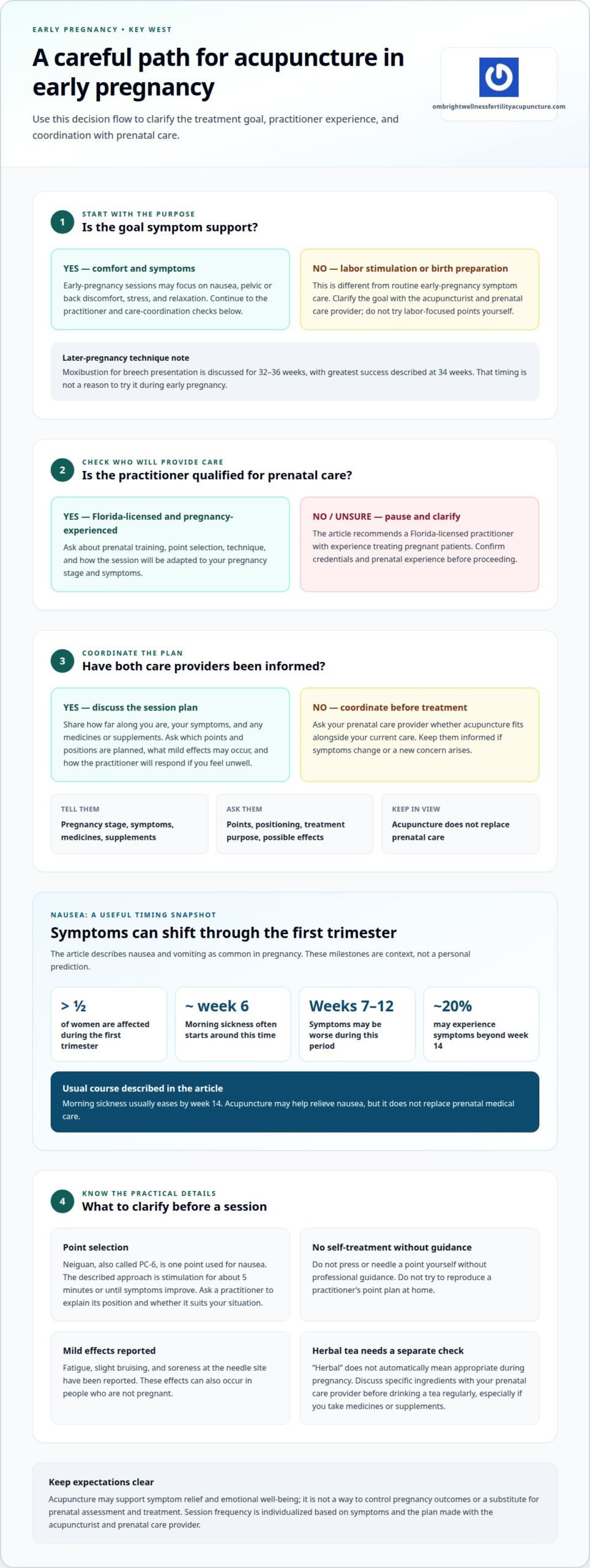
Acupuncture is described as safe during pregnancy when provided by a practitioner experienced in prenatal care. Mild effects reported by pregnant patients include fatigue, slight bruising, and soreness at the needle site. These effects can also occur in people who aren’t pregnant.
Nausea and vomiting affect more than half of women during the first trimester. Morning sickness often starts around week 6, may be worse between weeks 7 and 12, and usually eases by week 14. About 20% of women may experience it beyond week 14. Acupuncture may help relieve nausea, though it doesn’t replace prenatal medical care.
One point used for nausea is Neiguan, also called PC-6. The described approach is to stimulate it for about 5 minutes or until symptoms improve. A practitioner can explain the point’s position and whether it suits your situation. Don’t press or needle a point yourself without professional guidance.
Herbal tea is sometimes suggested for nausea, but “herbal” doesn’t automatically mean appropriate during pregnancy. Ingredients matter, so discuss a specific tea with your prenatal care provider before drinking it regularly, especially if you take medicine or other supplements.
When choosing an acupuncturist in Key West, look for a Florida-licensed practitioner with experience treating pregnant patients. Ask about their prenatal training and how they adapt treatment to pregnancy.
Insurance coverage for pregnancy acupuncture depends on your policy’s covered services and exclusions. Review your benefits for acupuncture, pregnancy-related care, and any referral or network requirements.
Before treatment, tell your acupuncturist and prenatal care provider how far along you are, your symptoms, and any medicines or supplements you take. Ask the acupuncturist which points and positions they plan to use, what mild effects may occur, and how they’ll respond if you feel unwell. Ask your prenatal provider whether acupuncture fits alongside your current care.
Acupuncture safety during pregnancy
Acupuncture during pregnancy should be tailored to your stage and reason for care. This distinction matters: addressing discomfort is different from using points intended to stimulate labor.
Pregnancy Safety Considerations
Pregnancy safety considerations shape point selection, technique, and positioning during a session. They matter because treatment goals can change as pregnancy progresses. An acupuncturist may tailor care to your symptoms, while your prenatal care provides important context about the pregnancy. Share relevant health concerns and current treatment plans before a session.
Explain whether your goal is symptom support or preparation for birth. Ask how the practitioner adapts the session to that goal and what effects to watch for afterward. Acupuncture may help with certain pregnancy symptoms, but it does not replace prenatal assessment or treatment. Keep your prenatal care provider informed, especially if symptoms change or a new concern arises.
Points and Techniques to Avoid
Points and techniques should be selected with your pregnancy stage and treatment purpose in mind. Stimulation intended for labor induction differs from a session focused on comfort. Don’t try to reproduce a practitioner’s point plan at home. Ask which points will be used and why they suit your current stage of pregnancy.
For example, acupuncture points intended to stimulate labor should not be confused with routine early-pregnancy symptom care. Moxibustion, a warming technique used for breech presentation, is discussed for a later stage: treatment is recommended between 32 and 36 weeks, with greatest success described at 34 weeks. That timing is not a reason to try it during early pregnancy. Discuss any technique with your prenatal care provider and acupuncturist.
Before treatment, ask what the session will involve, how your position will be adjusted for comfort, and whether the plan includes labor-focused stimulation. A clear explanation helps you make an informed choice. For a coordinated discussion of pregnancy acupuncture support, bring your questions and current care details to the conversation.
Acupuncture use during early pregnancy
Acupuncture in early pregnancy may focus on symptom relief and emotional well-being. Its purpose differs from treatment intended to stimulate labor later in pregnancy.
Evidence for Early Pregnancy Use
Evidence for early-pregnancy use includes reported symptom support and broader fertility findings, but these are not the same outcome. Acupuncture may help with nausea, pelvic or back pain, and stress. Stress can prompt cortisol release, which may affect hormone levels and pituitary balance involved in the reproductive cycle.
Studies have found higher pregnancy and birth rates among women maintaining regular acupuncture treatments. That finding concerns fertility outcomes; it doesn’t establish that acupuncture prevents early miscarriage, which occurs before 12 weeks. Some treatment approaches aim to support blood flow to the uterine lining and nourish blood and energy. These proposed aims should be distinguished from proven pregnancy outcomes.
Session Frequency
There isn’t one session schedule that applies to everyone in early pregnancy. The frequency depends on the symptoms being addressed, how they change, and the plan developed with your acupuncturist and prenatal care provider.
For example, if you’re seeking help with nausea, discuss whether sessions should continue while symptoms persist. Tell the practitioner about fatigue, pain, emotional strain, and changes between visits. This gives your care team practical information to review the plan instead of following a fixed timetable.
Acupuncture in early pregnancy is best understood as supportive care, not a way to control pregnancy outcomes. A session may focus on comfort and relaxation, with points selected for that purpose rather than to stimulate labor. Keep prenatal appointments and tell your prenatal care provider about changes such as worsening pain or difficulty managing nausea. Coordinating care helps distinguish symptoms needing medical attention from concerns suited to supportive treatment. In Key West, discuss the goals and frequency of sessions before starting, then revisit them as your symptoms and needs evolve.
What evidence supports acupuncture during early pregnancy?
Research needs to be read in context: a study’s participants, treatment timing, and measured outcome determine what its findings can tell you. For example, research on acupuncture before birth addresses labor, not early-pregnancy experiences. Keeping these questions separate helps prevent applying a result beyond the group or stage studied.
One prebirth study compared 70 women who received acupuncture with a control group of 70 women. Among first-time mothers, average labor duration was eight hours and two minutes in the control group. The acupuncture group’s average was six hours and 36 minutes. Those figures describe labor duration in that study, not the course of early pregnancy.
If you’re considering treatment in early pregnancy, ask whether a research finding matches your reason for seeking care. A result about labor duration cannot establish an effect on nausea, pelvic discomfort, or pregnancy progression. Likewise, research on fertility treatment addresses a different stage and outcome from care after pregnancy begins. Interpret evidence according to its specific focus.
When discussing acupuncture, distinguish the treatment goal from the research outcome: symptom relief, fertility support, and labor preparation are separate questions. Ask what outcome a cited study measured and whether participants received care during the same stage you’re experiencing. This keeps expectations grounded and helps you discuss supportive care with your prenatal care provider.
Acupuncture may be considered as complementary support, while prenatal care continues to guide pregnancy health. A clear discussion can help you decide whether the proposed approach fits your current needs. Discuss fertility acupuncture support as part of that informed conversation.
The page recommends weekly acupuncture during the last 6-8 weeks of pregnancy as pre-birth treatment, which is a different focus from support during early pregnancy. It describes warming the acupuncture point near the baby toe for 20 minutes per side during moxibustion. These details describe the approaches discussed, not evidence that they address early-pregnancy symptoms.
The page states that over 50% of women experience morning sickness during pregnancy. It also states that over 50% of women experience nausea, vomiting, and fatigue to some degree during the first trimester. A commenter reported having three acupuncture sessions during pregnancy; that personal experience does not establish what outcomes others can expect.
Ombright Wellness Fertility Acupuncture: Fertility Acupuncture
Ombright Wellness Fertility Acupuncture offers Fertility Acupuncture as supportive care for people navigating fertility and pregnancy. If you’re considering acupuncture during early pregnancy, bring your symptoms, treatment goals, and prenatal care plan into the conversation. This can help clarify whether fertility-focused acupuncture aligns with the support you’re seeking.
Acupuncture is complementary care, not obstetric medical care or a replacement for prenatal appointments. Keep your prenatal care provider informed about any treatment you pursue, especially if symptoms change. Coordinating care helps clarify the purpose of each part of your plan without treating acupuncture as a guarantee of pregnancy outcomes.
For a calm, individualized discussion of your needs, contact Ombright Wellness Fertility Acupuncture.
Make Your Next Step a Thoughtful One
As you consider acupuncture for early pregnancy support in Key West, think about what would make a session worthwhile for you. You might value time to discuss your concerns, a clear explanation of the approach, or a plan that reflects your comfort and priorities. Naming those preferences can help you choose a considered next step rather than feeling rushed.
You don’t need to resolve every question at once. Start with the concern that matters most today, then decide whether discussing supportive care would be useful.
If you’d like to explore that conversation, contact Ombright Wellness Fertility Acupuncture. Take the next step at a pace that feels right for you.
Frequently Asked Questions
How can acupuncture help?
Acupuncture may offer an individualized, complementary way to address concerns during pregnancy. Before a visit, choose a practical goal, such as making meals easier or resting more comfortably. Sharing that goal gives you and the practitioner a clear starting point for discussing whether the approach feels useful over time. Keep pregnancy-care decisions with your prenatal care team.
Is acupuncture safe during the first trimester?
Acupuncture may be considered during the first trimester as supportive care, with a plan shaped around your pregnancy and health. Before scheduling, discuss your pregnancy history and current care plan with your prenatal provider. Continue routine prenatal appointments, and don’t change prescribed medicines or skip recommended care because you’re receiving acupuncture.
What pregnancy-related symptoms may acupuncture help relieve?
Acupuncture may be used to address nausea and discomfort, including pelvic or back pain. To make a discussion more useful, note which concern affects your day most and what activity it interferes with, such as eating, walking, or resting. That context helps clarify the goal of supportive care without assuming every symptom has the same cause.
What risks or side effects can acupuncture cause in early pregnancy?
Reported effects include fatigue, slight bruising, and mild pain at the needle site. If you feel discomfort during a session, tell the practitioner so they can respond. Afterward, note any effects that concern you and share them before another visit. Don’t try to reproduce needling yourself; treatment should be performed by a qualified practitioner.