
You don’t need a partner to begin planning parenthood. Fertility support for a single mother by choice in Miami may involve donor sperm with IUI or IVF, adoption, and a care plan shaped around your health and family goals.
It’s understandable to want clarity before making decisions about conception, finances, and the support you’ll need. Each path comes with practical and emotional considerations, and you can take time to understand your options.
This article explains how IUI, IVF, and adoption fit into family planning, what to discuss at an initial fertility consultation, and how insurance coverage and financing may affect your plans. It also explores ways to build a support system and include integrative care in your fertility journey in Miami and nearby communities.
Key Takeaways
- Review how your insurance plan defines infertility and what treatment criteria it uses before shaping a financing plan.
- Compare donor-sperm IUI and IVF with adoption as distinct paths, each with different medical, personal, and planning considerations.
- Build a support network early by identifying the practical and emotional help you may want during pregnancy and after a baby arrives.
- Use an initial fertility consultation to discuss your health, age, family goals, and care options, including supportive acupuncture.
Insurance coverage and treatment financing
Insurance rules can shape which fertility treatment fits your parenthood plan. Some plans require an infertility diagnosis or 6-12 months of trying to get pregnant before covering treatment. For a single parent using donor sperm, that definition may not align neatly with the treatment pathway. Review your plan’s eligibility criteria, exclusions, and required documentation before scheduling medical care.
Insurance coverage can differ for intrauterine insemination and in vitro fertilization. A plan may cover testing or medication but exclude a procedure, donor sperm, or related services. Ask your insurer to explain requirements at each stage, including referrals, prior authorization, and clinical records. Keep written responses with your plan documents so you can compare expected coverage with your care plan.
Financial planning for single parenthood involves more than treatment. Map out likely costs such as donor screening, medication, travel to appointments, time away from work, and newborn care. If a cycle involves repeated clinic visits, for example, consider how transportation and work schedules affect your monthly budget. Adoption is another route to parenthood, with processes and financial arrangements that vary between private adoption and foster-care agencies.
Financing depends on your route, benefits, and treatment plan. Ask your insurer which services count toward deductibles or annual limits, and whether coverage changes across calendar years. If you’re considering loans, payment plans, or savings, compare repayment terms and timing with the treatment schedule. Don’t build your plan around a financing option until its terms are clear.
Florida donor-sperm arrangements can also raise legal questions about parentage and donor rights. Before treatment, ask a Florida reproductive-law attorney to review a written donor agreement. Known donors and intended parents are advised to have separate counsel and define rights and financial obligations in a contract. This can clarify expectations before conception.
For fertility support for a single mother by choice in Miami, bring your coverage details, treatment goals, and financing questions together in one plan. This can help you understand how insurance decisions may affect your journey.
Trying to conceive or adopt
Common paths to parenthood for a single woman include donor sperm with IUI or in vitro fertilization (IVF), as well as adoption. The right route depends on medical factors, family goals, and preferences about donor involvement. You don’t need a partner to explore these options.
IUI places washed donor sperm directly into the uterus, where it can travel toward the fallopian tubes. A clinic may recommend medication or injections to stimulate ovulation. IVF involves ovarian medication, egg retrieval, fertilization with donor sperm, embryo development in a laboratory, and transfer to the uterus. These are key steps to discuss when comparing IUI and IVF.
Donor selection may involve reviewing health history, screening, and future questions about identity. Reproductive Science Center says egg and sperm donors need FDA clearance to ensure they do not have a physical or mental illness that could pose a risk to the baby or gestational carrier. Genetic carrier screening for you and a potential donor can identify shared recessive conditions. Psychological testing may also help assess a donor’s mental health history.
With IVF, embryos develop in a laboratory before transfer. They may be grown in incubators for about 5-7 days before higher-quality embryos are biopsied and tested. This timing can help explain why testing decisions and transfer planning are separate parts of the process. Donor egg use is another consideration if your treatment plan involves eggs from a donor.
Adoption offers another route to parenthood. Single-parent adoptions make up about 30% of domestic adoptions in the United States. Domestic, intercountry, and foster-care adoption each involve distinct processes. An adoption agency can explain its pathway, required preparation, and placement process, helping you consider which option aligns with your family goals and readiness.
IRMS advises prospective parents to consider whether a donor-conceived child may want to know the donor’s identity when the child comes of age. Women in their late 30s to mid-40s are increasingly choosing to become single mothers through fertility treatments in the United States.
The cost of adopting through foster care is typically covered by the state. Single parents can adopt anywhere in the United States, as laws barring single-parent adoptions have been removed.
Building a support system
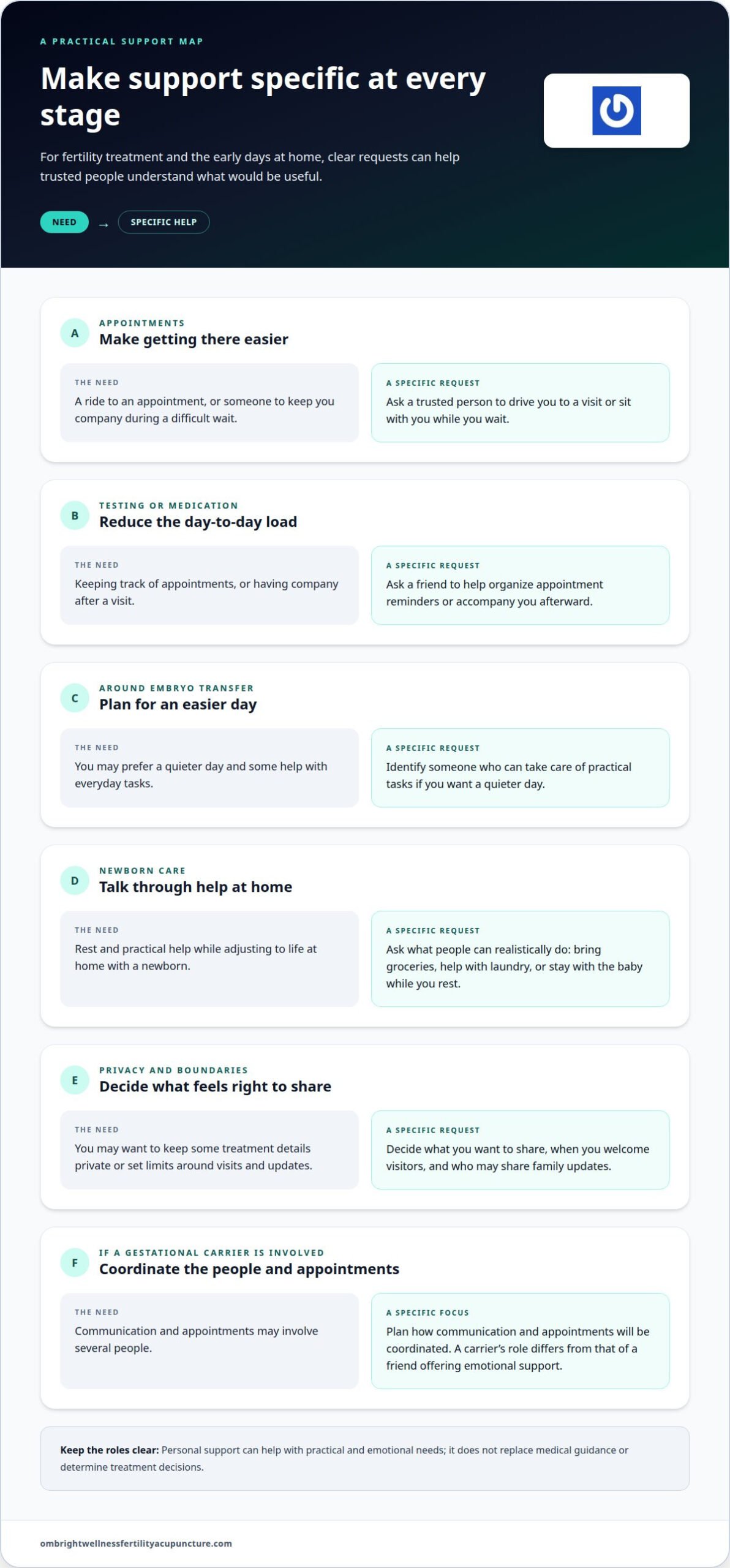
Build practical support before fertility treatment begins. Choose trusted people who can offer specific help, such as driving you to an appointment, preparing a meal, or keeping you company during a difficult wait. Clear requests are easier to answer than a general offer to help. You can also decide which details about infertility or treatment you want to keep private.
Match support to each stage of care. During testing or medication, a friend could help organize appointment reminders or keep you company after a visit. Around an embryo transfer, identify someone who can help with everyday tasks if you’d prefer a quieter day. These arrangements are personal and don’t replace medical guidance or determine treatment decisions.
Plan for life at home with a newborn while there’s time to talk. Ask supportive people what they can realistically do, such as bringing groceries, helping with laundry, or staying with the baby while you rest. Discuss boundaries too, including when you welcome visitors and who may share family updates. Clear expectations can help prevent misunderstandings during a demanding period.
If your family-building plan involves a gestational carrier, support may include coordinating communication and appointments among the people involved. A carrier’s role differs from that of a friend offering emotional support. For assisted conception involving your own uterus, identify who can accompany you to key visits and listen afterward without pressuring you for updates.
- For appointments: Choose someone who can provide transportation or take notes when you request it.
- For home preparation: Assign practical tasks, such as organizing meals or setting up baby supplies.
- For emotional care: Name a trusted listener and explain whether you want advice, company, or simply space.
Revisit your plan as your needs change. Someone who supports you during fertility care may have a different role after a baby arrives. Writing down agreed tasks gives your support system a clear, realistic way to help.
Initial fertility consultation and care planning
Use the first consultation to connect your reproductive history with your parenthood goals. Discuss your age, desired family size, prior testing, and whether you prefer donor sperm, a sperm bank, or another route. If you’re considering pregnancy later, ask whether egg freezing fits your plans.
Miami fertility clinics that support single women by choice can discuss donor-sperm IUI and IVF, explain treatment pathways, and plan care around your goals. Look for a consultation that addresses donor screening, testing, and your medical history, rather than treating relationship status as a treatment plan.
No single success-rate figure explains how IUI or IVF may work for every single woman by age in Miami. Ask clinics to explain age-specific outcomes and whether figures refer to pregnancy, live birth, or results per treatment cycle. Age, reproductive history, and use of your own eggs or donor eggs affect how those figures apply.
For testing, discuss genetic carrier screening for you and a potential sperm donor, along with evaluations guided by your health history and treatment plan. Ask what each test assesses and how the results could affect the choice between IUI, IVF, or preserving eggs. Review the medical considerations of medication, egg retrieval, embryo transfer, and pregnancy before proceeding.
Bring questions about donor identity and future disclosure, including whether a donor-conceived child may want information when older. If surrogacy is a possible path, discuss how a gestational carrier changes medical and legal planning. Psychological readiness matters too: consider what support you want during treatment and how you’ll make decisions if plans change.
Before the consultation ends, summarize the proposed next steps, including recommended testing, treatment options, and unanswered questions. A written plan can help you compare choices calmly and keep decisions aligned with your health, timeline, and hopes for parenthood.
As you weigh treatment options, discuss your age and ideal family size with an IVF physician. If you want to postpone trying to become a parent, egg freezing is an option to discuss. Relate it to your parenthood goals and ask how it fits with the treatment options under consideration, keeping the conversation focused on your preferences.
Ombright Wellness Fertility Acupuncture: Fertility Acupuncture
Ombright Wellness Fertility Acupuncture offers Fertility Acupuncture as supportive care while you plan conception or pursue fertility treatment. Discuss how care may fit your goals and existing reproductive plan. Fertility Telehealth Consultations are also available for remote guidance and treatment planning.
Other supportive options include Fertility IV Therapy and Fertility Ozone Therapy. These services may fit into your broader wellness plan, while your fertility clinician guides decisions about IUI, IVF, and medical testing.
Ombright Wellness Fertility Acupuncture is led by an NCCAOM-Certified Diplomate of Acupuncture. Contact Ombright Wellness Fertility Acupuncture to discuss whether its fertility support fits your care plan.
Choose a next step that feels right
You don’t have to settle every decision about building a family at once. Choose one practical next step, such as organizing questions for a care conversation or deciding what kind of support would help you feel grounded. A clear priority can make fertility support for a single mother by choice in Miami feel more manageable, while leaving room to adjust your plan as your needs become clearer.
If you’d like to explore supportive care alongside your fertility planning, contact Ombright Wellness Fertility Acupuncture to start a conversation. You can share where you are in your journey and discuss what support may fit your goals. Take the process at a pace that respects your health, values, and hopes for parenthood.
Frequently Asked Questions
What financial assistance, grants, or payment plans are available for fertility treatment in Miami?
Insurance coverage is one financial route to assess in Miami. Some plans require an infertility diagnosis or 6-12 months of trying to get pregnant before covering fertility treatment. Review your policy’s eligibility language and identify which requirement applies to your situation. This gives you a clearer basis for planning before choosing a treatment path.
What fertility clinics in Miami support single mothers by choice?
Miami fertility clinics that support single women by choice can discuss donor-sperm IUI and IVF and plan care around your goals. Look for a consultation that addresses donor screening, testing, and your medical history.