
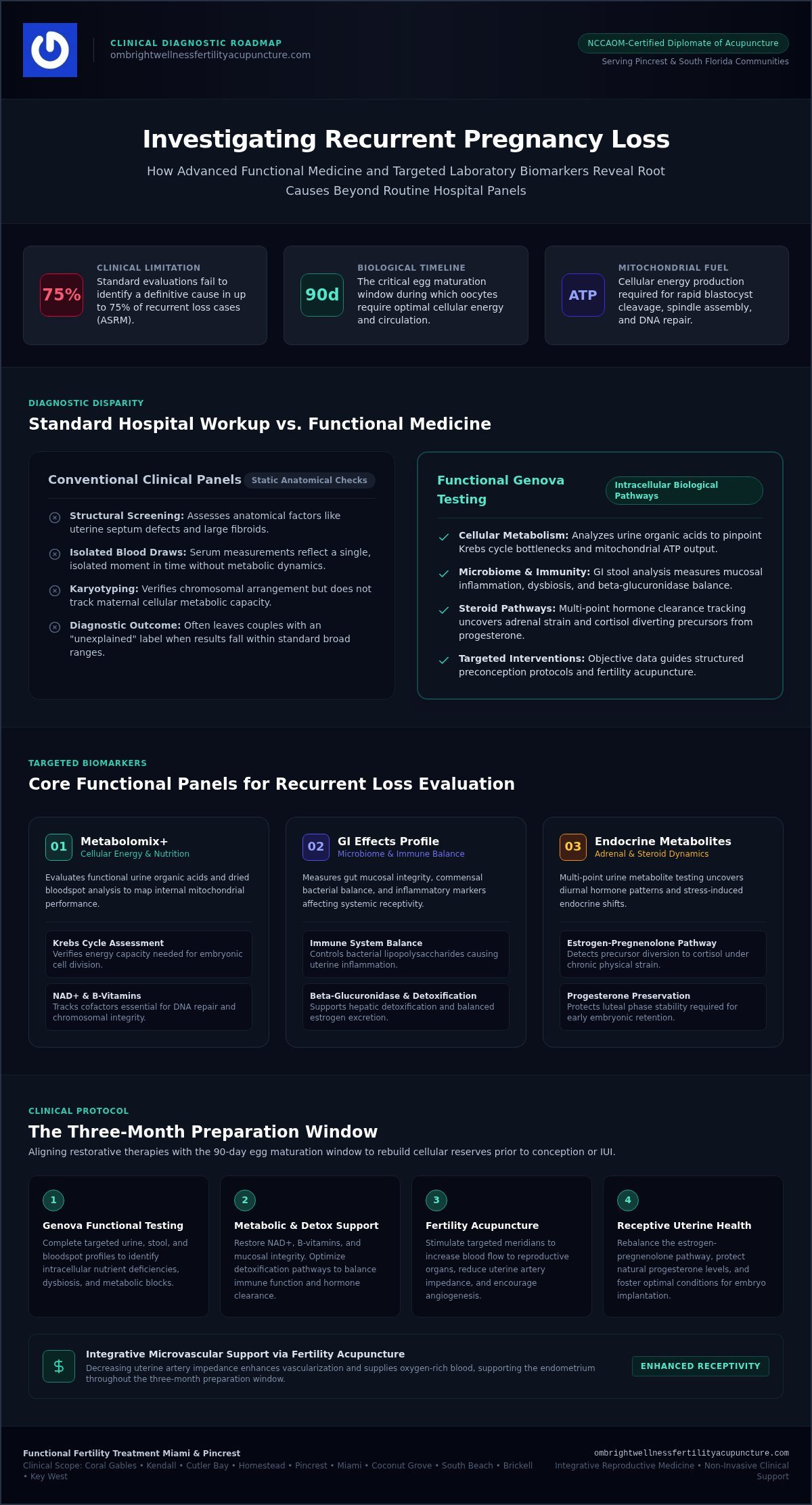
According to the American Society for Reproductive Medicine, standard clinical evaluations fail to identify a definitive cause in up to 75% of recurrent pregnancy loss cases. For hopeful parents seeking Genova diagnostics for recurrent loss Pincrest practitioners provide a clear path forward when routine hospital panels return without actionable answers.
Hearing that your laboratory results are normal brings little comfort when you carry the physical and emotional exhaustion of repeated losses or failed embryo transfers. You know your body deserves deeper investigation than an unexplained diagnosis, especially when anxiety clouds future conception attempts. In this guide, you will discover how advanced Genova diagnostics identify hidden metabolic, gut, and hormonal contributors to recurrent pregnancy loss for families in Pincrest. We will walk through the biological biomarkers conventional testing overlooks, examine how systemic balance protects the 90-day egg maturation window, and outline a targeted roadmap to restore your cellular health before your next pregnancy.
Key Takeaways
- Standard hospital evaluations primarily screen for structural uterine anomalies and major clotting disorders, frequently missing subtle cellular and mitochondrial imbalances.
- Using targeted Genova diagnostics for recurrent loss Pincrest practitioners can uncover hidden organic acid deficiencies, microbiome disruptions, and hormone clearance issues.
- Functional urine and stool assessments evaluate intracellular metabolism and biological pathways rather than simply providing a static snapshot from a standard blood draw.
- Objective laboratory biomarkers shape a structured three-month preparation window, using fertility acupuncture to improve blood flow to reproductive organs and rebuild cellular reserves before conception.
Why Standard Testing Misses Underlying Causes of Recurrent Loss
When couples face the heartbreak of repeated early losses, standard hospital assessments focus heavily on macroscopic anatomical and chromosomal factors. A clinical workup for recurrent miscarriage routinely checks for uterine septum defects, large fibroids, antiphospholipid syndrome, and parental chromosomal translocations. While vital for ruling out structural barriers, these evaluations stop short of assessing cellular metabolism. For hopeful parents turning to Genova diagnostics for recurrent loss Pincrest practitioners offer an essential bridge between static anatomical checks and the living biological dynamics of cellular vitality.
The Boundary of Conventional Recurrent Miscarriage Panels
Standard panels rely primarily on pelvic imaging, diagnostic hysteroscopy, and isolated hormone draws. Parental karyotyping confirms whether chromosomes are arranged properly, but it cannot measure whether maternal cells have the biological resources to fuel rapid embryonic cleavage. Routine serum blood tests also present clear limitations. They reflect circulating markers at a single, isolated moment, frequently masking deep intracellular nutrient depletions and oxidative strain within reproductive tissues. When these high-level tests return within standard reference ranges, couples often receive an unexplained diagnosis without actionable guidance.
How Functional Medicine Identifies Hidden Biological Stressors
Functional medicine views recurrent loss as a signal of systemic distress rather than an unexplainable event. Early embryonic division is an energy-intensive biological process. A newly formed blastocyst relies on maternal mitochondria to produce adenosine triphosphate (ATP) for DNA replication, spindle assembly, and sustained cellular division. Cellular health directly determines whether an embryo progresses past initial implantation or arrests prematurely. Subtle metabolic imbalances, chronic gut mucosal inflammation, and subclinical immune activation drain these cellular reserves long before anatomical disease appears. By identifying these quiet metabolic roadblocks, functional medicine allows practitioners to restore systemic balance, protect cellular integrity, and support the receptive internal environment required for healthy embryonic development.
Key Genova Diagnostics Panels for Evaluating Recurrent Loss
Functional evaluations investigate biological pathways rather than just anatomical structures. By measuring cellular metabolism, gut microbiome diversity, and endocrine clearance, these specialized assessments uncover hidden stressors that compromise embryo viability. When seeking Genova diagnostics for recurrent loss Pincrest families gain access to targeted testing protocols designed to uncover the biochemical reasons behind unexplained miscarriages.
Metabolomix+ and Cellular Energy Production
The Metabolomix+ profile evaluates cellular nutrition through functional urine organic acids and dried bloodspot analysis. It identifies functional roadblocks within the Krebs cycle, showing whether mitochondria can produce the energy required for cellular division. The panel also tracks fatty acid balances and vital micronutrients, including B-vitamins and NAD+, which fuel enzymatic repair and support chromosomal stability during early embryonic development.
Gastrointestinal Microbiome and Systemic Immune Balance
Through the GI Effects profile, clinicians evaluate gut mucosal health, commensal bacterial levels, and inflammatory markers. Intestinal dysbiosis can release bacterial lipopolysaccharides into circulation, generating low-grade systemic inflammation that disrupts the uterine lining. Imbalanced flora also alters beta-glucuronidase activity, interfering with estrogen excretion and hepatic detoxification. Restoring gut diversity fosters maternal immune system balance, which is necessary for the body to accept and nurture an implanting embryo.
Assessing the Estrogen-Pregnenolone Pathway and Adrenal Stress
Sustained emotional stress and physical depletion place substantial demands on the endocrine network. Under chronic strain, the estrogen-pregnenolone pathway frequently shifts precursor hormones toward cortisol production at the expense of reproductive steroids. This biochemical diversion compromises luteal phase stability and natural progesterone production. Multi-point urine metabolite testing tracks how these hormones are metabolized and cleared throughout the day, offering far clearer clinical insight than isolated serum values.
For individuals seeking structured support through functional medicine for fertility, these functional panels turn elusive symptoms into objective markers that inform restorative care.
Comparing Functional Diagnostic Panels with Standard Blood Tests
Standard blood tests operate under tight homeostatic mechanisms. The bloodstream works continuously to maintain stable circulating nutrient levels, often drawing vital minerals and cofactors directly from organs and peripheral tissues to preserve equilibrium. Because of this protective buffering, routine serum draws can easily mask depleted stores inside reproductive cells. When investigating repeat miscarriages with Genova diagnostics for recurrent loss Pincrest residents obtain an evaluation that looks beyond circulating blood fluid into cellular activity and tissue health.
Serum Testing Versus Intracellular Functional Assessment
Static blood panels measure how much of a substance travels through the bloodstream at a single instant. In contrast, urine organic acid analysis reveals whether your cells successfully convert those nutrients into metabolic energy. For example, high organic acid byproducts in urine signal enzymatic blocks within biochemical pathways, even if serum vitamin levels appear entirely sufficient. Functional testing also evaluates methylation capacity by assessing plasma intermediates alongside genetic polymorphisms. Intact methylation regulates homocysteine processing, governs cellular repair, and establishes the vascular architecture necessary for fetal nourishment during early placental development.
Evaluating Toxic Burden and Cellular Detoxification
Environmental exposures place an unseen burden on reproductive tissues. Plasticizers, solvents, and heavy metals trigger oxidative stress by generating reactive oxygen species that damage lipid membranes and fragile mitochondrial DNA. When natural detoxification systems become overwhelmed, this toxic accumulation directly impairs follicle health during the 90-day egg maturation window.
Functional assessment compares key biological markers to clarify systemic health:
- Circulating Serum Draws: Capture isolated concentrations subject to daily dietary shifts and acute physical stress.
- Intracellular Metabolites: Reveal downstream biochemical efficiency, mitochondrial output, and cellular energy deficits.
- Stool Ecology Markers: Identify mucosal immune triggers, gut microbiome composition, and intestinal barrier breakdown.
- Antioxidant Reserve Profiles: Highlight specific pathway weaknesses, showing whether glutathione and protective enzymes require clinical replenishment.
Using Genova diagnostics for recurrent loss Pincrest clinicians can pinpoint precise physiological hurdles instead of relying on broad reference ranges. This level of clarity helps couples understand their unique biological terrain and take purposeful steps toward recovery.
The Process of Completing Genova Testing in Pincrest
Completing specialized functional laboratory analysis does not require hospital admissions or complicated clinical visits. Instead, the workflow follows an organized path designed to keep you informed and supported at every stage. When utilizing Genova diagnostics for recurrent loss Pincrest residents move through a four-step diagnostic journey that transforms confusing physical symptoms into clear biological targets.
Clinical Intake and Personalized Panel Selection
The journey begins with an initial clinical intake that evaluates your reproductive history in detail. Rather than looking only at broad diagnostic labels, your clinician reviews previous pregnancy losses, failed IUI cycles, and subtle physical signals. Based on this personal assessment, specific Genova profiles are curated to address your unique situation, whether your history points toward mitochondrial energy deficits, gut immune reactivity, or endocrine imbalances.
Convenient Sample Collection and Laboratory Analysis
Specialized testing kits arrive right at your doorstep with clear handling guidelines. Most evaluations rely on straightforward at-home sample collection methods:
- Urine and Saliva Samples: Collected directly at home according to specific collection schedules to monitor circadian hormone output and organic acid excretion.
- Stool Ecology Specimens: Completed in the privacy of your home using simple preservative vials that stabilize bacterial DNA and digestive markers.
- Bloodspot or Phlebotomy Components: Completed either via simple fingerstick cards at home or through local partner draw sites across Miami-Dade County.
Following collection, specimens are shipped using prepaid priority mailers directly to Genova’s CLIA-certified facilities. The laboratory utilizes high-precision tandem mass spectrometry and gas chromatography to analyze over a hundred individual metabolic and microbial biomarkers.
Translating Lab Biomarkers into Daily Clinical Steps
Within several weeks, your test results generate an objective blueprint of your cellular terrain. During your clinical consultation, your practitioner reviews each biological marker with you, explaining how specific enzyme blocks or microbiome shifts may have contributed to prior pregnancy arrests. These concrete findings remove uncertainty, replacing standard trial-and-error advice with a tailored restorative protocol.
If you are ready to identify root causes and build a clear plan, schedule your fertility telehealth consultations to begin your diagnostic journey.
Restoring Reproductive Health After Unexplained Recurrent Loss
Objective laboratory results mean little without a clinical plan to rebuild cellular resilience. Once specialized testing clarifies the biological hurdles behind repeat losses, treatment shifts from searching for answers to purposeful preparation. By pairing targeted lab insights from Genova diagnostics for recurrent loss Pincrest patients can address underlying physiological stress and create an optimal biological foundation before conceiving again.
Fertility Acupuncture for Uterine Receptivity and Blood Flow
Vascular supply directly affects the uterine environment where implantation occurs. Clinical fertility acupuncture targets specific points along meridians to soothe sympathetic nerve tension, which measurably reduces uterine artery impedance. This shift restores healthy blood flow to reproductive organs, encouraging angiogenesis so that a nutrient-dense endometrial lining can mature. Discover our dedicated approach to fertility acupuncture in Miami for personalized conception support.
Maximizing the Three-Month Preparation Window
Developing oocytes require approximately ninety days to move from their resting state to ovulation. Because this egg maturation window takes three full months, a dedicated three-month preparation window allows intended parents to nourish cellular energy reserves, replete NAD+, and repair mitochondrial membranes before ovulation or embryo transfer. This structured pause supports couples exploring non-invasive fertility treatment in Miami, helping optimize egg quality through evidence-based cellular care.
Combining Lab Findings with Integrative Supportive Care
Under the guidance of an NCCAOM-Certified Diplomate of Acupuncture, laboratory biomarkers inform every stage of restorative care. When GI Effects or Metabolomix+ profiles highlight immune activation or toxic burden, gentle detoxification and customized herbal medicine calm mucosal inflammation and restore immune system balance. These non-invasive modalities work smoothly whether you conceive naturally, prepare for an IUI, or seek holistic supportive care during IVF. This integrated care provides Pincrest families with physical stamina, emotional reassurance, and clear physiological momentum.
Moving Forward with Clarity and Confidence
Experiencing repeated pregnancy loss is emotionally taxing, especially when standard evaluations provide no clear answers. You do not have to settle for the frustration of an unexplained diagnosis. Through specialized functional testing, you can uncover cellular deficiencies, gut inflammation, and hormone clearance patterns that conventional blood draws overlook. Choosing Genova diagnostics for recurrent loss Pincrest practitioners provide allows you to transform ambiguous symptoms into an actionable clinical strategy.
Every step of your care is led by an NCCAOM-Certified Diplomate of Acupuncture, pairing objective laboratory analysis with clinical therapies that enhance blood flow and uterine receptivity. By using targeted biomarkers to guide your preconception care, you give your body the exact cellular support it needs to thrive. Take the next step on your path toward healing. Schedule a functional fertility consultation to uncover your root causes and build a calm, confident plan for your future family.
Frequently Asked Questions
What makes Genova diagnostics different from standard hospital miscarriage panels?
Conventional panels focus almost exclusively on anatomical uterine defects, major karyotyping anomalies, or severe blood-clotting disorders. In contrast, choosing Genova diagnostics for recurrent loss Pincrest couples can assess cellular biochemistry, metabolic pathways, and mucosal inflammation. By measuring intracellular organic acids, nutrient cofactors, and gut ecology, these profiles reveal subtle biological dysfunctions that standard hospital blood panels consistently miss.
How does gut health relate to recurrent pregnancy loss?
The gastrointestinal tract houses a major portion of the body’s immune defenses. When gut dysbiosis occurs, elevated intestinal permeability allows endotoxins to leak into systemic circulation, provoking maternal inflammation. This immune response interferes with immune system balance and alters beta-glucuronidase activity, which disrupts estrogen clearance. Restoring digestive balance calms systemic inflammation and creates a receptive, welcoming uterine lining necessary for sustained embryo implantation.
Can metabolic and organic acid testing improve egg and embryo quality?
Yes, metabolic and organic acid testing reveals whether cells generate enough energy to support early development. By evaluating Krebs cycle metabolites, clinicians identify functional shortages in B-vitamins, antioxidants, and NAD+. Replenishing these vital cofactors during the 90-day egg maturation window protects developing oocytes against oxidative damage, preserves mitochondrial membrane integrity, and ensures dividing blastocysts have the cellular energy needed to thrive.
How long does it take to receive and review Genova lab results?
Genova Diagnostics typically processes and delivers test findings to ordering practitioners within 7 to 17 business days after receiving your specimens. Patients return their at-home test kits using prepaid priority mail within 24 hours of collection. Once the laboratory completes its high-precision analysis, your clinician reviews the data during an in-depth consultation to outline practical steps for your recovery.
Is functional diagnostic testing helpful if my previous fertility tests were normal?
Absolutely. Standard blood tests evaluate circulating hormones and nutrients at a single moment, often missing subclinical deficiencies within reproductive tissues. In fact, standard panels leave up to 75% of recurrent losses unexplained. With Genova diagnostics for recurrent loss Pincrest patients can identify hidden metabolic blocks, adrenal stress shifts along the estrogen-pregnenolone pathway, and subtle immune activation that standard tests routinely overlook.
How do acupuncture and functional medicine work together after a miscarriage?
Functional medicine uses objective laboratory metrics to identify biological deficiencies, guide detoxification, and formulate tailored nutritional support. Concurrently, fertility acupuncture stimulates specific points on meridians to regulate autonomic nervous tone and improve blood flow to reproductive organs. This dual clinical approach lowers uterine artery impedance and promotes angiogenesis, pairing internal biochemical balance with restored tissue circulation across South Florida.
When should Pincrest patients begin the testing process before trying to conceive again?
We recommend initiating testing at least three to four months before attempting natural conception, IUI, or an embryo transfer. Because follicles develop over a dedicated three-month preparation window, beginning early allows sufficient time to receive lab data, correct intracellular nutrient deficits, and restore mucosal health. This intentional pause builds maternal reserves, reduces anxiety, and sets the stage for a healthy pregnancy.