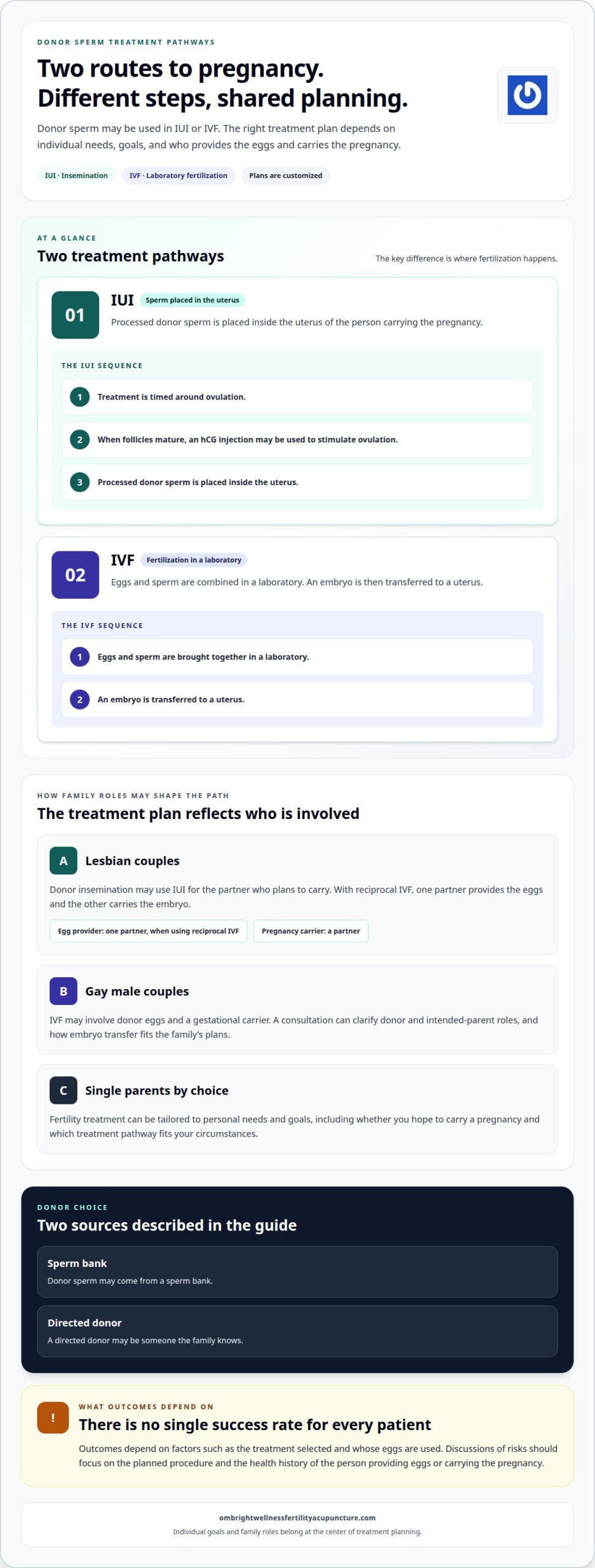
Donor sperm can be used for IUI, which places processed sperm inside the uterus of the person carrying the pregnancy, or for IVF, where eggs and sperm are combined in a laboratory before an embryo is transferred to a uterus. Reproductive Wellness says fertility treatment plans are customized to address each person’s needs. Single parents by choice can also explore fertility treatment using donor sperm.
Choosing a path to parenthood brings practical questions alongside deeply personal hopes. This guide explains donor sperm treatment options, how fertility care can be tailored for a single parent by choice, and how inclusive, holistic support can complement a reproductive care plan. Use it as a starting point to consider the steps ahead, with your family structure and individual needs at the center.
Key Takeaways
- Compare IUI and IVF to understand how donor sperm can be part of different paths to pregnancy.
- As a single parent by choice, consider a treatment plan shaped around your health, goals, and preferred route to parenthood.
- Explore how holistic support may complement fertility care while keeping your individual needs in focus.
- Think through what inclusive care should address, including who provides the eggs, who carries the pregnancy, and the support each person needs.
What options are available for individuals or couples using donor sperm?
Donor sperm may be used for IUI or IVF, depending on who provides the eggs and carries the pregnancy. For LGBTQ+ families, options may include a partner’s involvement in conception or a gestational carrier.
Treatment Options for Lesbian Couples
For lesbian couples, donor insemination places processed donor sperm inside the uterus of the partner who plans to carry the pregnancy. IUI is timed around ovulation; when follicles mature, an hCG injection may be used to stimulate ovulation. Reciprocal IVF offers another shared path: one partner provides the eggs, and the other carries the embryo after eggs and sperm are combined in a laboratory.
Sperm may come from a sperm bank or a directed donor, such as someone the family knows. A consultation can help clarify which partner will provide eggs, who hopes to carry, and whether IUI or IVF fits the family’s fertility journey. Those decisions make the treatment plan more specific to the couple’s goals and circumstances.
Treatment Success Rates and Risks
There is no single success rate that applies to every LGBTQ+ patient. Outcomes depend on factors such as the treatment selected and whose eggs are used. IUI and IVF also involve different steps: IUI places processed sperm in the uterus, while IVF involves fertilization in a laboratory and embryo transfer.
Discussions of risks should focus on the planned procedure and the health history of the person providing eggs or carrying the pregnancy. For gay male couples, IVF may involve donor eggs and a gestational carrier. A consultation can clarify the roles of donors and intended parents, and how embryo transfer fits the family’s plans.
Can I pursue fertility treatment as a single parent by choice?
Yes. A single parent by choice can pursue fertility treatment with a plan tailored to personal needs and goals. Ombright Wellness customizes fertility treatment plans around each person’s needs. Start by considering what parenthood means to you, whether you hope to carry a pregnancy, and what you want to know before choosing among fertility options.
A practical first step is to organize your health history and treatment priorities. Note relevant cycle information, previous evaluations, and health concerns to discuss. Then consider which method fits your preferences and circumstances. You may want to compare a pathway with fewer steps against one involving laboratory procedures, while keeping the decision focused on your goals.
Hormonal treatment may be part of a fertility plan, depending on the method and clinical circumstances. If medication is discussed, ask what role it plays, how timing is determined, and what monitoring is involved. Keeping these questions together can help you understand each step and how it relates to your approach to building a family.
Personalized planning also means revisiting the plan as your needs become clearer. You might begin with a consultation about your goals, then identify relevant testing, treatment preferences, and support needs. This gives you a structured way forward without assuming one method suits everyone. Take time to consider what could make the process feel manageable.
For an integrative perspective on your goals and reproductive health, explore holistic fertility support as part of your planning.
Holistic fertility support for LGBTQ+ families
Holistic fertility care for LGBTQ+ families in Pincrest should complement reproductive treatment and reflect each family’s goals. Support can address emotional well-being and practical routines alongside clinical care.
Holistic Support for IUI and IVF
For people pursuing IUI or IVF, supportive care may include acupuncture for fertility support and stress relief. Note which parts of treatment feel most demanding, then discuss supportive practices with your care team. For example, someone preparing for embryo transfer might ask about ways to manage stress during that stage.
Everyday habits can also be part of a supportive plan. A healthy diet that includes fruits, vegetables, lean proteins, and healthy fats can support fertility. Choose changes that fit your routine, such as planning balanced meals, rather than relying on one food to shape the outcome.
Infertility Support
Infertility can affect individuals and couples in different ways. Testing and medical history help guide discussions; someone with endometriosis, for example, can ask how that history relates to their care plan. Supportive care can address personal well-being alongside clinical treatment, while diagnosis and medical decisions remain part of reproductive care.
Gestational surrogacy may be an option for people who have had a hysterectomy, were exposed to DES, or have a congenital absence of the uterus while their ovaries are preserved. Parentage planning is a separate consideration in assisted reproduction. Intended parents can clarify the roles of any donor and gestational carrier, then seek legal guidance relevant to their family-building arrangement.
Choosing holistic fertility care for LGBTQ+ families in Pincrest means making room for each family’s structure, questions, and priorities. A thoughtful approach considers medical care and personal support together, while keeping decisions centered on the people building the family.
Inclusive fertility care for LGBTQ+ families
Inclusive reproductive care recognizes each family’s roles, goals, and chosen path to parenthood. Holistic fertility care for LGBTQ+ families in Pincrest should reflect who provides eggs, who carries the pregnancy, and whether a sperm donor or gestational carrier is involved.
When comparing fertility clinics, consider how their intake process addresses family structure and treatment choices. A consultation should give you space to explain your goals, discuss IUI or IVF, and identify who should be included in care conversations. Notice whether forms use inclusive language and staff address each person by their chosen name and role. These details can make practical steps clearer from the start.
Which clinics near Pincrest provide LGBTQ+-inclusive care? Look for reproductive centers whose materials and consultations address LGBTQ+ family building, donor sperm, reciprocal IVF, and gestational-carrier arrangements. The clinic’s approach should clarify how it includes intended parents and the person receiving treatment in care conversations.
- At intake: Check whether forms allow you to describe your family and identify relevant roles without assumptions.
- During consultation: Bring a short list of questions about treatment options, communication, and who participates in planning.
- Across the care plan: Look for language that distinguishes the egg provider, intended parent, and person carrying a pregnancy.
Inclusive care also means discussing the sperm donor as part of the treatment plan, rather than treating donor use as an exception. For example, a lesbian couple considering reciprocal IVF can explain which partner hopes to provide eggs and which hopes to carry the pregnancy. Clear language supports informed decisions and keeps everyone’s role visible throughout care.
For LGBTQ+ families in Pincrest, holistic fertility care can support a personalized approach to reproductive treatment and family building. Explore inclusive fertility support as one part of your care approach.
Ombright Wellness Fertility Acupuncture: Fertility Acupuncture
Ombright Wellness Fertility Acupuncture offers Fertility Acupuncture as supportive care during a fertility journey. If you’re considering IUI or IVF, acupuncture may complement your care plan, but it does not replace reproductive treatment. A discussion can connect your goals and treatment schedule with the support you’re seeking.
Care may also include Fertility IV Therapy, Fertility Ozone Therapy, or Fertility Hyperbaric Oxygen Therapy. Each is a distinct supportive service to consider in relation to your needs and broader care plan. The practice’s NCCAOM-Certified Diplomate of Acupuncture brings a relevant credential to acupuncture care.
To explore whether Fertility Acupuncture fits your fertility care, contact Ombright Wellness Fertility Acupuncture.
Choose a Next Step That Fits Your Family
Your next step can be a chance to clarify what matters most in your family-building journey. Consider which questions feel most important and what support would help you feel prepared to discuss them. A short written note can give your priorities a clear starting point.
For families considering holistic fertility care for LGBTQ+ families in Pincrest, a thoughtful plan can begin with your goals and values. Move at a pace that feels manageable, keeping your decisions grounded in what feels right for your family.
Every path to parenthood is personal. Let your next step reflect your needs, and give yourself room to approach the journey with care and confidence.
Frequently Asked Questions
Do you offer fertility preservation for transgender and non-binary patients?
Ombright Wellness Fertility Acupuncture offers supportive reproductive wellness services, not egg or sperm freezing procedures. Transgender and non-binary patients can discuss how fertility support may fit alongside their family-building goals and any preservation plan. Start by identifying the reproductive health concerns you want to address, such as stress or general wellness, and bring those priorities to a consultation.
What Are The Fertility Options For LGBTQ+ Families?
Options depend on who provides eggs, who carries the pregnancy, and whether donor sperm or a gestational carrier is part of the plan. For example, a lesbian couple may consider one partner providing eggs while the other carries the pregnancy. A single person may explore donor sperm. Clarify each intended parent’s role and preferred path, then discuss how those choices shape clinical planning.
What should I do to get started?
Begin by writing down your family-building goals, relevant health history, and questions about supportive care. At an initial consultation, Ombright Wellness reviews your health history, lifestyle, and fertility goals, then develops a personalized plan. You can also ask how telehealth consultations may support remote planning. This preparation helps keep the conversation focused on your priorities and the support you’re seeking.
What does holistic fertility care include for LGBTQ+ families?
Holistic fertility care can bring together supportive services and broader health goals. Options at Ombright Wellness include Functional Medicine for Fertility, Genova labs and diagnostics for fertility, hypnotherapy, and sound therapy. These services can address different aspects of reproductive wellness while keeping your plan personal. They complement fertility care and do not replace surgical treatment or obstetric care.
What fertility treatment options are available for LGBTQ+ couples and individuals?
Fertility pathways may involve donor sperm, IVF, or a gestational carrier, depending on the family’s reproductive roles and goals. Ombright Wellness provides supportive care for male and female fertility factors, including concerns related to sperm quality and motility. Telehealth consultations are also available for remote guidance and treatment planning. A clear outline of your goals can help organize your questions for a consultation.
What steps should LGBTQ+ families take to begin fertility care near Pincrest?
For families near Pincrest, start by outlining who hopes to provide eggs, carry the pregnancy, or participate as an intended parent. Gather relevant health history and note questions about supportive care. Then arrange a consultation to discuss your goals and possible plan. Ombright Wellness offers in-person visits and telehealth consultations, giving local families in Pincrest and across Miami a way to begin planning around their needs.