
What if an abnormal sperm morphology result is a reason to ask more questions, not a verdict on fertility? If you’re researching improving sperm morphology with functional medicine Kendall, it’s understandable to want clear answers and a reliable next step. Morphology describes the shape of sperm, but one result alone can’t determine whether conception is possible.
A clinician interprets morphology alongside the rest of the semen analysis, including sperm concentration and motility, as well as your health history and your partner’s circumstances. Functional medicine may offer an individualized way to discuss lifestyle, health history, and other factors that could be relevant. It can’t promise to change a lab score or guarantee conception.
This article explains what morphology results can and can’t tell you, what to ask a qualified urologist or reproductive specialist, and how coordinated supportive care in Kendall may fit alongside conventional fertility care. You’ll also learn how to assess claims carefully and consider whether functional medicine is appropriate for your care plan.
Key Takeaways
- Read sperm morphology as one part of a semen analysis, not a stand-alone diagnosis or prediction of conception.
- Improving sperm morphology with functional medicine Kendall may involve discussing individual health history, lifestyle, and environment, without an expectation of a guaranteed lab-score change.
- Use functional wellness support alongside, not instead of, appropriate evaluation by a urologist or fertility specialist.
- Prepare for appointments by bringing the full lab report, relevant medical history, current care details, and questions for your clinicians.
- Explore Ombright Wellness Fertility Acupuncture offerings, including functional medicine, fertility acupuncture, Genova labs, and telehealth consultations. Ask about the clinician providing any service and its role in your care.
What Sperm Morphology Means and Why One Result Is Not the Whole Story
An abnormal morphology result can be unsettling, but it describes one feature of a semen sample, not a person’s overall fertility. Sperm morphology is the laboratory assessment of sperm form, including whether sperm meet specified criteria for a typical shape. It is a laboratory finding, not a stand-alone diagnosis or a prediction of whether conception will occur.
What does a sperm morphology result measure?
During a semen analysis, a laboratory examines sperm under a microscope and classifies their forms using defined criteria. The World Health Organization’s 2021 sixth edition of its Laboratory Manual for the Examination and Processing of Human Semen gives a lower reference value of 4% sperm with normal forms when strict criteria are used. That reference point helps clinicians interpret results; by itself, it does not establish infertility or determine an individual’s chance of conception.
Methods and criteria matter, so a result should be read in light of the laboratory’s reporting and the clinician’s interpretation. The overview of Semen analysis describes morphology as one component of this testing. If a report uses unfamiliar terms or you’re unsure how the result was assessed, ask the ordering clinician to explain the method and what the finding means in your case.
Can morphology alone explain difficulty conceiving?
No single morphology percentage can explain every difficulty conceiving. Clinicians consider it alongside sperm concentration, motility, and other reported semen measures, including total motile sperm count when available. They also review relevant medical and reproductive history, since the broader picture can change how a result is understood.
Fertility involves both partners and many clinical factors. A morphology result alone can’t predict whether natural conception will occur or determine the likely outcome of IUI or IVF. It should prompt a thoughtful discussion, not a conclusion based on one number.
Bring the complete laboratory report to a qualified clinician, such as a urologist or reproductive specialist. Ask how morphology fits with the other semen parameters, whether the result needs follow-up, and what your history may add to the interpretation. For people considering improving sperm morphology with functional medicine Kendall, this context matters: supportive care can be discussed as part of an individualized plan, but it shouldn’t replace medical evaluation or be presented as a guaranteed way to change a result.
How Functional Medicine in Kendall Can Explore Factors Related to Sperm Health
After reviewing what a morphology result can and can’t tell you, the next question may be whether other aspects of health deserve attention. Functional medicine looks at health history, environment, and lifestyle to explore possible contributing factors. This approach can support a broader conversation about sperm health, but it can’t establish the cause of an abnormal result or promise a change in morphology.
Some health conditions, medications, lifestyle habits, or environmental exposures may be relevant to reproductive health. An association, however, doesn’t prove that a factor caused one person’s test result. A clinician needs to consider the whole clinical picture. The Mayo Clinic’s explanation of sperm morphology can help orient readers, while personal interpretation belongs with a qualified clinician familiar with the full semen analysis and medical history.
What might a clinician review during an individualized assessment?
An assessment may begin with discussion of medical history, medications and supplements, lifestyle, prior test results, and evaluations already completed. Depending on the situation, a urologist or reproductive specialist may recommend further medical assessment. There isn’t one standard set of tests or interventions that everyone needs.
Genova labs are among Ombright Wellness’s offerings, but they shouldn’t be assumed to diagnose sperm morphology. Before agreeing to any test, ask: What question is it intended to answer? Is it appropriate for male fertility? How could the result change the care plan? These questions help keep testing purposeful and distinguish a wellness assessment from a diagnostic evaluation.
Where can lifestyle and whole-person support fit?
Everyday habits such as avoiding smoking, moderating alcohol, eating well, and managing stress can be discussed as part of general health support. They shouldn’t be presented as proven treatments for an individual’s morphology result. A clinician can help prioritize realistic changes in light of your health, existing care, and personal circumstances.
Supportive wellness care is also different from diagnosing or treating a medical condition. If you’re considering improving sperm morphology with functional medicine Kendall, coordinate that care with a urologist or reproductive specialist, and ask how any proposed intervention is supported by current evidence. Ombright Wellness offers functional medicine consultations. You can learn about functional medicine support and discuss how it may fit alongside your medical evaluation.
Functional Medicine or Medical Fertility Evaluation: How to Compare Your Options
A semen-analysis finding and a fertility prognosis are not the same thing. A urologist or reproductive specialist can assess results in the context of medical and reproductive history and determine whether further evaluation is appropriate. Functional medicine may offer additional wellness support, but it isn’t a substitute for diagnosing or treating a medical condition.
These approaches can have different purposes and may be coordinated. If a result remains concerning, or you have questions about what it means, review it with a qualified clinician who evaluates male reproductive health. Don’t choose a treatment based on morphology alone.
| Care option | Purpose | Questions it may address | When coordination may help |
|---|---|---|---|
| Medical fertility evaluation | Assess semen-analysis findings and reproductive health | How do the results fit with the full report and medical history? Is further evaluation appropriate? | When results are abnormal, persistent, or unclear, or conception has been difficult |
| Functional wellness support | Explore health history, lifestyle, and environmental factors relevant to overall wellness | Which areas might be reasonable to discuss? What evidence supports a proposed service for this concern? | When pursued alongside medical evaluation, with roles and follow-up clearly discussed |
Which clinician should assess an abnormal semen analysis?
Start with the clinician who ordered the test or seek a qualified urologist or reproductive specialist. Bring the complete report, including concentration, motility, morphology, and any other reported measures. A clinician can explain whether the finding needs follow-up and how your health and reproductive history affect its interpretation. One result alone doesn’t establish infertility or point to a specific treatment.
What should you ask before choosing integrative support?
Before adding supportive care, ask clear questions and look for answers that respect the limits of evidence:
- What evidence supports this service for my specific concern?
- How will you coordinate with my urologist or fertility specialist?
- How will we assess progress, and what outcomes are uncertain?
- Could this approach affect or delay my existing medical care?
For readers considering improving sperm morphology with functional medicine Kendall, a thoughtful plan should make these distinctions clear. Wellness support may be considered as part of coordinated care, but no provider should guarantee a particular laboratory change or suggest that supportive services replace appropriate medical evaluation.
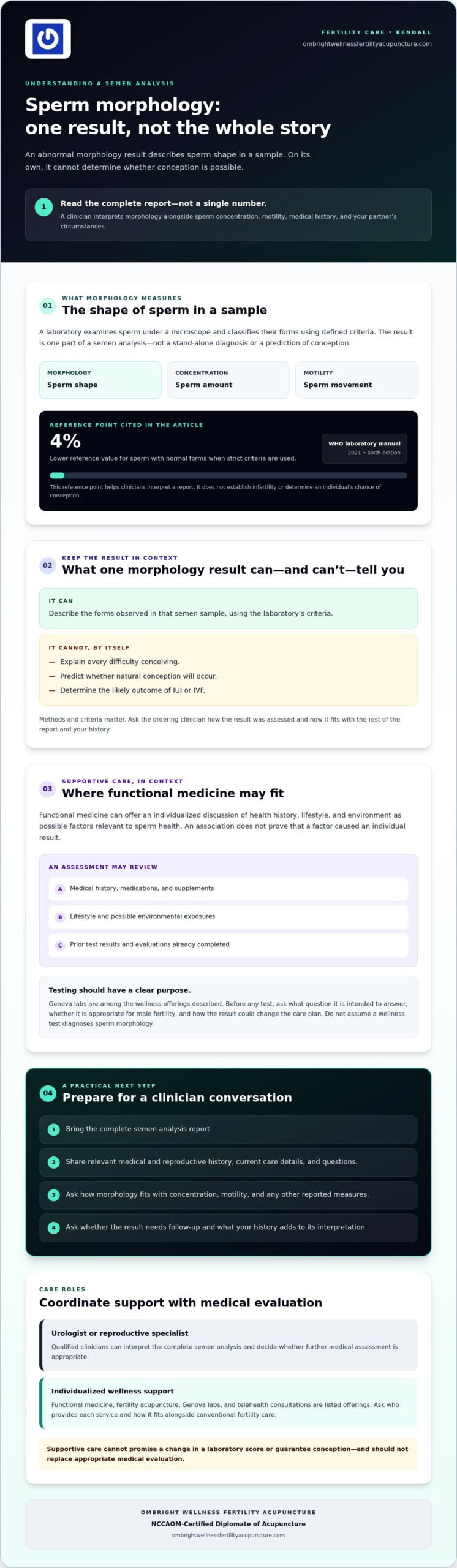
A Practical Next Step Checklist After a Low Morphology Result
A low morphology result can leave you unsure what to do first. A steady next step is to gather the full information and review it with a qualified clinician, rather than making decisions from one number. Use this checklist to prepare for a focused conversation.
- Get the complete semen-analysis report. Bring every page, not only the morphology value. Ask the clinician to explain each relevant finding and how the results fit together.
- Write down relevant health details. Note medical history, medications and supplements, prior fertility evaluations, and any questions or changes you’ve noticed. Include care you’re already receiving.
- Ask what follow-up is appropriate. Find out whether the result calls for further evaluation, a referral to a urologist or reproductive specialist, or consideration of both partners’ health and history.
- Clarify any proposed test or service. Ask what question it is meant to answer, what evidence supports it for your concern, what its limitations or possible risks are, and how the results would affect the care plan.
- Discuss repeat testing with your clinician. Whether and when another semen analysis is appropriate depends on your circumstances and the clinician’s assessment. There is no single timeline that applies to everyone.
- Keep treatment decisions coordinated. Don’t start, stop, or change prescribed treatment based only on an article or a morphology result. Discuss changes with the clinician who manages your care.
Before the appointment, choose your most important questions and bring them in writing. For example: “What does this result mean alongside the other semen measures?” and “Who should coordinate the next steps?” If a recommendation is unclear, ask the clinician to explain its purpose and how progress will be reviewed without assuming a particular lab result is guaranteed.
If you’re also exploring improving sperm morphology with functional medicine Kendall, keep supportive wellness care connected to medical follow-up. Ombright Wellness offers functional medicine consultations. Ask about functional medicine support and how it may fit alongside care from your urologist or reproductive specialist.
Improving Sperm Morphology With Functional Medicine in Kendall: What Support Can Address
For someone weighing improving sperm morphology with functional medicine Kendall, a first conversation can help clarify what supportive care may and may not address. Ombright Wellness lists functional medicine, fertility acupuncture, Genova labs and diagnostics, and fertility telehealth consultations among its offerings. Consider these services in light of your goals and medical evaluation, not as a promised way to change sperm morphology or fertility outcomes.
What can you discuss in an initial consultation?
Bring your complete semen-analysis report, questions about the results, and a brief record of prior evaluations or care. Sharing your fertility goals and the clinicians already involved can help make the discussion more relevant. You might ask:
- Which of your services, if any, may fit my goals and current care?
- What evidence supports that service for my specific concern, and what are its limitations?
- Are any proposed Genova tests relevant to male fertility, and how would the results guide care?
- How would you coordinate with my urologist or reproductive specialist?
Genova labs are an available offering, but that does not mean every test is appropriate for every person or that these labs diagnose sperm morphology. Ask what each test is intended to assess. A consultation can help you discuss supportive options; it doesn’t replace specialist evaluation or establish a medical diagnosis.
Before choosing care, ask who would provide the service and confirm the clinician’s current credentials and role. Clear answers about training, scope, evidence, and coordination can help you make an informed choice.
How can local and telehealth support fit your care?
Ombright Wellness serves people seeking fertility wellness support in Kendall. In-person care and telehealth consultations are listed options. Ask the clinic whether telehealth is appropriate for your needs, what services can be discussed remotely, and whether any parts of your care require in-person or specialist assessment.
The practice’s local service area includes Kendall, Coral Gable, Cutler Bay, Homestead, Pincrest, Miami, Coconut Grove, South Beach, Brickel, and Key West. If you live in one of these communities, ask which in-person or telehealth options may fit your needs.
Integrative support works best as a transparent part of a coordinated plan, with your medical evaluation and existing care kept in view. If you’re exploring options, you can Discuss your fertility wellness questions with Ombright Wellness and ask how its offerings may fit your circumstances. Start with your questions and the information you already have.
Take Your Next Fertility Care Step With Clarity
A sperm morphology result is one part of a semen analysis, not a stand-alone fertility prognosis. Reviewing the complete report with a qualified urologist or reproductive specialist can help you understand what the findings mean and whether further evaluation is appropriate.
If you’re considering improving sperm morphology with functional medicine Kendall, keep supportive care coordinated with medical evaluation. Ombright Wellness lists functional medicine, Genova labs, and in-person and telehealth consultations among its offerings. These options may provide a setting to discuss your goals and questions, but they don’t guarantee a change in morphology or fertility outcomes.
Bring your report, describe the care you’re already receiving, and ask what evidence and limitations apply to any proposed service. To discuss your fertility wellness questions, connect with Ombright Wellness. A clear, coordinated plan can help you move forward one informed conversation at a time.
Frequently Asked Questions
Can functional medicine improve sperm morphology?
Functional medicine may help you discuss health history, lifestyle, and environmental factors that could be relevant to overall reproductive health, but it can’t guarantee improved sperm morphology. People searching for “improving sperm morphology with functional medicine Kendall” should ask what evidence supports each proposed service for their particular concern. Consider supportive care alongside evaluation by a urologist or reproductive specialist, not as a replacement for diagnosis or medical treatment.
What does low sperm morphology mean?
Low sperm morphology means a smaller proportion of sperm in the sample met the laboratory’s criteria for typical form. The World Health Organization’s 2021 semen manual gives 4% normal forms as a lower reference value when strict criteria are used. That reference helps interpret a result, but it isn’t a dividing line between fertility and infertility. A clinician should review it with the complete semen analysis and relevant history.
Can sperm morphology improve over time?
Sperm morphology results may differ over time, but a future result or fertility outcome can’t be predicted from one report. Sperm development takes approximately three months, so changes made during that period may be relevant to a later sample, but they don’t guarantee a different morphology result. Ask your clinician whether repeat testing is appropriate and when to do it. Don’t start or change treatment based solely on an article.
Should I see a urologist for abnormal sperm morphology?
Yes, consider discussing an abnormal result with a urologist who evaluates male reproductive health, or with the clinician who ordered the test. Bring the full report and ask how morphology relates to concentration, motility, and your medical and reproductive history. A single result doesn’t diagnose infertility or identify a specific treatment. Your clinician can advise whether further evaluation or a referral is appropriate for you and your partner.
What tests are used to evaluate sperm morphology?
Sperm morphology is assessed as part of a semen analysis, in which a laboratory examines sperm form using specified criteria. The report should be reviewed alongside other semen measures, such as concentration and motility. There isn’t a morphology result that, by itself, explains difficulty conceiving. Ask the ordering clinician how the laboratory assessed the sample and whether any additional evaluation is appropriate based on your full history.
Can I get functional medicine fertility support in Kendall?
Ombright Wellness lists functional medicine, fertility acupuncture, Genova labs and diagnostics, and fertility telehealth consultations among its offerings. Its local service area includes Kendall, Coral Gable, Cutler Bay, Homestead, Pincrest, Miami, Coconut Grove, South Beach, Brickel, and Key West. In-person and telehealth consultations are listed options; ask about current availability and whether a service fits your needs.