People under 35 with regular cycles should seek a fertility evaluation after one year of unprotected intercourse without pregnancy; for ages 35 to 39, the point to seek evaluation is after six months. At 40 or over, seek evaluation more promptly. A natural fertility specialist in Coconut Grove may support a personalized plan, and irregular cycles, endometriosis, hormonal imbalances, or a history of extensive abdominal surgery are reasons to seek help sooner.
It’s understandable to want a thoughtful, less invasive approach while trying to conceive. Natural and integrative care can be part of a broader fertility plan, with choices shaped by your health history, cycle patterns, and goals rather than a one-size-fits-all protocol.
This article explains what to consider in a fertility assessment, when to seek support, and how fertility acupuncture may fit into an individualized approach. It also covers how complementary care can accompany steps to better understand your reproductive health.
Key Takeaways
- Prepare for a fertility assessment by noting cycle patterns, health history, and all supplements you take.
- Consider how symptoms such as irregular cycles or known reproductive conditions may shape the timing and focus of evaluation.
- Learn how fertility acupuncture and other integrative therapies may fit into a personalized fertility care plan.
- Compare holistic care options, including acupuncture, IV therapy, ozone therapy, and hyperbaric oxygen therapy, with your individual goals in mind.
2. Fertility assessment and personalized treatment
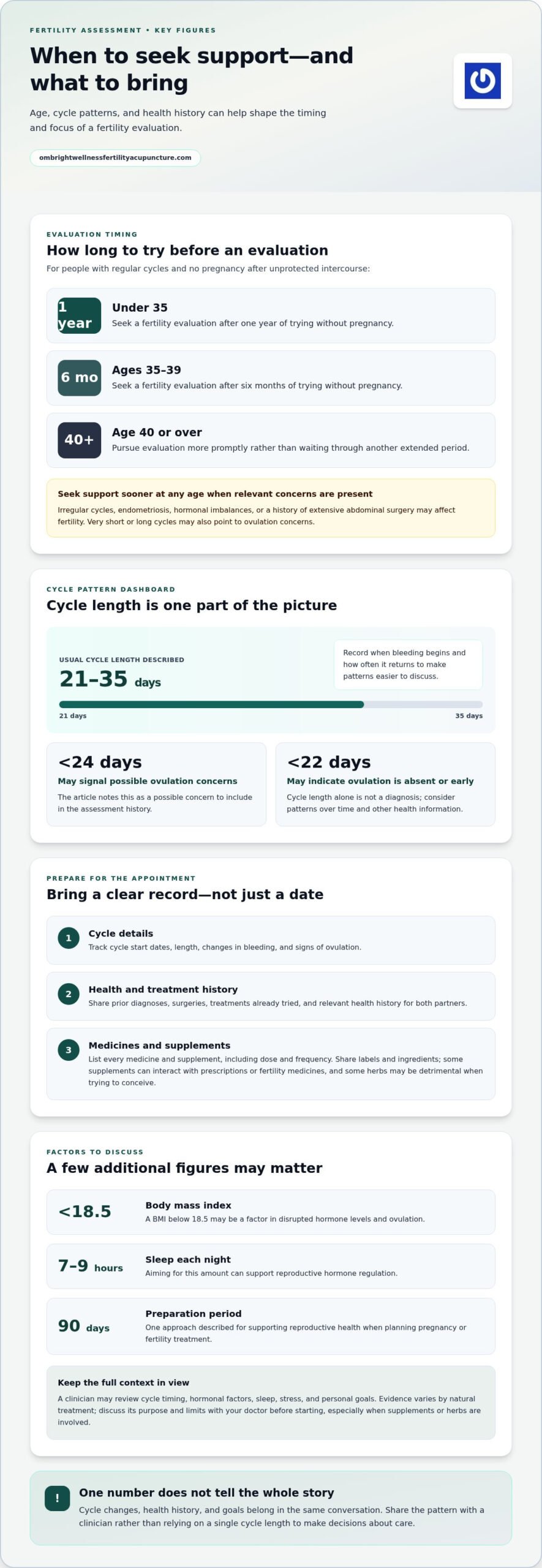
A useful assessment begins with a clear picture of menstrual patterns, health history, and goals. Track cycle start dates, length, bleeding changes, and signs of ovulation before an appointment. A cycle usually lasts 21 to 35 days, while cycles shorter than 24 days may signal possible ovulation concerns. Share prior diagnoses, surgeries, and any treatments already tried.
Bring a complete list of medicines and supplements, including doses and how often you take them. People trying to conceive should tell their doctor about every supplement, since some can interact with prescriptions or fertility medicines. A body mass index below 18.5 may also be a factor in disrupted hormone levels and ovulation. These details help shape which questions or tests may be useful.
Personalized care connects findings with practical next steps. For example, a clinician may review cycle timing, assess hormonal factors, and discuss habits such as sleep and stress management. Aiming for 7-9 hours of sleep each night can support reproductive hormone regulation. If planning pregnancy or IVF/IUI, a 90-day preparation period is one approach described for supporting reproductive health.
Natural fertility care and conventional fertility treatment differ in focus, but can work alongside each other. Natural approaches may address stress, daily habits, and overall health, while conventional evaluation can investigate reproductive factors and guide medical treatment.
Evidence varies by natural treatment, so discuss its purpose and limits with your doctor before starting. Supplements can carry risks, including interactions with prescriptions, and some herbs may be detrimental when trying to conceive. Share labels and ingredients, then weigh each option against your health history and current treatment.
Menstrual cycles shorter than 22 days may indicate that ovulation is not occurring or is happening too early. This possibility is a reason to include unusually short cycles in the history shared during assessment, rather than treating cycle length alone as a diagnosis. A record of when bleeding begins and how often it returns can help make the pattern clear.
Discussing cycle patterns with a clinician can help determine whether further evaluation is appropriate and how the findings fit with other health information and goals. Consider the full picture, including changes over time, instead of relying on a single cycle to make decisions about care.
3. When to see a fertility specialist
Timing depends on age, cycle patterns, and known reproductive health concerns. People under 35 with regular cycles should seek evaluation after one year of trying without pregnancy. At ages 35 to 39, seek evaluation after six months. At 40 or over, pursue evaluation more promptly rather than waiting through another extended period.
Some concerns call for earlier assessment at any age. Irregular menstrual cycles, endometriosis, hormonal imbalances, or extensive abdominal surgery can affect fertility. Very short or long cycles may point to ovulation concerns. Male fertility matters too, so both partners’ health histories can help inform an assessment.
For Florida credentials, distinguish a practitioner’s professional license from specialty training. Check that the credential matches the service being provided; acupuncture training, for example, is distinct from medical training in reproductive endocrinology. Ask what the practitioner’s specialty covers and how it relates to your reproductive health needs.
Insurance acceptance and payment plans vary by practice and individual plan, so there isn’t one answer for all Coconut Grove providers. Before making an appointment, review your plan’s fertility benefits and determine whether the care you’re considering falls within its coverage.
Credentials and specialties differ among natural fertility practitioners. Some focus on acupuncture or lifestyle support, while other clinicians evaluate infertility and medical treatment options. Patient reviews are provider-specific; look for comments about communication, care planning, and follow-through rather than relying on a rating alone.
To book an appointment, identify your main concern, gather relevant cycle or treatment history, and use the provider’s appointment-request process. Bring a current list of supplements and medications. If you’re trying to conceive, these details can help make the first discussion focused and useful.
Natural pregnancy rates drop to less than 10% for women in their mid-to-late 30s and 40s, underscoring why age can shape the timing of a consultation.
For people under 35 with regular cycles, seek a fertility evaluation after 1 year of unprotected intercourse without pregnancy. For people aged 35 to 39 with regular cycles, seek evaluation after 6 months of unprotected intercourse without pregnancy. After more than 1 year of unsuccessful attempts to get pregnant, seek answers from a fertility specialist.
4. What natural fertility specialists practice in Coconut Grove, Miami?
In Coconut Grove, “natural fertility care” describes an integrative approach rather than a fixed protocol. A practitioner considers cycle history, diagnoses, lifestyle, and treatment goals together. Start by identifying your focus, such as ovulation timing, stress support, or preparation alongside fertility treatment. This helps organize the discussion around a specific reproductive health concern.
Acupuncture is one practice associated with integrative fertility care. In traditional Chinese medicine, meridians are channels through which qi flows, and specific points on them are stimulated during acupuncture. Fertility acupuncture focuses on reproductive health and may support blood flow, hormone balance, and stress reduction. Treatment planning should also account for your current fertility care.
Functional medicine takes another whole-person approach. It examines genetics, environment, and lifestyle to identify factors related to health. In a fertility discussion, this may include reviewing sleep habits, stress, nutrition, and existing diagnoses. This perspective connects daily routines with questions raised during reproductive health assessment.
Other integrative modalities include IV therapy, ozone therapy, and hyperbaric oxygen therapy. These are distinct approaches, not interchangeable steps in a single protocol. A useful discussion clarifies the intended role of each modality, how it relates to your goals, and whether it complements ongoing fertility treatment.
Natural approaches and conventional reproductive care address different parts of the fertility journey. If you’re undergoing IUI or IVF, discuss complementary care in relation to treatment timing and existing medical guidance. The goal is coordinated care, not treating natural approaches as a replacement for medical evaluation.
For a practical appointment, bring cycle notes, a list of current supplements, prior diagnoses, and questions about the approach being considered. For example, if stress support is a priority, ask how that concern shapes the care plan. Clear goals make it easier to understand what a practitioner does and how each step relates to fertility.
4. Which Coconut Grove fertility providers offer naturopathic or holistic care?
In Coconut Grove, “holistic fertility care” can describe several distinct practitioner types, not one standard credential. Acupuncture practitioners focus on acupuncture; functional medicine clinicians examine health through genetics, environment, and lifestyle. These approaches differ from reproductive endocrinology, which addresses medical fertility evaluation and treatment. Match the provider’s discipline to the support you’re seeking.
If you’re interested in acupuncture, look for a practitioner whose training and credentials relate to that care. If you want a wider review of lifestyle and health factors, consider a functional medicine approach. The word “naturopathic” alone doesn’t explain a practitioner’s training or scope, so identify the specific service and professional background before deciding whether it fits your needs.
Holistic fertility care may address stress, sleep, nutrition, and reproductive health alongside a chosen therapy. A practitioner can discuss how these factors relate to your goals, such as managing stress during fertility treatment. If you’re considering a supplement or herbal medicine, bring its label and ingredient list to the discussion, especially if you take prescriptions.
Some people explore integrative therapies while receiving conventional fertility care. If that’s your situation, share the proposed approach with the clinicians coordinating your care, including any planned procedures or medications. This helps clarify how complementary services fit your existing plan and avoids treating them as a replacement for medical assessment.
To compare options in Coconut Grove, write down your main goal, the practitioner’s specialty, and the questions you want answered. Ask how a proposed therapy relates to your concern and what information informs the care plan. Bring relevant medical history and current supplements to your first appointment. A clear, specific discussion makes it easier to understand the provider’s approach and choose a suitable next step.
Ombright Wellness Fertility Acupuncture: Fertility Acupuncture
Ombright Wellness Fertility Acupuncture offers Fertility Acupuncture for people seeking integrative support while trying to conceive or receiving fertility care. This approach focuses on reproductive health and may support blood flow, hormone balance, and stress reduction as part of an individualized plan. The practitioner is an NCCAOM-Certified Diplomate of Acupuncture.
Fertility IV Therapy, Fertility Ozone Therapy, and Fertility Hyperbaric Oxygen Therapy are additional care options. Each has a distinct role, and a conversation about your goals and current care can help clarify which approach is relevant. Consider this support if you’d like to discuss acupuncture or complementary options as part of your fertility journey.
To explore Fertility Acupuncture with Ombright Wellness Fertility Acupuncture, contact the practice.
Choose a supportive next step for your fertility care
As you consider what comes next, identify the kind of support you want and how it should fit into your broader fertility journey. A natural fertility specialist in Coconut Grove can be part of a thoughtful conversation centered on your priorities. Write down your questions to make your next step clear and personal.
Ombright Wellness Fertility Acupuncture welcomes conversations about your fertility care goals. Schedule an appointment to explain what matters to you and explore a considered path forward.
Contact Ombright Wellness Fertility Acupuncture to begin a conversation. Take the next step at a pace that feels right for you.