PCOS-related fertility care can include non-hormonal support: for people seeking non-hormonal PCOS fertility treatment in Homestead, nutrition and physical activity may support hormone balance, and a 5% weight reduction may improve metabolic and reproductive function, including menstrual regularity. Weight loss isn’t the right goal for everyone, and PCOS-related ovulation problems can have more than one contributing factor.
It’s understandable to want to know whether lifestyle changes alone can help you conceive, or whether additional fertility care may be needed. This article explains how weight changes and insulin resistance relate to ovulation, and what pregnancy and live birth rates can tell you about possible treatment paths.
You’ll also learn how PCOS can disrupt ovulation, how non-hormonal support may complement medical fertility care, and which factors shape an individual’s outlook. The goal is to clarify your options without treating one approach as right for everyone.
Key Takeaways
- PCOS care isn’t one-size-fits-all: weight, nutrition, and activity should be considered in the context of each person’s health.
- Irregular or absent ovulation can make conception less predictable, and understanding the pattern can clarify which treatment options may help.
- Pregnancy outcomes vary with factors such as age, ovulation, and the treatment approach; success rates need context to be meaningful.
- Insulin resistance can affect reproductive health, so recognizing its role can help inform a broader fertility plan.
- Learn how non-hormonal support may complement medical fertility care, and what to consider when comparing treatment approaches.
Lifestyle changes and weight loss
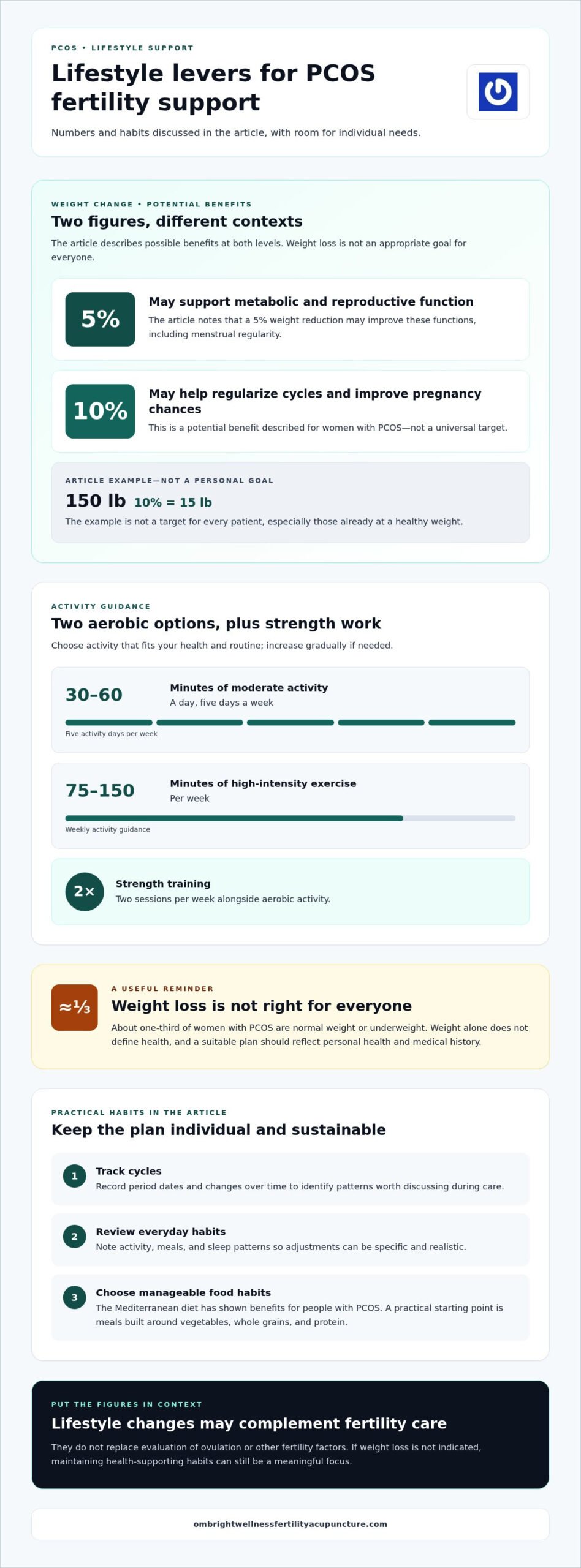
For PCOS, lifestyle changes can support metabolic and reproductive health, but weight loss isn’t appropriate for everyone. A 5% weight reduction may improve metabolic and reproductive function, including menstrual regularity.
Lifestyle Changes
Lifestyle changes are everyday choices about eating patterns and physical activity that can influence health. For people with polycystic ovary syndrome, these choices may support hormone balance and address metabolic concerns alongside care guided by medical history. Weight alone doesn’t define health: about one-third of women with PCOS are normal weight or underweight, so weight loss may not be an appropriate goal for everyone.
Lifestyle Changes and Fertility
Lifestyle changes may support fertility by improving metabolic and reproductive function, which can help menstrual cycles become more regular. A 10% body-weight reduction may help regularize cycles and improve the chance of pregnancy for women with PCOS. For example, 10% of a 150-pound body weight is 15 pounds. This example is not a target for every patient, especially those already at a healthy weight.
Build a plan around sustainable habits rather than rapid changes. The activity guidance in this article is 30-60 minutes of moderate activity a day, five days a week, or 75 to 150 minutes of high-intensity exercise per week. It also includes two strength-training sessions per week alongside aerobic activity. Choose activity that fits your health and routine, then increase gradually if needed.
Food choices can be individualized, and the Mediterranean diet has shown benefits for people with PCOS. A practical starting point is planning meals around vegetables, whole grains, and protein, then considering whether the routine feels manageable. Discuss nutrition goals in light of your medical history, especially if weight change isn’t appropriate.
- Track cycles: Record period dates and changes over time to identify patterns worth discussing during care.
- Review habits: Note activity, meals, and sleep patterns so adjustments can be specific and realistic.
- Set a suitable goal: Focus on metabolic health and reproductive function, not a single number on the scale.
For someone planning fertility care or an embryo transfer, lifestyle changes should fit the treatment plan and personal health needs. They may complement medical treatment, but they don’t replace evaluation of ovulation or other fertility factors. If weight loss isn’t indicated, maintaining health-supporting habits can still be a meaningful focus.
PCOS-related ovulation problems and infertility
PCOS can disrupt ovulation and make conception less predictable. For those exploring non-hormonal PCOS fertility treatment in Homestead, understanding cycle patterns can help guide discussions about fertility care.
PCOS and Ovulation Challenges
Polycystic ovary syndrome can interfere with ovulation, the release of a mature egg. A mature egg must be released for conception to occur during a cycle. PCOS affects 1 in 10 women of childbearing age in the United States. Some women have fewer than eight periods per year, while others have periods every 21 days or more often.
In PCOS, small ovarian follicles measuring 2-9 mm can interfere with normal egg development. Hormonal imbalances may prevent ovulation or make its timing difficult to predict. Patients may then have trouble identifying fertile days. For those considering non-hormonal PCOS fertility treatment in Homestead, cycle records can help clarify what supportive care may complement medical fertility treatment.
Ovarian drilling is a surgical treatment that usually restores ovulation for 6 to 8 months. Its potential benefit is renewed ovulation; the benefit must be weighed against the risks of an ovarian procedure. Discussing the procedure’s suitability and risks with a fertility specialist helps place this option in context.
Infertility and PCOS Testing
Testing before treatment can assess PCOS, ovulation, and other possible contributors to infertility. Evaluation may include menstrual and medical history, a review of symptoms, blood tests, and ovarian imaging such as ultrasound. A PCOS diagnosis may be made when a person has at least two specified symptoms after other conditions are ruled out. The tests selected depend on the questions raised by the person’s history and symptoms.
Symptoms can include irregular periods, excess hair growth, acne, or weight changes, and they vary from person to person. A fertility evaluation also considers whether ovulation occurs and whether other reproductive factors could affect conception. Bringing cycle records and medical history to an appointment can help connect test findings with your fertility concerns.
When ovulation is absent or unpredictable, ovulation induction uses medication to stimulate egg release. For people with PCOS who are trying to conceive, oral medication is identified as the first treatment option in the treatment pathway. The American College of Obstetricians and Gynecologists identifies clomiphene as a primary medication for fertility issues associated with PCOS.
Other medication options include letrozole and gonadotropins. Metformin, commonly used to treat diabetes, may be taken alone or with clomiphene to help improve ovulation. Timed intercourse or IUI may accompany ovulation-stimulation medication. The approach depends on evaluation findings, treatment history, and whether ovulation occurs.
If oral medications are ineffective, injectable gonadotropins may be the next treatment step, followed by IVF. Daily FSH injections for PCOS are taken for about 7 to 15 days to stimulate mature follicle development. These medicines directly address egg release, while non-hormonal support serves a different role. A discussion of non-hormonal PCOS fertility treatment in Homestead can clarify how supportive care fits alongside medical options.
Pregnancy and live birth success rates
PCOS doesn’t prevent everyone from conceiving naturally, but outcomes depend on factors such as age, ovulation, sperm health, and treatment. Reported pregnancy estimates describe conception, not necessarily live birth, so compare figures only when their measures and conditions match.
For women under 35 with normal sperm, the available estimates give a monthly pregnancy success rate of about 1-2% with metformin alone. The estimate is 15% with Clomid for women under 35 with normal sperm who ovulate, and 20% with injectable gonadotropins for women under 35 with normal sperm. These figures describe distinct treatment situations, not a direct guarantee for an individual.
Successful pregnancy with ovulation induction is more likely during the first 3 to 4 months of treatment. That timing can help guide conversations about response and next steps. It doesn’t mean treatment should be stopped or changed automatically after that window; the doctor considers whether ovulation occurred, how treatment was tolerated, and other fertility findings.
Many women with PCOS conceive naturally, though the likelihood varies. For people under 35, lifestyle modification alone can improve pregnancy rates. If other treatments have not led to pregnancy, IVF may be considered; most women with PCOS under 40 who have not conceived with other treatments can succeed with IVF when treated at a high-quality clinic.
Pregnancy risks associated with PCOS should be considered alongside a person’s medical history and fertility treatment. The success estimates discussed here don’t quantify pregnancy complications or live birth rates, so they shouldn’t be interpreted as measures of either. A doctor can use health history, treatment response, and pregnancy progress to guide monitoring and care.
Fertility procedure risks depend on the method used. Ovulation-stimulation medicines can cause side effects; metformin, for example, causes gastrointestinal effects such as diarrhea in about 25% of patients. Treatment involving an embryo transfer has different considerations from oral medication, so the procedure and monitoring plan matter.
To interpret a reported rate, note the patient group, treatment, and outcome being measured. A monthly pregnancy estimate isn’t the same as a live birth rate, and results for people who ovulate shouldn’t be applied to those who don’t. Age, sperm health, and response to treatment all affect how relevant a comparison is.
Ask the doctor to clarify whether a quoted outcome means pregnancy or live birth, and whether it reflects a monthly rate or a full treatment course. For example, the Clomid estimate applies to women under 35 with normal sperm who ovulate. That context makes the figure more meaningful than a percentage viewed on its own.
Fertility treatment costs
PCOS care can involve evaluation, cycle monitoring, and different treatment approaches. Comparing the clinical steps helps clarify what each option is intended to address. Oral medication may be considered to induce ovulation; if it doesn’t work, injectable gonadotropins may be considered, followed by in vitro fertilization. These approaches aren’t interchangeable: each has a different role in fertility care.
Before choosing a path, a fertility specialist considers the person’s symptoms, medical history, and reproductive goals. An evaluation may look at irregular cycles and whether ovulation occurs. A doctor may also use ultrasound to assess reproductive health. These findings help distinguish cycle-related concerns from other factors that could affect conception.
Success-rate comparisons need context. A monthly pregnancy estimate differs from a live birth rate or a result measured across a full treatment course. Age, sperm health, ovulation status, and treatment type all affect whether a figure applies to a particular patient. For example, a result reported for people who ovulate doesn’t describe the same group as people with irregular or absent ovulation.
For people with PCOS trying to conceive, oral medication is identified as the first treatment option to induce ovulation. If it’s ineffective, injectable gonadotropins may follow, then IVF. Timed intercourse or IUI may be paired with ovulation-stimulation medication. This sequence shows how treatment can progress according to response, rather than treating every option as a standalone choice.
Non-hormonal support has a different role from medication that induces ovulation. It may complement a medical plan, while evaluation and monitoring address clinical questions about cycles and reproductive health. Keeping these roles distinct can make discussions with a fertility specialist more focused, especially when you want supportive care without confusing it with treatment designed to stimulate egg release.
To prepare for an appointment, write down cycle dates, past evaluations, and medications you’ve tried. Ask about the purpose of each recommended step, which findings guide decisions, and how progress will be assessed. If an ultrasound or other test is discussed, ask what clinical question it is intended to answer. A clear record can help the fertility specialist connect test findings with the next stage of care.
PCOS symptoms can vary, so evaluation and treatment should reflect each person’s circumstances. For one patient, clarifying ovulation may guide the next discussion; for another, a specialist may consider additional reproductive factors. Understanding the purpose of each step helps you take part in decisions and compare approaches based on what they are intended to address.
Insulin resistance
Insulin resistance means the body responds less effectively to insulin, which helps regulate blood sugar. In polycystic ovary syndrome, excess insulin may be part of the hormonal picture and can relate to reproductive health. More than half of women with PCOS will have diabetes or prediabetes before age 40. This makes metabolic health relevant when discussing fertility, even if pregnancy is the immediate goal.
Insulin resistance can occur alongside irregular cycles and ovulation challenges. This connection matters because ovulation is necessary for conception, while PCOS may disrupt or make it unpredictable. A fertility evaluation can consider cycle history, symptoms, and metabolic health together. This broader view helps distinguish fertility questions from concerns that may also need attention for general health.
A specialist may discuss medication as one part of care. Metformin is commonly used to treat diabetes and may be taken alone or with clomiphene to help improve ovulation in some women with PCOS. However, the FDA has not approved metformin to treat PCOS symptoms. Its role in a fertility plan therefore differs from medication prescribed specifically to stimulate ovulation.
A useful next step is to bring relevant medical history and menstrual-cycle records to an appointment. Note whether periods are irregular, how often they occur, and any prior evaluations or medication use. These details help a specialist connect reproductive concerns with your broader health picture. They also provide context for discussing whether metabolic assessment or ovulation-focused fertility care is appropriate.
- Ask about the goal: Clarify whether a medication is intended to address diabetes, support ovulation, or serve another purpose.
- Review cycle patterns: Share dates and changes in menstrual bleeding, rather than relying on memory alone.
- Discuss the full history: Include prior diagnoses, medications, and fertility treatments when reviewing options.
- Separate outcomes: Metabolic health and the chance of conception are related topics, but they are not the same measure.
Non-hormonal lifestyle support may complement medical care, but it doesn’t replace evaluation of insulin resistance or ovulation. Nutrition and physical activity can support overall hormone balance in people with PCOS, while medications address specific clinical goals. The right next step depends on the findings, symptoms, and fertility priorities under discussion.
PCOS can complicate fertility planning when metabolic concerns and irregular ovulation overlap. Understanding insulin resistance gives you a clearer basis for discussing medication, reproductive goals, and follow-up with a specialist. A focused conversation can connect PCOS, cycle history, and metabolic health without assuming that one treatment serves every purpose.
Ombright Wellness Fertility Acupuncture: Fertility Acupuncture
Ombright Wellness Fertility Acupuncture offers Fertility Acupuncture as supportive care alongside a PCOS fertility plan. It may suit patients seeking non-hormonal support while discussing ovulation, metabolic health, or fertility treatment with their medical team. Acupuncture doesn’t replace diagnostic evaluation or medication used to induce ovulation.
Care is provided by an NCCAOM-Certified Diplomate of Acupuncture. For someone managing PCOS, this can offer a complementary path while coordinating fertility goals with existing medical care. Other available supportive services include Fertility IV Therapy, Fertility Ozone Therapy, and Fertility Hyperbaric Oxygen Therapy.
If you’re considering acupuncture as part of your fertility care, contact Ombright Wellness Fertility Acupuncture to learn more.
Choose a Next Step That Fits Your Goals
The next step can be a conversation about your fertility goals and how non-hormonal options might fit alongside your existing plan. For people considering non-hormonal PCOS fertility treatment in Homestead, it can help to clarify which approaches align with your preferences and what questions you want answered before making changes.
Discuss your priorities with your care team, especially before adding or stopping any treatment. Supportive care can be considered as part of a broader plan, while medical evaluation guides clinical decisions about conception. A calm, informed conversation can make the path ahead feel more manageable.
If you’d like to explore supportive fertility care, contact Ombright Wellness Fertility Acupuncture. Your next step can begin with a conversation shaped around your needs.
Frequently Asked Questions
How is PCOS treated?
PCOS treatment depends on the symptoms and health goals being addressed. For someone planning pregnancy, care may focus on ovulation and other fertility factors; for another person, metabolic health or cycle concerns may take priority. Share your symptoms, medical history, and pregnancy goals during an evaluation to help shape a plan around your needs rather than treating every PCOS symptom alike.
Can I still get pregnant if I have PCOS?
Yes, PCOS doesn’t rule out pregnancy. Some people conceive naturally, while others need support with ovulation or additional fertility factors. For example, someone with irregular cycles may benefit from an evaluation to clarify whether ovulation is occurring and which next steps fit their goals. A pregnancy estimate describes a group, not an individual outcome, so discuss how age, sperm health, and treatment history apply to your circumstances.
How hard is it to get pregnant if I have PMOS?
“PMOS” is commonly a mistaken form of PCOS. Conception can be more difficult when the condition disrupts ovulation, but experiences vary. Someone with predictable ovulation may face different considerations than someone whose cycles are widely spaced. An evaluation can also consider other reproductive factors, so planning doesn’t rely on the diagnosis alone.
What non-hormonal fertility treatments are available for people with PCOS?
Non-hormonal supportive options include Fertility Acupuncture, Fertility IV Therapy, Fertility Ozone Therapy, and Fertility Hyperbaric Oxygen Therapy. These differ from medications used to stimulate ovulation and don’t replace diagnostic care. If you’re considering an integrative approach, share your current treatment plan and goals so supportive care can complement medical fertility management.
Can lifestyle changes improve ovulation and fertility with PCOS?
Lifestyle changes can support overall hormone balance and reproductive health, and may help some people with PCOS improve fertility. The most useful approach is one you can maintain and adapt to your health needs. For example, keep a simple record of cycle dates and routine changes, then discuss the pattern during care. This can help connect daily habits with the fertility questions you want answered.
What fertility treatments for PCOS avoid hormones and ovulation-induction drugs?
Fertility Acupuncture is a non-hormonal supportive option, as are integrative services such as Fertility Ozone Therapy, Fertility IV Therapy, and Fertility Hyperbaric Oxygen Therapy. These approaches don’t induce ovulation in the way fertility medications do. If ovulation is the main barrier to conception, discuss how supportive care fits alongside evaluation and treatment intended to stimulate egg release, rather than assuming one approach serves both purposes.
How do PCOS fertility treatment options compare in cost and success rates?
For women under 35 with normal sperm, estimated monthly pregnancy rates are about 1-2% with metformin alone, 15% with Clomid when ovulation occurs, and 20% with injectable gonadotropins. These are different treatment situations, not individual guarantees; the material provides no cost figures.