
A fertility-focused treatment can sound promising without proving it improves fertility. Ozone therapy for uterine health in Homestead refers to using medical ozone, a molecule made of three oxygen atoms, as a complementary approach intended to support reproductive health. Its relationship to fertility remains uncertain, so it should be understood as supportive care rather than a proven fertility treatment.
If you’re exploring options for uterine health, it’s reasonable to want a clear picture of what a treatment involves and what it can realistically offer. Ozone gas should never be inhaled, and administration methods differ in how they are delivered and absorbed.
This article explains what ozone therapy is, what to expect from a session, and how methods such as vaginal insufflation and IV administration work. It also distinguishes proposed effects on uterine health from established evidence about fertility, helping you consider the approach with a calm, informed perspective.
Key Takeaways
- Understand what medical ozone is and why it should never be inhaled.
- Learn what an ozone therapy session may involve, including the typical 30-60-minute duration of ozone IV therapy sessions.
- Compare administration methods, including vaginal insufflation, and how they differ in delivery.
- Separate proposed reproductive-health benefits from established fertility evidence before considering ozone therapy as supportive care.
What is ozone therapy?
Ozone therapy uses ozone, a molecule made of three oxygen atoms, in a medical setting. Weigh proposed effects on uterine health against limited evidence, known risks, and established care for the condition being treated.
Claimed Effects on Microbes and Inflammation
Ozone therapy is promoted for antimicrobial and anti-inflammatory effects, including possible activity against pathogens and inflammatory processes. For uterine conditions, clinics may claim it helps address infection or pelvic inflammation, but those claims do not prove that it treats a specific disease. Early animal studies suggest possible reductions in uterine inflammation and infection; animal findings do not establish benefits in people. This distinction matters when deciding whether ozone should complement, rather than replace, evidence-based care.
Potential Effects on the Immune System
Proponents also suggest ozone may affect immune activity, oxygen delivery, circulation, and antioxidant production. These are possible biological responses, not established treatment outcomes for uterine disorders or fertility. A change in an immune marker would not, by itself, show that a condition improved. Ask which specific outcome is being discussed, such as symptoms or a diagnosed condition, and whether evidence supports that outcome in people.
Potential Side Effects and Risks
Ozone therapy carries safety concerns, and inhaling ozone gas can cause severe airway irritation and fluid buildup in the lungs. The U.S. Food and Drug Administration warned against ozone therapy in 2019 because evidence was insufficient to establish that it was safe or effective; the agency has not authorized or regulated the therapy. Ombright Wellness states that temporary side effects typically resolve within 24-48 hours. It also states that ozone therapy is not suitable during pregnancy. Discuss risks and your health history in a consultation before considering treatment.
Evidence for Uterine Health Claims
Evidence supporting ozone for uterine health is limited: early animal studies have indicated possible effects on inflammation and infection, but they do not establish human benefit. Unlike treatments supported for a diagnosed uterine condition, ozone therapy has not been established as a treatment for uterine disease. The FDA has not recommended it for uterine conditions. Clinics may claim uses for gynecological conditions, infections, hormonal imbalances, or pelvic inflammation; these are claims, not proven indications. I can’t responsibly name a Homestead clinic as licensed based only on its location. The American Academy of Ozonotherapy educates and certifies healthcare practitioners in ozone use, but that training does not establish FDA authorization or effectiveness for uterine health.
Treatment-session expectations
An ozone therapy plan can vary by administration method and the health concern being addressed. Knowing the proposed schedule and session length can help with planning, but does not establish that the treatment is effective.
Suggested Treatment Schedule
A commonly described starting schedule is 6-10 sessions over several weeks. That outline gives a general sense of treatment frequency, not a universal prescription for uterine health. The route of administration, the reason for treatment, and a person’s health history shape what a plan involves.
A personalized discussion should review the diagnosed condition, current care, and treatment goals. For example, someone considering ozone alongside care for pelvic inflammation needs to distinguish symptom support from treatment of the underlying cause. Track symptom changes and discuss them at follow-up visits. The number of sessions alone cannot show whether treatment is helping.
Treatment Session Duration
Ozone IV therapy sessions are typically 30-60 minutes. This range describes the session itself; it does not establish how long other administration methods take. Ask which method is planned and what the appointment includes, since preparation and follow-up can affect the time set aside.
An intravenous infusion delivers treatment through a vein. Session duration does not prove effectiveness for uterine conditions, arthritis, healing, or immune system support. A longer appointment does not establish greater oxygen delivery or detoxification, either. Those terms describe proposed effects, not ways to judge a session’s success.
Before starting, use the consultation to clarify the treatment route, schedule, and intended outcome. Keep established care for a diagnosed uterine condition central, and consider adjunctive approaches in that context. If you’re comparing supportive fertility options, you can explore fertility care approaches as part of that discussion.
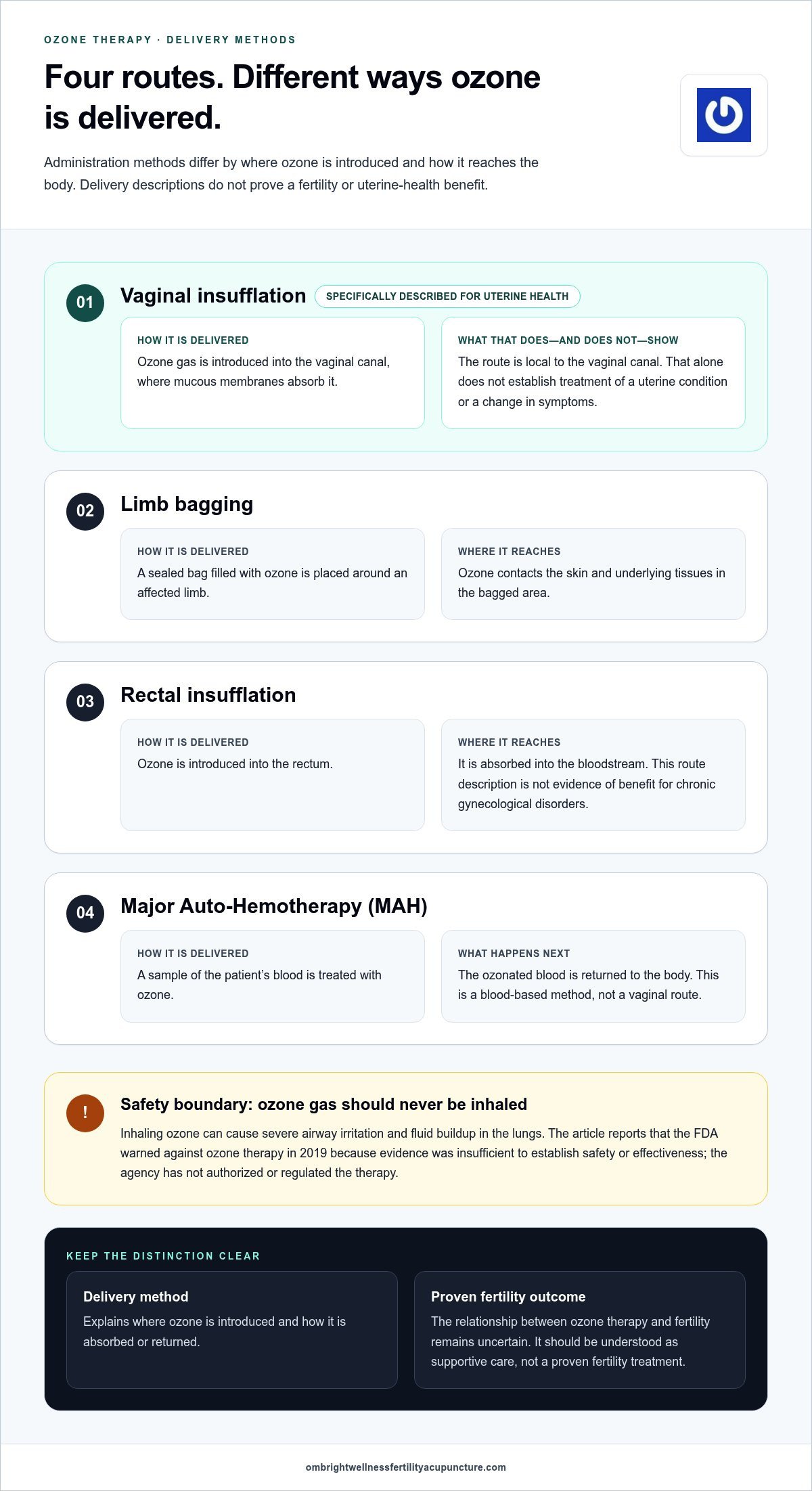
Ways ozone therapy is administered, including vaginal insufflation
For uterine health, vaginal insufflation is the specifically described ozone route. Other administration methods include limb bagging, rectal insufflation, and Major Auto-Hemotherapy (MAH). These methods differ in where ozone is introduced and how treatment reaches the body.
Vaginal insufflation introduces ozone gas into the vaginal canal, where mucous membranes absorb it. It is described for gynecological conditions, infections, hormonal imbalances, and pelvic inflammation. This method is local to the vaginal canal; that does not establish that it treats a uterine condition or changes symptoms. Ask which condition the method is intended to target and what outcome is being measured.
Other methods use different routes. Limb bagging places a sealed bag filled with ozone around an affected limb, allowing ozone to contact the skin and underlying tissues. Rectal insufflation introduces ozone into the rectum, where it is absorbed into the bloodstream. These descriptions explain how ozone is administered, not proven effects on chronic gynecological disorders.
MAH is a blood-based method: a sample of the patient’s blood is ozonated and returned to the body. This differs from vaginal insufflation, which applies ozone locally, and rectal insufflation, which uses the rectal route. The administration method matters because the site of exposure and intended purpose differ. A route used for another condition is not automatically appropriate for uterine health.
Terms such as free radicals, immune balance, or autoimmune response describe proposed biological mechanisms, not measures of clinical benefit. For example, a theory about oxidative balance does not show that ozone resolves pelvic inflammation or infection. Before proceeding, clarify the route, where ozone is administered, and how the approach fits alongside evaluation and care for the diagnosed condition. This helps distinguish the method from claims about results.
Ozone therapy and fertility
Fertility care can have different goals, such as preparing for natural conception or coordinating support during IVF or IUI. If you’re considering ozone therapy for uterine health in Homestead, first identify your stage of care and the specific question you want addressed. A discussion focused on one goal may not answer another.
Bring a concise record of cycle patterns, prior fertility evaluations, and current treatments to a consultation. Note what you hope to understand, such as whether a proposed approach fits your existing plan. This gives the conversation a practical focus without treating a general wellness claim as an individualized fertility assessment.
Ask how the proposed care relates to your fertility plan and which clinician is coordinating each part. If you’re preparing for an IVF or IUI cycle, clarify how any complementary approach would fit with its timing and clinical instructions. For ozone therapy for uterine health in Homestead, these details can help you evaluate whether the discussion addresses your reproductive goals.
Keep the decision tied to the question you’re trying to answer. A plan for menstrual concerns, preparation for assisted conception, and support while trying to conceive are distinct contexts. Write down follow-up questions after the consultation and review them with the professionals involved in your reproductive care.
If you’re considering supportive care, you can discuss fertility-focused care options in relation to your existing plan.
Ombright Wellness Fertility Acupuncture: Fertility Acupuncture
Ombright Wellness Fertility Acupuncture offers Fertility Acupuncture as supportive care for people navigating fertility concerns or treatment. An NCCAOM-Certified Diplomate of Acupuncture provides this service, which may complement a fertility care plan without replacing diagnosis or medical treatment for uterine conditions.
If you’re weighing ozone therapy, ask how its proposed role fits your reproductive goals and existing care. Ombright also offers Fertility Ozone Therapy, Fertility IV Therapy, and Fertility Hyperbaric Oxygen Therapy. These are distinct supportive approaches, not proof that ozone improves fertility. A conversation about your priorities can help clarify which service may fit your needs.
For a calm next step, contact Ombright Wellness Fertility Acupuncture or visit ombrightwellnessfertilityacupuncture.com.
Make your next fertility-care decision with clarity
If you’re exploring ozone therapy for uterine health in Homestead, start by defining what you hope to address. Write down your main concern, any diagnosed condition, and the outcome that matters most to you. This can help keep the discussion focused on your needs rather than broad wellness claims.
Bring your current care plan and questions to the conversation. Ask how a proposed supportive approach would fit alongside existing treatment, what changes would be monitored, and how progress would be assessed. Whether ozone belongs in an individual fertility plan depends on personal health circumstances and care goals.
If you’d like to discuss supportive fertility care in a thoughtful setting, contact Ombright Wellness Fertility Acupuncture. A clear, considered next step can help you move forward with greater confidence.
Frequently Asked Questions
What Are the Benefits?
Ozone therapy is promoted for possible effects on infection, inflammation, and circulation, but these claims do not establish proven benefits for uterine health or fertility. To assess a proposed benefit, identify the condition being addressed and the outcome that would count as improvement. For example, relief of discomfort and successful treatment of an infection are different outcomes.
Why Use Ozone in Medicine?
Some practitioners use medical ozone because its chemical properties are thought to affect microbes and biological processes. Its medical use dates to the 1800s, but a history of use doesn’t demonstrate effectiveness for every condition. For a uterine concern, the relevant question is whether the proposed method has evidence for that specific condition, rather than a different use or general wellness claim.
What are the risks and side effects of ozone therapy?
Ozone therapy has safety concerns, and inhaling ozone can seriously irritate the airways and cause fluid buildup in the lungs. Before considering any route, disclose relevant health conditions, medications, and the possibility of pregnancy during a clinical consultation. Ask how exposure is prevented and which symptoms require prompt medical attention. Do not treat ozone therapy as a substitute for evaluation of a uterine condition.
Can ozone therapy affect fertility, pregnancy, or menstrual health?
Ozone therapy has not been established as a way to improve conception or regulate menstrual cycles. Ombright Wellness states that ozone therapy is not suitable for people who are pregnant. If you’re trying to conceive or tracking cycle changes, discuss treatment with your reproductive care team and keep cycle records. A change in symptoms alone does not demonstrate improved fertility or explain its cause.
What credentials and safety standards should an ozone therapy provider have?
The American Academy of Ozonotherapy educates and certifies healthcare practitioners, but that training does not establish FDA authorization or effectiveness. Ozone therapy is not FDA-authorized or regulated; discuss your health history and risks with a provider, and never inhale ozone gas.